News
’24-25 News in Review
Welcome to WashU! Here’s a chronological recap of some of the major events and happenings from last school year, both around campus and in the greater community. This includes how national politics have affected the WashU community, so you can get up to speed on all of the campus goings-on.
After the U.S. Supreme Court overturned Affirmative Action in June of 2023, effectively banning the consideration of a person’s race as a factor in university admission, Student Life reported that WashU’s Class of 2028 had 6 percentage points fewer students of color than the previous class. At the same time, the number of students from low- to moderate-income backgrounds — including those eligible for federally funded Pell Grants — increased, and the share of students receiving financial aid rose from 42% to 48%.

WashU community members were part of nearly three million voters in Missouri who cast ballots in the 2024 presidential election, with the state eventually going to president-elect Donald Trump. (Bri Nitsburg | Managing Photo Editor)
On Election Day, WashU saw its highest voter turnout in history, with over 2,000 people voting at polling stations set up on the Danforth and Medical Campuses. Following the 2022 Supreme Court decision in Dobbs v. Jackson Women’s Health Organization, which made abortion illegal in the state, Missouri’s Amendment 3 — which would guarantee the “fundamental right to reproductive freedom” and enshrine the right to abortion up until fetal viability in the state constitution — passed by a margin of 52% to 48% on Tuesday, Nov. 5. Notably, 91.3% of the WashU students surveyed by Student Life voted in favor of the amendment. The amendment has faced legal turmoil since its passing, including court battles over its constitutionality. Additionally, the Republican majority in the state legislature has approved a ballot amendment, which could be put to voters in 2026 elections or sooner and would ask voters to reimpose an abortion ban, but with exceptions for pregnancies caused by rape and incest.
In mid-January, Student Life interviewed Sandro Galea, the inaugural dean of WashU’s forthcoming School of Public Health — the first new school since the George Warren Brown School of Social Work opened in 1925. Galea shared that he is excited to use WashU’s prestige in the world of medicine to make an impact in public health and plans to work closely with pre-med and medical students, along with students in other academic fields intersecting with public health. The school will open in 2026.
Approximately two weeks after Trump’s inauguration, the National Institutes of Health (NIH) announced a $4 billion cut to research funding in the U.S.; however, the cut was paused by a Massachusetts federal court judge following lawsuits from universities across the nation and 22 state attorney generals. WashU received the third-most NIH funding of any university in 2024, and according to Student Life estimates, the cuts could cause WashU to lose roughly $106 million, which would stifle research efforts.
Following the proposed cuts, graduate students organized protests on Mudd Field and the Medical Campus. Many of the students and professors who attended the demonstrations said that they wanted to give greater visibility to scientists who are working to solve some of the world’s biggest problems through research.
In late February, Chancellor Andrew Martin gave his annual State of the University Address, in which he addressed how current political turmoil may impact WashU’s funding and staff. Despite the uncertainty faced by WashU, Martin remained optimistic regarding the future of the school, touting the achievements of students, faculty, and community members as an indicator of what is to come from WashU.
At the time of Martin’s address, the Trump administration had put U.S. universities under fire for their Diversity, Equity, and Inclusion (DEI) initiatives. When asked about the future of WashU’s DEI programs, Martin said he is committed to maintaining WashU’s community but isn’t necessarily committed to the letters “D,” “E,” “I,” or any combination of the three. Since then, the University announced the formation of a committee charged with reviewing and recommending changes to the university’s DEI programs and activities.
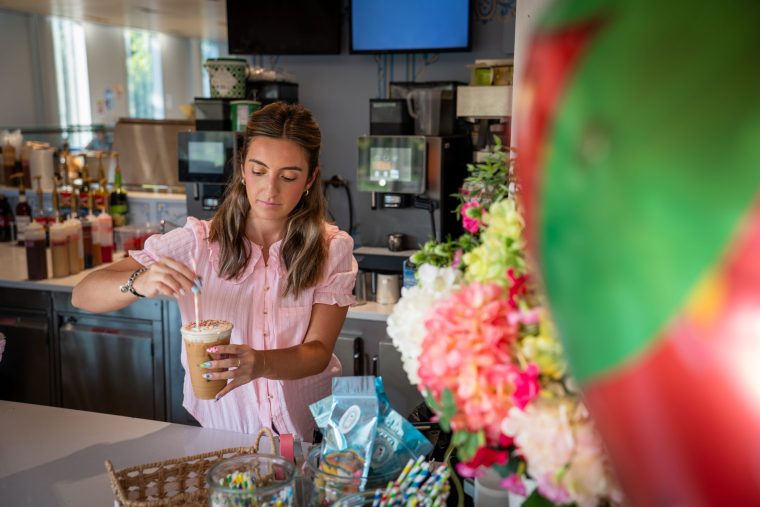
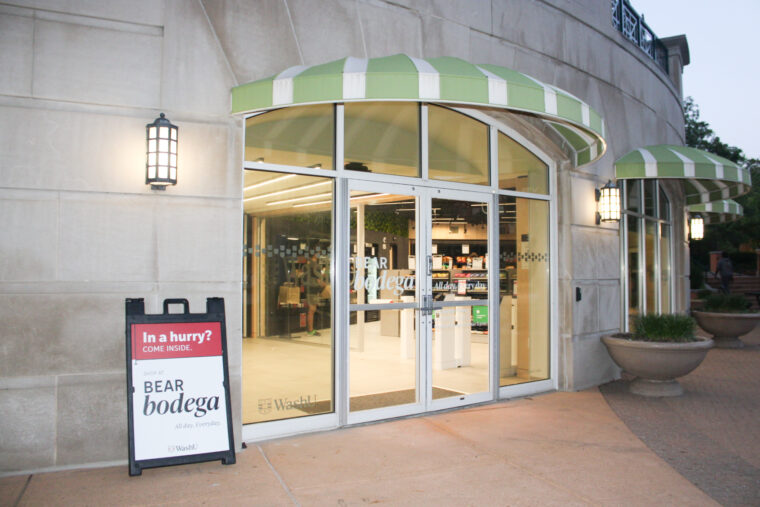
In April, WashU’s Dining Services — which was named No. 2 Best College Dining by the Princeton Review in 2024 — committed to a two-to-three-year overhaul of its operations after facing criticism from some students last year concerning limited hours and high pricing. According to its website, the overhaul includes “reviewing higher ed best practices, expanding All You Care to Eat (AYCTE) options, integrating national and local brands, adopting innovative technology, and reconfiguring meal plans to offer diverse options and price points.” Administrators reiterated their commitment to affordability.
Also in April, the University announced that it is pausing the construction on Riney Hall, a new Arts & Sciences building that was slated to open in 2028, and reopening Mudd Field fully in the fall. Mudd Field had been partially closed during the 2025 spring semester as the University had plans to remodel the field. The school cited a potential endowment tax and cuts to research funding as the reasons behind the pause. WashU also expressed interest in resuming work on the project in the future.
In other facilities-related news, WashU is still in the process of planning how to utilize land purchased from Fontbonne University — a neighboring university that is ceasing operations after the summer 2025 term — for $39 million in 2024. Additionally, WashU was hoping to develop land leased from nearby Concordia Seminary into baseball, softball, intramural, and club sports facilities, but the University withdrew its proposal to do so from Clayton’s Board of Aldermen after many local residents spoke up against it.

Hip hop artist Flo Rida headlined the spring 2025 WILD performance on Friday, April 25. (Anna Calvo | Staff Photographer)
Flo Rida was the headliner for Spring 2025 WILD, an annual concert that WashU puts on at the end of the spring semester for its students. The student band “On Hold with the IRS” and DJ Mustard opened for Flo Rida. WILD’s budget for 2025 was increased to $325,000, almost double that of 2024, which featured rap sensation Joey Bada$$.
Throughout the 2023-2024 school year, there were a number of on-campus demonstrations and events in relation to the Israel-Hamas war, both pro-Israel and pro-Palestine, in which students and faculty participated. In late April of 2024, WashU carried out more than 100 arrests at a pro-Palestine demonstration, including those of 23 students and five faculty members, as they had set up an encampment on the East End of WashU’s campus in violation of WashU’s Danforth Campus Facilities Access Policy. During the 2024-2025 school year, demonstrations related to the war were less frequent and did not result in any on-campus arrests, while events such as vigils commemorating both Israeli and Palestinian lives lost in the war continued to be held throughout the school year.

Damaged ginkgo trees on Ginkgo Allée outside of Olin library, the ginkgo trees in the area are almost a century old. (Photo courtesy of Wilson Hou)
On Friday, May 16, WashU’s campus and surrounding areas were in the path of a tornado, which strengthened to an EF3 level of severity as it progressed across the city. The storm caused significant damage to North St. Louis neighborhoods and inflicted moderate damage on buildings and trees on WashU’s Danforth campus. More severe damage to apartment buildings and houses near campus was reported, including numerous felled trees that damaged roofs and crushed cars. WashU plans to repair the campus fully by the time classes resume in the fall.
Stay in Touch!
Get the latest and top news from StudentLife delivered to your inbox