News
Spring 2026 Student Union Election Guide
This semester’s Student Union election, featuring races for Senate, Treasury, and the Executive Branch, began this Tuesday at 9 a.m. CST and will end this Thursday at 9 p.m. CST.
This election, 10 candidates are running for Senate’s 10 seats while 11 candidates are running for Treasury’s 12 seats. Voters will also elect the five positions within the Executive Branch: president, executive vice president, vice president of engagement, vice president of finance, and vice president of programming.
All of the races are uncontested except for the president, which has two candidates this semester. Student Life interviewed all six candidates running for the Executive Branch.
President candidates
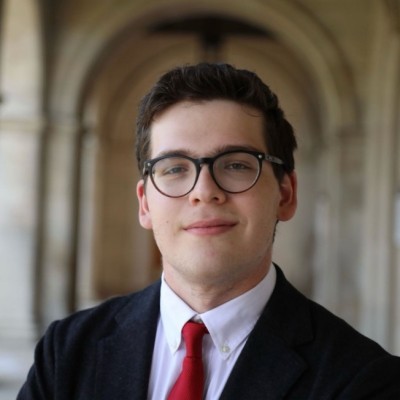
Romen Der Manuelian is running for president. Manuelian has endorsements from Jewish on Campus, College Democrats, and Ashoka. Headshot courtesy of Manuelian.
Romen Der Manuelian — Class of 2027, he/him
SL: Why are you running for president?
RDM: If you look at the state that SU is in, we’re doing a lot of great work. I mean, if you look at what’s happened in the last year, we’ve delivered better dining hours. We’ve delivered a great financial situation from our treasury, we’ve delivered new legislation on getting more input from students on financial changes about fundraising for the student opportunity fund. We’ve delivered a lot of good things, but I think a lot of that good … is not getting [communicated] to the student body.
A big part of why I want to run is I really want to engage the student body as a whole in making sure that SU is there for them and is a resource. [That’s the core] of my slate SU4U: accessibility. SU is a hard place to navigate. It’s has a fairly complex bureaucracy. There’s a lot of information in a lot of different places, and there’s a lot of very, very long forms that people have to fill out to be able to access SU funds and SU advocacy. And I think getting at the heart of what would make SU a more trusted campus partner by students, a more trusted resource is, I think we have to tackle that accessibility issue. And so what that means is, it means consolidating information. It makes it easier to access information. It makes it easier to understand the rules and regulations that SU has. I want to make sure that every student can look up to SU as an organization, that they can trust that it can deliver them a more positive experience on their campus. That’s why I’m running.
SL: How have you and how are you currently preparing for this role?
RDM: I served as Speaker of the Treasury last semester, [and] I’ve been serving since freshman year on Treasury. I have a lot of experience in the financial side of things. But also as Speaker of the Treasury, I served on Exec, and so I’m familiar with all the projects that SU is undertaking. I’ve written two, I would say, hopefully, transformational pieces of legislation focusing one on our financial reforms [and] making our finances more accessible to the student body by allowing students a time period to suggest changes and revisions to current policy. And second was a piece of legislation that was dedicated to fundraising for the Student Opportunity Fund, which provides extracurricular opportunities to students [which] may be less accessible. So that might be providing suits for Mock Trial to a student in need, those sorts of situations. I’ve been trying to build up our accessibility on the financial side of things, in the ways where we can utilize money and spending to be able to make every WashU opportunity more accessible to the whole student body … One thing that I really have been working on is talking to a lot of people from [both Treasury and Senate]. I built a coalition slate of candidates from both chambers with a total of 20 semesters of experience. What we’re [also] looking towards is making sure that we’re able to get the student body [engaged], and then also engaging our partners and other student governments in St. Louis. So right now [for example], the current executive board is working on a coalition of student governments across St. Louis, whether it be Truman State or UMSL, and [work together on] community projects and community service to engage St. Louis.
SL: What would those cross collaborative projects between student governments look like?
RDM: What we’ve seen over the last two years is conferences of all the sorts of St. Louis University student governments. Our current Vice President of Engagement, Ella Scott, is doing a great job setting up and coordinating community service projects. And that’s something I really want to focus on: bringing together all the St. Louis universities, SLU, UMSL, Lindenwood, Truman State, and giving back to our community through a set of community service projects that we work on together. Just in the fall alone, SU exec organized three community service projects. Sometimes we’re short staffed, because SU only has so many people. Everybody’s busy. I think the more universities that we’re able to bring in the more we can give back to our community. I’d like to create a formalized St. Louis student government organization that will be able to give back to our community by engaging the people of St. Louis.
SL: Should you be elected, what changes do you hope to implement during your presidency? Or what are some priorities that you have going into it?
RDM: I think making SU’s bureaucracy more more navigable. That means consolidating information. Now we’ve seen some great strides in this in terms of the website. We have something called the Trello board, which has a lot of our financial information, but a lot of that information is all over the place. If you’re a new student group treasurer, or if you’re someone who’s looking for someone to advocate for you in the Senate, it can be a bit of a hassle to find out where to look. One thing I would like to see is shorter and more consolidated forms. I’d like to see us focus on some budget reforms. So right now, we use WUGO go, which is a website for all of our student groups, and that’s how they submit their budgets. It’s a bit of a janky website. You get a lot of stories of people working five hours, six hours, to submit a budget. And sometimes it cracks, and you lose everything. What we need to look for is setting up a task force for looking towards some alternatives in terms of how students are submitting their budgets, how long these forms are going to be, making them consolidated, easier to navigate, and making obtaining finances more accessible and easier.
SL: As president, you would be residing over the executive branch of SU. How do you hope to cultivate a productive and positive environment within the executive branch?
RDM: I’m very proud to say that the exec board is currently all candidates from my slate, SU4U. Every other position besides president is unopposed. I’m the only one in an opposed race. And all of the other candidates who are going to win their seats share the same vision, and so we already have a great working relationship. We’ve cultivated a great relationship running together, campaigning together, and we’re going to create a great working relationship, working together in the 60th exec board. And for me, I think it’s been a big plus to run alongside some very talented and very experienced people. Like I said, we have 20 semesters of experience in SU across the four of us, and I think that’s significant. SU faces challenges. We have to engage the student body, we have to work alongside university leadership, and we have to pragmatically work with them, and that’s a challenge, and to be able to get that job done, you need experience. You need experience talking to university leadership, something that all five of us across our ticket have done, and that is a job that we are very, very committed to.
SL: As SU president, you’re also going to be the face of SU to the student body. How do you plan on ensuring that the student body feels represented by you and by SU more broadly?
RDM: That’s something I’ve tried to fight for throughout my treasury career with that financial reform that brought in more student input into the student body. The current Vice President of Finance, Meris Damjanović, has done some excellent work with [hosting] focus groups. I’d like to see more focus groups, more advisory boards, and more surveys where people can give direct feedback to how they feel about student government policy. That’s our way of making the system easier to navigate.
SL: How would you characterize SU’s relationship to the administration or University leadership? How do you hope to maintain or better those relations?
RDM: I think right now it’s in a strong relationship. I think it’s had some low points in the past, but I think at this time, we’ve seen very successful work from our last three presidents, especially Ashton, who’s done a great job. I think that at the end of the day, it’s being pragmatic, it’s, you know, standing for your principles, but always being willing to work alongside university leadership. On my end, what I’ve tried to do to better that relationship is to make sure university leadership trusts us. And how I’ve been able to do that is, as Speaker of Treasury, I had to oversee our fiduciary duties to the student body as a whole. We manage a $4.6 million budget. Meris and I had to make sure that we didn’t run out of money. And right now, SU finances are in a very, very stable condition. And I’m proud of that achievement, and I think that’s an achievement that university leadership will make sure to account for when they consider whether or not to trust SU in the future. I’d like to continue that pragmatic relationship. What we’ve done is we’ve frequently engaged with University leadership. At the end of the day, you’re a diplomat: you have to be polite, you have to be cordial, and you have to be honest. You always have to be honest about the state of our finances, about the state of our advocacy, about what the student body is feeling. And university leadership understands that, and they are a partner, and we’re not going to agree on everything, and that’s okay. At the end of the day, you can have disagreements, but kindness and compassion and honesty go a long way in facilitating that relationship.
SL: One of the powers of the president includes vetoing any decisions made by the Senate or the Treasury within three business days. When would you deem it appropriate to use that?
RDM: I think in cases where I would see legislation run clearly contrary to the interests of the student body. I think that if we have, for instance, something that will deeply cause an uproar on campus, or something that would be a major problem the overwhelming majority of students. It’s democracy, so I think it’ll be pretty clear where the will of the student body is on a particular issue. At the end of the day, my role as president is, to an extent, not to advocate. It’s not [just] to advocate my own personal views, but also to represent the student body as a whole. If we’re doing surveys and focus groups and those student boards that I talked about earlier, and they’re saying this is going to hurt us, this is going to be bad for us, then I think it’s absolutely obligatory that I veto a piece of legislation. I care a lot more about what students on the ground are saying than what Treasury and Senate might say, if there’s a clear disconnect between the two. At the end of the day, we have to connect Student Union to the student body, and we’re not going to be able to do that with deeply unpopular pieces of legislation.
SL: Anything else?
RDM: This election for me is about engaging the student body and bridging that as to student body relationship. I mean, look at this election. We have 12 candidates for Senate. We have 10 for Treasury. All of those Treasury candidates are going to win. There’s only one person in the Senate going to lose. There are four uncontested exec board races and one contested one. I think that low candidacy interest is a bit of a red flag. And I think the way that we’re able to bridge that red flag is by closing together these two planes that SU and the student body have operated on … I’m very grateful to have an opponent honestly, because that means we can actually debate our ideas and talk about what our ideas for the student body are. I’d like to extend that privilege of having an opponent across the SU ballot, because we’re not going to be able to have those debates about how to best help the student body [without opponents]. Best of luck to Matthew. I hope for a great race, and at the end of day, we’re both committed to the same mission of bringing together a united student body that is engaged with their student government.
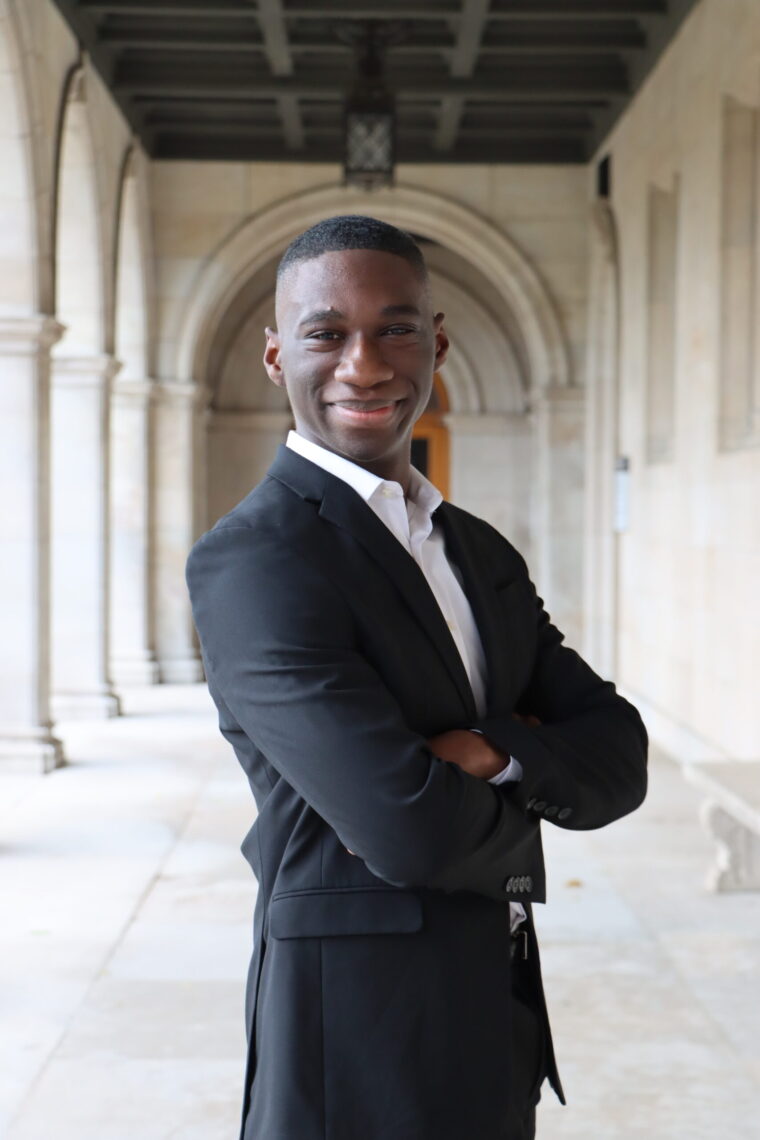
Matthew Broome is also running for president. Broome has endorsements from the Association of Latin American Students, the Association of Black Students, and College Democrats. Headshot courtesy of Broome.
Matthew Broome — Class of 2027, he/him
SL: Why do you want to run for president?
MB: Yes, I want to run for president for a number of reasons. First off, the President is the official representative of the student body to, everybody, especially university leadership. And we need somebody that you know, who can share their own experiences, but also listen [and] collect data from other diverse groups of students with different opinions to better understand the student body. I’m a proven advocate. I’m the current Speaker of the Senate, and that’s kind of what I do right now. I’m the Senate official liaison to University leadership [and] student groups. [I]n that role, we’ve done a lot of things like campus-wide condom distribution, extending the dining hours at Qdoba and Beast craft, [and] getting the Sam Fox refrigerator. We did that last semester. [I am a] proven advocate with results, and I promise you, as President, I [will] continue. I could promise to continue delivering results for the student body.
SL: I know you’ve touched on what you’ve done in the past, [but] I’d love to hear a little bit more about what you plan on implementing in the future. What kind of changes do you anticipate making should you be president?
MB: Yes. Should I be president, I promise to be more visible [and] more transparent. Right now, people don’t know what the President does or what the exact board does as a whole, and we need to have more communication with the student body. We also need to send more communication from us. Right now, we do a quarterly newsletter, but there are, I believe, other ways to be visible, [such as] utilizing social media, which they’ve done a really good job. I want to ramp that up. In Senate this semester, we have some of the most popular reels. I have people coming up to me be like, ‘Oh, you’re the condom guy’. ‘Oh, you’re doing this’. ‘You’re doing this with the shopper shuttle’. I just want to be visible outside of the more traditional media.
SL: Okay, gotcha, so essentially boosting social media presence seems to be the main goal?
MB: A lot of the first years, they don’t know what we do or how we do it, or why we do it, and so just bringing them into the conversation […] so that they know that SU is a resource for them, we can advocate. We can get what you want, or try to get you on that path so [you] can focus on what’s important, like academics, extracurriculars, [and] looking for a job. Let Student Union handle the load.
SL: As president, how do you plan to gauge student concerns further, to ensure that you’re addressing your constituency?
MB: I think there, there are multiple avenues we can do that, [like] a survey. We’ve gotten very successful survey feedback in the past reaching out to specific affinity groups or communities [where] concern would be the most present. An example of this was the incident. I don’t know any other word for it. What happened [last month was that] we specifically reached out to ABS, and they wanted to sit at the table. We worked closely with them, and I spearheaded [a] resolution.
[It’s also important to meet students] where they are. I remember trying to get the Sam Fox refrigerator. I was down there in Sam Fox and [gave] and [while] I’m not an architecture major, some of my friends are. [I] just interview[ed] them right there while they [were] working, because sometimes you don’t even notice a problem till it happens to you, right? I was there, you know, 11 p.m., and like, ‘Oh, you would need a refrigerator’. They wouldn’t even think about it because they’re so busy working.
Just meeting students where they are. You know, surveys are always good. Social media, tabling, flyering, and also Sidechat. You know, I would probably not use Sidechat as a main source because I personally can’t have Sidechat, but sometimes Sidechat is more fun and memes, or also a place where we could notice a problem.
SL: We’ve already addressed a little bit of the constituency aspect of the presidency. Another part of that is, of course, interfacing with admin, right? And I know in the past, SU has had a little bit of a contentious relationship with University leadership, so I was curious, how do you hope to maintain and bolster those relationships?
MB: As speaker of Senate, I have met with a lot of University leadership, and I’m proud that I think that this work has been done to strengthen our relationship. I’ve met with Dean Wild bi-weekly since January. I’ve met with Dr. G. I’ve been in conversations with a whole host of people, and then I’ve also, like other senators, met with other people in University leadership, and we really try to stress that, you know, we are on the same team. […] When I send the agenda for Senate, I end with, ‘My mom always said to me growing up, “you catch more flies with honey, so be nice”’. That is the way I approach advocacy, right? Because if you are nice, people are more likely to help you [and] support you get, try to get where you want to go, but if you’re kind of mean or antagonistic, there could be some obstacles to advocacy that wouldn’t have existed if you approached them in a better way. Sometimes it’s not what you say, it’s how you say it. I believe that this semester, we have really tried to be open to compromise, and expect that things may be changing, and to be flexible. I think in order to be a good advocate, you have to be flexible and roll with the punches. Now that you can have a main goal or policy, but know that the road could change, know that University leadership supports us. They’re here for us. They do listen to student concerns, and they will tell us what we need to do to help them so they can help us. Working with Dining Services, we’ve worked with them a lot, and sometimes I personally have gotten frustrated, but I know that they have other responsibilities. They have certain metrics that they have to meet that we don’t even know anything about. Just simply meeting with us shows that they care about us, that they care about students’ needs and concerns, and that they want to also communicate because they want to do their jobs better. [W]e are all playing for the same team, and that truly everybody wants to compromise, and we will do that. We’ll try to do that.
SL: As president, you are also in charge of the Senate and the Treasury and, of course, the judiciary to an extent, but one of the powers of the presidency, as you know, entails vetoing any decision made by Senate or Treasury within three business days. I know there was a controversial veto that happened this semester regarding Treasury, so I just wanted to ask you: What do you consider an appropriate situation in which to use that power?
MB: In regards to Treasury, that student group, I don’t think necessarily followed the correct procedures. […] I sat in on that meeting where it was being discussed, and there was a lot of confusion in the room with the student group [and] the Treasury representatives themselves. I think that that veto was probably warranted, because we need to be equitable and fair to all student groups, and if there’s confusion, we probably could lose that equitability. We want to make sure that all student groups are going through the same processes, so we can best ensure fairness. And I guess I would use that veto power if there’s a lot of confusion, or if some of the rules or policies that are like in the financial guidelines are not being adhered to, to make sure that every student group has the best opportunity to get funding.
I think the way they advertised an interest form [was], I think, the big hang-up that was not in a way congruent with the financial guidelines. I think that a lot of treasurers didn’t like that. But also, there was confusion about the specific money being exchanged and it just wasn’t clear, right? And when there’s a lot of when it’s a lot of ambiguity, and since we do have a budget, I would want to make sure that, you know, student groups are prepared when they present. And [that doesn’t] mean they don’t need to know everything, right? There’s still uncertainty, but come from a good place. [This group] they did try, and they did come from a good place. I know some things are out of their control, but I think that there was the reasoning for the veto by the President, that he himself was a little confused. Treasury representatives said that they were confused during the meeting, and people didn’t know what specific numbers they were voting on, but just being clear. Then for Senate, I would veto if it was contentious in a political sense. Our constitution says that we’re not going to do anything political, but that’s really broad. And I do think that we have done things that are politically correct, like condemning ICE [and] protecting our students.
SL: I know you already touched on some of your qualifications as to why you’d be fit for this role, but I wanted to give you the opportunity to elaborate on that.
MB: I’m the longest-serving senator. Currently, I’ve been in Senate since November of 2023, my first year here, and right now Senate has three to four committees, and I’ve been a part of three of them. Earlier in January, I was elected by the Senate to be their speaker, meaning that I control the agenda. I [also] do a lot of the administrative and logistical work. I select appointees, and I’m the official representative, and I also guide what we should do as a body. And I think that this semester, we’ve done a lot of good work in advocacy, but also communication and more tangible, noticeable effects. And I guess a good example of that is the campus-wide distribution of condoms — I spearheaded that project myself. We have had the condoms since October, but there’s a lot of administrative work and concerns from Habif, and we work closely with Habif and with ResLife in order to make sure the condoms are in there in a safe, protected way, so that the students know about them. And I believe that you know my little skit, my Instagram Reel is one of the most popular Instagram Reels that we’ve posted this semester. I know that the condoms are being used. We are actually refilling the dorms, all the dorms next Tuesday after session, and we did the Village last Tuesday, but we’re doing the South 40 next Tuesday.
And we’re also [working with] Dining Services. We’ve also had a very close relationship with Dining Services previously, but also this semester, in fact, also coming on Tuesday. They’re supposed to come on February 24 […]; we are really excited to continue working with them. March 3rd we are inviting the Vice Dean of the College of Arts and Sciences, Erin McGlothlin for a Q&A.
[…] Besides that, I’ve also done a lot of good work with the Shopper Shuttle and am trying to make it more equitable for students. Saturday doesn’t work for a lot of a large number of students [because] they may have religious observations, classes that may get in the way, or the shopper shuttle doesn’t fit into the schedule, and so we were also in constant communication with the Parking and Transportation Department. We’ve also worked with accessibility. And you know, coming soon, there will be a way to let people get accessibility placards, and we’re still working with logistics and what that looks like, but that will be coming soon before the start of the next year, just to ease those concerns. Senate is doing so much [that] it’s kind of hard to keep track of. We’re hosting a free speech town hall next Thursday to discuss the state of free speech at WashU. We’re inviting the student groups that have already been reached out to, and it will be open to anybody who wants to go. But Senate is doing a lot, and this is what I campaigned on when I ran for Speaker: to do more tangible and less, I would say, performative activism that doesn’t lead anywhere, but we’ve done things with specific changes in mind to directly impact the students.
SL: That is kind of the extent of my questions for you. Is there anything else you’d like to add?
MB: Yes, go vote. Make your voices heard. I know it’s after spring break. It’s the last quarter. We have midterms and finals. Go vote. You know, last semester turned out to be really low, and so we want to change that up. We’re doing a lot more marketing, and we have stickers and signs. It’s gonna be great. I’m gonna go vote, of course. But, you know, we can make WashU 2026-2027 even better than it has been. You know, we can only go up from here. I’m really excited that the current exec team, Senate, and Treasury have done great things, and you know I want to improve, and you know you can only go up from here. The last thing I’ll say is, embrace the sweep.
Vice President of Engagement candidate

Emaan Sayied is also running for vice president of engagement. Sayied has an endorsement from Ashoka. Headshot courtesy of Sayied.
Emaan Sayied — Class of 2027, she/her
SL: Why do you want to run for VP of Engagement?
EM: I’ve always had a very Senate-focused component to my time in SU. I spent two years or so in that role before I moved on to Treasury to get more of a lay of the land of how all the branches work. The thing that I really like about engagement is that it seems really simple, like you’re just being PR, you handle the Instagram. But I also think VPE has a really great opportunity to solve a problem that SU has had for quite some time, which is getting the student body to be interested in what SU does and actually knowing how it works. For example, we do great work with student groups, like with accessibility issues on campus, but [all students should] realize that [when] they have an issue, they know who they can turn to, and that space should be Student Union, specifically Senate. I think having more coordinated outreach, especially to underrepresented students, for SU elections and things like that, could really help us a lot.
SL: What is SU’s responsibility on campus?
EM: So I get to have a really fun perspective on this, because I spent the last semester hanging out in Treasury and like seeing how the funding works. I think SU exists as a space for students to really be empowered to do what they want to on this campus, whether that’s through equitable funding, like, for example, funding a formal. So, empowering students to create campus communities to create spaces through the funding, but also working with administrators, which can be hard, to kind of recognize some of the present-day issues on campus and compromise on ways to resolve them. I think SU Senate, in particular, plays a really great role in getting to see behind the scenes of how the University works and meeting people halfway so that we can get something that we want. For example, I think we’ve done a really great job with our Dining Services advocacy, and I think that that is something that we can continue to work on, because dining isn’t perfect, right? But we have great connections with the administrators who run it. We have good connections with a lot of students who are concerned. For example, kosher dining was a really big issue that I worked on in the past, and a lot of other senators did too, and I think that’s an ongoing conversation that people continue to have.
SL: How have you and how are you currently preparing for this role?
EM: I’ve been in SU for two years. So far, I have been an external columns chair for Senate for a year. I was in Senate and was the speaker of Senate. Now I’ve done some work in Treasury, and then I did some work on the Constitutional Task Force. It’s very silly, but I think I always wanted to explore all the spaces that I could within SU, because I want to know how every single thing works. I think that sometimes branches get so disconnected with each other. We’ve been working on that a lot. I think Treasury and Senate have a better relationship with one another. But I think knowing how all those internal things really work makes me more prepared for VPE, specifically because I’m going to be doing outreach for all of these branches of SU, for all these different projects.
SL: What are three priorities you have coming into the role?
EM: Cutting bureaucracy. For example, I love the Trello [website], I love all the policies that are on there. But if I was a new treasurer and I had to sift through all the boxes on that website, I would get so confused so quickly. Two: I think we need to be a lot better about our constituent engagement and feeling more connected to the student body. I think Senate does a really great job with a lot of their projects. But, we do get that question over and over again, which is: ‘Who asked you to do this?’ Like, what’s going on? And we do have people ask us to do things, but I think it would be good to be more purposeful about saying, ‘Yes, we’re doing this project on period products or whatever, but we’re also working with this student group that really cares about health equity at the same time,’ or having them co-sponsor some of the resolutions that Senate puts out, I think will give a lot more legitimacy to SU as an institution, which I do think Senate has done a really good job of recently. I think my third one, which connects to the student body, is accessibility. I think it’s a little bit the same with bureaucracy. I think that SU can be an intimidating space when you step into it. I think that’s a lot of why a lot of people don’t run. I know that student groups in the past had told Senate that when we would invite them to come over and present and tell us ‘How can we help you?’ They were like, this is actually an intimidating space for us to be a part of. We’re telling you, ‘Oh, this is what our org[anization] does.’ We’re asking you for money, and there’s 22 of you looking at us and silently typing on your computers when we say the wrong thing.
SL: As Vice President of Engagement, you will be the student body’s contact person within SU and keep them updated on SU. As you know, SU has plenty of nuances to its operations. How do you hope to be clear and transparent with constituents should you be elected to the office of Vice President of Engagement?
EM: I think that a lot of what SU does runs in the background. Especially, I love treasury, but if you’re not reading your emails, which you should read your emails, you have no idea when half the things are due, or what’s going on with your budget. I think relying a little less on the SU newsletter would also be helpful just because it is just one email that goes out to everyone … I’m going to have video campaigns and TikToks, because those get more engagement. I think having a lot more things that are posted with other student groups, if we’re working on an initiative, helps boost things. I also have this idea of little pop up events for SU reps where other students could get to meet [SU reps] and be like, ‘I have this question about SU’ will help demystify things. I know that Ella, who’s our current VPE, is working on a lot of ‘how stuff works’ things. I’m hoping to continue those on. But in general, I think we just need to be more intentional about advertising.
SL: Anything else?
EM: I’m running on a slate with four other people, and they’re all very wonderful. It’s me, Cora Johnson, Romen [Der Manuelian], Varun Vadhera, and Ella McCauley. We all decided to work together because I think we all bring something different to the table, and we’re really experienced, which I think is what an SU exec board really needs. Our platform is accessibility, transparency, empowerment, SU ‘ATE’, that’s what we call it. We all have similar visions of making SU more accessible for people, cutting down on the bureaucracy, engaging with people in a way that they haven’t been engaged with before.
Vice President of Programming candidate
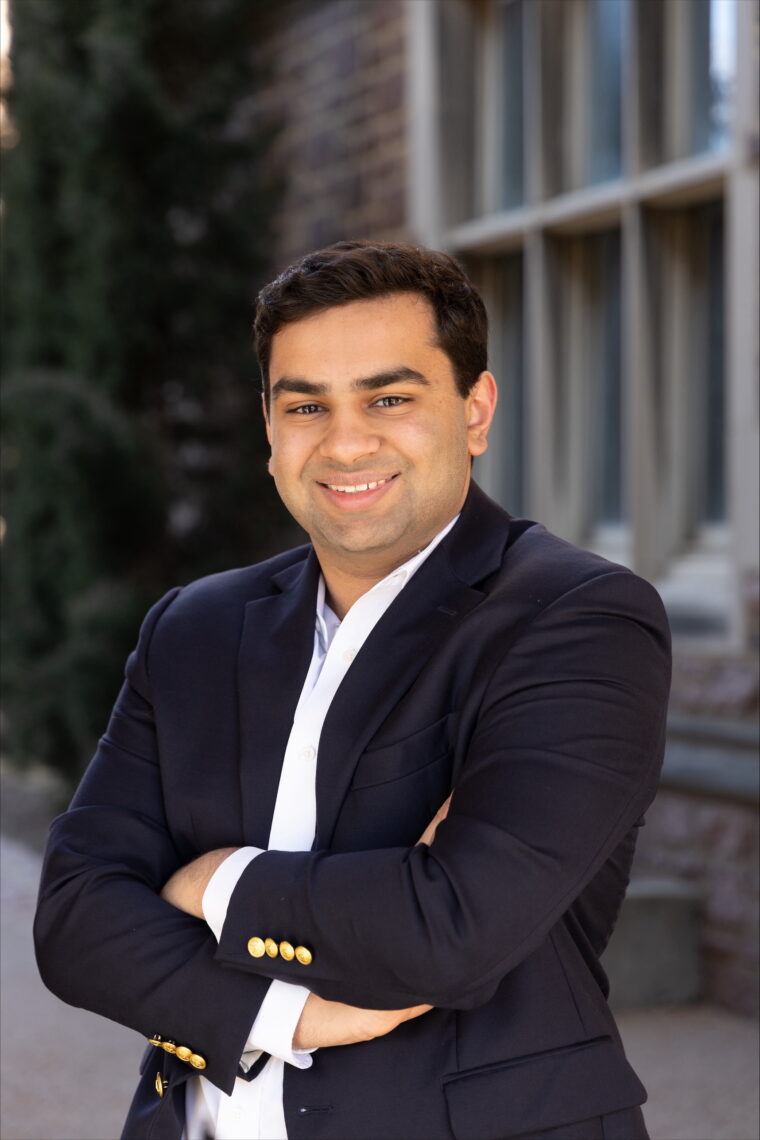
Varun Vadhera is running for vice president of programming. Vadhera has endorsements from Jewish on Campus and Ashoka. Headshot courtesy of Vadhera.
Varun Vadhera — Class of 2027, he/him
SL: Why do you want to run for VP of Programming?
VV: I’ve been involved with SU for quite a bit now. I ran initially in Treasury as a freshman. So it’s been around two and a half, three years since I joined and then being in Treasury allowed me to witness kind of the allocation grants at SU, how different events are funded. And I kind of want to transition more into the programming kind of things. I oversee the allocations process for SU, but moving over to program[ming] would allow me to actually put on events that people would attend, rather than just funding them. And also my other role on campus is being a president of Ashoka, which is the South Asian student association. And, through them I put on countless events, programs for countless events on campus, including, like the Diwali show, Holi Bazaar, fireworks, all that kind of stuff. And it’s really, really been a fun experience. I kind of want to do that for the broader WashU community, instead of just the South Asian community.
SL: What role do you think the VP of programming should play in SU?
VV: So the president of programming, [has] kind of changed over the past couple of years. So, just for reference, the Vice President of programming two years ago used to also be the president of SPB. They changed that two years ago, so now the vice president programming mainly serves as an advisor to SPB. But also like a liaison between SPB and Student Union. So SPB is like an executive entity that kind of precedes the process. So to be a liaison to them, and hosting events that more and more students would attend, leveraging both SPB resources and SU resources is something that I kind of want to do. Another responsibility I see is helping all the different groups on campus program. So I have a lot of experience programming myself like I have a lot of relationships with office on campus or vendors off campus, including CSC and Weinhardt. For reference, actually, before I was Speaker of the Treasury, my previous role in Student Union was the activities community chair. So along with the category changes in New Group recognition, I was responsible for hosting two activities fairs. So I held two activities fairs, one last year and one last fall. So working with all the different campus partners to get that going was something that I learned a lot about, and something that I want to work with the other 400 student groups on campus to like, share that knowledge with them and help them to the best of their ability. On top of that, something that’s in the works right now is, speaking of the activities fairs, traditionally, in the past, activity fairs is the responsibility of the community chair. We’re gonna migrate the responsibility under the vice president of programming. So the VPP would be responsible for hosting those activities fairs. And it’s something that I’ve done two times in the past, and something I’m looking forward to two times in the future.
SL: Are there any other priorities you want to focus on in this role?
VV: There’s a couple of things. Something that Beni [Bisimwa] did this year really well is hosting some tailgates. And I think it was really successful. It was really great. I think over a 1000 people attended, which is the most packed I’ve ever seen in a WashU sports game, and my years on this campus. So it was really, really fun to watch that. So I would plan to host more tailgates, get more people, you know, involved in the sports culture at WashU. Another thing I want to do is try to work with some students to create traditions. You know, traditions need to happen naturally. It can’t be like a forced thing. Student Union can work with Student Affairs to get traditions to happen. I know a bunch of other schools do, like a midnight scream before finals or something like that. I think that would be really, really interesting to have on campus.
SL: Why do you think traditions are important to have?
VV: We have WILD and we have stuff like that. But all these other schools have really, really fun things that they have, like, that final scream, or they have runs on campus, or stuff like that. I’m from Delaware, by the way, so a bunch of my friends go to the University of Delaware, and they have a thing called, it’s blanking on me, but it’s similar to Dance Marathon, where they basically dance all night to fundraise money for cancer. So something like that would be really, really interesting to have on campus. And to answer your question, it’s a memorable experience that people kind of remember for the rest of their lives, and just makes the campus more exciting.
SL: Anything else?
VV: I mean just like the experiences in the past, I’m currently serving as president of Ashoka, previously served as the Diwali show director for Ashoka. In terms of experience, I’m currently the Speaker of the Treasury, so managing all of the allocation process for SU. Before that, I served as the Activities Committee chair, so I organized the activities fairs and the new group recognition process, and also managed SU storage. And then before that, I served as a Treasury rep and external communications chair SU at Treasury.
Executive Vice President candidate
 Catherine Chung
 Ella McCauley is running for executive vice president. McCauley has endorsements from Jewish on Campus and Ashoka. Headshot courtesy of McCauley.
Ella McCauley — Class of 2028, she/her
SL: Why do you want to run for this position?
EM: I want to run for executive vice president because I did join Senate in October of 2024, so this is my fourth semester, and I’m on a leadership position. I’ve just grown to really love SU and see its impact, and I’ve also just kind of really been able to understand how SU works, and I definitely want to be able to grow in a leadership role like executive vice president. I am specifically drawn to Executive Vice President (EVP) because I know they are the internal affairs officer, and I would love to be able to help grow SU internally and make us more effective in reaching the student body. And I also am running on the exec board slate SU4U, and we are advocating for accessibility and transparency within SU to be able to empower the student body to become more connected with SU. So I’m just really excited about the ability to help SU grow internally, and also just have more connection with the student body, and just, yeah, so awesome.
SL: I know you touched on this briefly, but I’ll give you the space to elaborate more on this. What role do you think Executive Vice President should play in SU?
EM: I think Executive Vice President, of course, serves for the president if they are absent for anything, but beyond that, they are meant to serve as the Constitution says as official internal officer. And I guess to me, that looks like attending Senate and Treasury meetings and being able to help with Senate and Treasury in any way that I can. So one thing that I’ve kind of noticed in my experience in Senate is that sometimes the newer people just don’t get on board as quickly. And because of that, we’re not as efficient as we could be. So I, as EVP, would want to have semesterly trainings for senators and treasurers that way, right when they’re elected and beginning to start their roles, they have the resources and the training they need to be able to confidently execute their role. I definitely see EVP as the person who is meant to help uplift SU internally and make sure everyone has the resources that they need to succeed. And kind of looking beyond just Senate and Treasury, I would want to meet with the school councils to ensure that I can help them with their programming in any way that they need to and just figure out how SU can coordinate with the school councils more […] to make their programming just more successful than it already is. Another role that EVP has is retention and recruitment within SU, and I definitely think that the student body’s engagement with SU has been a little lower recently, as we’ve seen in recent elections. There just aren’t as many people running in elections, or not as many people voting in elections so when it comes to like recruitment and retention, I would want to make sure that we are advertising elections enough. [That means] being resources so people can ask us questions about any roles or kind of just be more aware of the ways that they can participate in SU and be aware of what those roles entail, so they can feel comfortable joining SU and running for those positions, and feel supported in that. And then also, along with that, just making sure that I can help the speakers of Senate and Treasury in any way with advertising, appointments, or anything like that. They’ve been really great with that, but just ensuring that we’re on top of kind of like advertising elections, and also making sure that the student body is aware of how they can participate in SU and that we’re supporting them in any way to just increase recruitment for us.
SL: I guess you hit on my next question of how you are planning on improving retention and engagement, retention and recruitment, which is great. I know you touched a little bit on what you expect EVP to be. Are there any particular changes that you’re that you would take on as EVP beyond what you’ve already elaborated on?
EM: I guess one thing that I would want to do as EVP that’s mainly just internally beyond training, is create a unified transition document for leadership roles within Senate and Treasury so those chair positions and also just exec boards, because I think that if we have more unified transition documents, kind of outlining the work that’s already been done, it would, one, just help make sure that the new officers coming in feel equipped with the resources that they need to succeed in those roles, but also ensure that there’s just more continuity and SU projects. Because I know that sometimes, if a committee chair graduates, or just stops being involved in SU, the projects that they were working on can fall off if nobody takes them on. So, just ensuring that we have transition documents and transition meetings, so there’s continuity in SU projects. I think that that would also kind of help with our relationship with the student body to show that we’re following through with what we’re doing.
SL: I know you’ve mentioned retention. Is there anything in particular that you’re planning on doing to try to maintain a sizable upperclassmen population in SU?
EM: What’s hard is that SU just gets really busy, and upperclassmen get busy with other things. But I guess one thing that I would definitely want to work on is just fostering connections within SU, like looking at Senate and Treasury specifically. I would see those semesterly trainings as a way to connect the senators and treasurers to the executive board and give them the resources that they need. But I would also see it as a way for senators and treasurers to be able to connect across bodies more. And I think being able to have that connection and those resources would be able to help with retention rates and just making sure that everyone has the resources that they need to succeed, and also just making sure that people are feeling connected to each other within SU.
SL: Transitioning to another aspect of EVP, that being residing over the election of speakers of the Treasury and the Senate. What will you keep in mind when holding those elections?
EM: VPE will do Senate because they’re the parliamentarian, and the VPF will do treasury, since they’re also the parliamentarian. But if either of them weren’t able to come, especially since I’m in Senate right now, I would definitely make sure that I am being as neutral as possible, because I already have professional and personal relationships with them, so ensuring that I am keeping it neutral and just following the procedures that are laid out in the Constitution and in the statutes. Beyond that, also just making sure that for anyone new to internals, the newer senators and the newer treasurers, [know] exactly how this works, because I know that that’s the very first meeting they come to so it can be daunting. So, making sure that they know exactly what’s going on, especially when it comes to how it works in parli[mentary] pro[ceedure] and stuff like that, [and] making sure that they understand the silent ballot votes that we do and those internal processes. And also just making sure that whoever is running knows that I am being neutral and will run it in an equitable way for all of the candidates.
SL: I know you already mentioned that you’re the DEI chair for Senate. I just want to give you a question to elaborate on what experiences you have had in the past that you feel qualify you for the role of EVP?
EM: I think just having that experience in Senate has definitely given me kind of the knowledge of Senate processes. But I also think being DEI committee chair has equipped me with the ability to train younger senators this semester. The DEI committee was all new senators this semester, so I’ve kind of had the opportunity to help them better understand resolutions and reports, and to be a resource for them to answer any questions or anything that they need. I definitely think that the mentorship part in the internal affairs officer, as I’ve definitely had experience this semester getting to work with some of the senators, which has been a really great experience. Even though the EVP is definitely a more internally facing role as DEI committee chair this semester, I’ve been working on space equity efforts in the Women’s Building, and for that, I’ve conducted outreach to all of the affinity groups in the women’s building, and been able to grow connections and understand what challenges the affinity groups on campus are facing. I think being able to bring in that perspective of what’s happening around campus will help me be able to grow SU internally and help SU understand kind of how the student body needs to be supported. Additionally, before serving as DEI committee chair, I was the internal communications Chair of Senate for two semesters, which taught me a lot about organization. I kept all the minutes and all the attendance. And some of those more administrative tasks are also assigned to the EVP, so I’ll be able to take those on relatively easily.
I’ve been in Senate for my fourth semester now. I have gone through general budget twice now, so that’s kind of helped me learn more about treasury, being in the form groups, and being able to be part of that budget process. And though I still have a lot more to learn about Treasury and some of the other bodies within SU, I have been able to have experience, kind of seeing what the other groups do that I haven’t been involved in.
Vice President of Finance candidate

Cora Johnson is running for vice president of finance. Johnson has endorsements from Jewish on Campus and Ashoka. Headshot courtesy of Johnson.
Cora Johnson — Class of 2027, she/her
SL: Would you like to introduce yourself?
CJ: As like a general overview, you already know, my name is Cora. I’m running for the position of Vice President of Finance. I’m a junior in Biomedical Engineering. I’m originally from Montgomery City, Missouri, which is like a small farm town, like an hour and a half west of St. Louis. I’ve spent, gosh, I don’t know how many semesters on Treasury, a number of them, I could, I could count it up, but I’m currently the Activities Committee chair. Feel free to just call me Cora. I use she/her pronouns.
SL: What made you want to run for this position?
CJ: Absolutely. So over my time in Treasury, both as just a representative and then also as like, holding many like, internal positions, I’ve come to work really closely with Meris Damjanović, who is our current Vice President of Finance, and watch kind of how he performs in this role. So during my time in Treasury, I’ve worked a lot with one on one groups, as well as, like, with overarching groups and our business coordinators. And I see the importance of Meris his current job, or the VPS job, that you really need someone in that role who is detail oriented, who can communicate with student groups, but who can also work really efficiently and effectively with our professional staff, because it is important that we’re kind of keeping everyone informed and in the loop. And I just have the background experience, both with Treasury representative, but also with money and other things outside of college and SU then I think that I could fill Meris’s shoes really well.
SL: In the broader Student Union environment, what role do you think the Vice President of Finance should play?
CJ: Oh, yeah, so on a more like technical role, the VPF reviews under $1,000 appeals rights and sets the financial policies, which are then approved by Treasury. [They] communicate directly with the business coordinators, and it’s basically their job to oversee Treasury as the parliamentarian. So they’re kind of like an advisor to Treasury, but also an advisor to everyone, as far as business coordinators go, and that’s like the technical sense of the role. The broader sense is that it’s your job to … oversee treasury and student group treasurers to make sure that funding is being spent and allocated equitably overall. It’s your job to advocate for the students and make sure that they are able to get the funding that they need to program to the best of their ability.
SL: What are your top three priorities going into the role?
CJ: Oh, yeah, I think the first one will always be fiscal responsibility. It’s really, important that we continue to equitably allocate, but we also continue to use our overall funding to the best of our ability. We don’t want to subsidize just because we can. We want to fund groups as much as we possibly can, while making sure that our budget lasts the entirety of our year. And that’s been kind of a problem in the past, of just making sure that we’re funding in the same rate throughout the entire year, so that when we get all the way, you know, to the end of April, we still have a little bit left for all of those late April programming events as well. So I think fiscal responsibility is my number one priority.
Number two would be communication with treasurers, especially student group treasurers, especially new student group treasurers. There’s a really big learning curve that happens when you step into that role. And we have the resources out there to train yourself. I mean, we have the Trello, we have videos, we have things that, like these student group treasurers can use, but it’s still really intimidating, so coming in with maybe scheduled emails or encouraging them to set up a one-on-one meeting with me, so that they feel comfortable, firstly reaching out to me when they need help, but also being able to submit appeals on their own or submit budgets on their own, and knowing who to contact and how to communicate. So really communicating with treasurers is my second priority.
And then my third one would probably be promotion of both on campus and off campus events. And this is kind of goes hand-in-hand with the Vice President of engagement role, but Treasury as a body really should be prioritizing funding for events that impact a large number of students, especially on campus events. We spend a lot of money on travel, which is great because these students are traveling everywhere, and they’re doing phenomenal missions. But we really do need to be focusing a lot on these on campus events that have large impacts. And this isn’t just speakers, this is also our cultural shows, like Diwali, like LNYF, like BA. All of these groups really deserve increased promotion of their events, because typically, we are funding to almost the max of what we can for them, but helping them to really reach out and push like their mission, so that the student body knows what’s happening is really important.
SL: In a constrained fiscal environment, how would you decide which groups receive more or less funding?
CJ: Oh, absolutely. So I think, I think the blanket answer is that our goal is that if we have to cut, cut or subsidize, every group would be subsidized from equally. Our goal is never to take more money away from pickleball and give it to Society of Women Engineers, that’s never our thought process. So if we are in a constrained fiscal environment, if our budget was cut in half, I would imagine that all budgets across all student groups would also be cut in half. While we want to prioritize events that have larger impacts, we will fund equitably for on-campus and off-campus events. The same student groups are trying their best to perform their mission, and that’s a lot of what we look at when we’re reviewing appeals is these mission-critical expenses. So your mission-critical expenses are very different across different student groups. It’s not our job to determine whether it falls into your mission. It’s our job to fund equitably. So I would imagine if there was a really large financial constraint that all budgets would be cut by about the same amount.
And I can talk a little more about like operating in a constrained fiscal environment, if you’d like.
SL: Yes, of course.
CJ: So WashU has one of the most funded Student Union or student groups across all of universities in the United States. I think we are second overall with the amount of funding that we’re given. And I can find that statistic somewhere. We receive an asinine amount of money in comparison to a lot of other schools, and I think that is something to really take into consideration when we have these groups that are growing rapidly, their needs are growing rapidly. But sometimes we have to consider that we don’t have an unlimited pool of money, and while it would be awesome if we did, because I would love to give like I’m a member of the Society of Women Engineers. I would love to give them $20,000 to go to conferences and to have socials and to have all of these amazing like inclusion and bonding events. That’s just not something we can physically do for every group.
So I think going through and really determining with groups how we can keep having this programming, but at a slightly lower cost, is really important. And we do have groups that do a phenomenal job of fundraising, of sourcing outside funding, of really trying to eliminate, like unnecessary costs. So you know, if you can get lemonade for $10 here, but you can get it for $5 here, and I think that’s a really simplistic example, of course, but I think encouraging groups to also be fiscally responsible when coming to Treasury is a big thing, but for a new student group treasurer, that can be really difficult. So it’s my job to aid in that process, because we want to give you your lemonade. We just need to find the best way that we can do it.
SL: What are your goals in creating SU’s general budget?
CJ: Well, that’s actually a great question. The fiscal budget for this past year passed both treasury and Senate in, I think it was like 14 minutes. It was extremely fast. So we have many entities and other things that go into our general budget. You can find all of that information on Trello, but I mean, our general budget is genuinely ginormous. Our past VPF put over 40 hours of work himself into the budget, so it’s not a small task.
But throughout all of this, we also have teams of senators and treasurers that are reviewing each and every budget. So it’s not solely a VPF decision ever. There is always oversight from our other branches, and our goal as we’re going through these budgets is to kind of work in the same way that Treasury does, but with these outside influences. So that’s why we have senators there, that’s why we have advisors there, that’s why we have student group treasurers there. Is that we’re hearing all the voices and perspectives.
I don’t have any overarching goals for full year ’27 or fiscal year ’27 budget, just because, I want to streamline our process for groups that will be requesting the similar amounts of money, similar things. I want to continue bringing in student group voices. It’s one of the biggest things I want to do. I still want them to be there to be there to advocate for themselves, to explain their costs. Because sometimes we do have questions about why we do or don’t need this thing, or maybe they submit a budget line item that’s a restricted purchase, and we have to explain that.
So I think really transparency throughout the process is what I really want to streamline, and that’s things like holding office hours, being there for student group treasures, answering emails so that they are fully informed about what’s happening with the budget. The budget, in and of itself, this year was fairly simplistic in years past, just because Meris did a lot of work ahead of time to ensure that transparency and communication between treasurers.
SL: When would you deem it appropriate to use the carry forward?
CJ: Oh, absolutely. So the carry forward is ever changing. You never know what the amount will be year-to-year, because at the end of the year, the carry forward is made from all of the funds that were unspent in the previous year. So, for example, right now, I think we have about a million dollars unspent in student group accounts, and that is not what our carry forward would be. We obviously still have a full month and a half of spending. We have, you know, Carnival is still spending for their cultural show, which is a large amount. And then we have lots of traveling clubs, spending for nationals. But at the end of the year, any of these funds that are unspent get pulled into our carry forward. So it changes year to year. You never know how much is in. It could be anywhere from $10,000 to $800,000, would be my rough guess.
When I deem it to be appropriate to pull from the carry forward is when Treasury would be in danger, [or] maybe at risk of running a negative account balance in a session.
And this is very rare. At no point have we really been like, ‘Oh my gosh, we’re going to go into the red during a session’. But sometimes you get to the end of the year where you have events that haven’t been spent on or, you know, you can’t pull retrievals, things like that, that’s when I would deem it to be appropriate to pull from the carry forward, because we don’t want a large carry forward. We don’t want to have millions of dollars rolling into every year. Our goal is to spend our entire budget. So if in our last two sessions, we have to pull $50,000 from the carry forward, that is absolutely what I would be willing to do. So I really think it’s most likely late in the semester when we’re waiting on groups to spend, when we’re really needing that last little bit to get us to the finish line, because our goal is to spend our entire budget and for student groups to then utilize their entire budget as well.
SL: Anything else?
CJ: So I’m part of the SU4U slate. You can find us on Instagram, and this is comprised of me and four of my peers who are running for all five of the executive candidate or the executive seats.
Our entire platform goal is SU for you. We really want to be improving accessibility to student groups, working on transparency within them, and then also empowering these groups to program to the absolute best of their ability.
And I mean, within this, we have many kind of subsets of goals, but really that’s accessibility. Accessibility, transparency, and empowerment are our primary goals. And all four of my candidates have shown that they’re really committed to these throughout our time in SU.
But really that is our overarching goal. We want student groups to feel empowered to program. And sometimes we have groups come to us and they’re not sure what the next best step is or how to hold this event. And that’s really our job is. We’re here to support student groups in whatever way we can. And if that means that I, as the Vice President of Finance, need to sit down and help you book a classroom, I will absolutely do that. I mean, I am here for the needs of the students, and that’s really our goal, is to make sure that every student group is empowered and has the resources that they need to program to the best of their ability.
Additional reporting by Aliza Lubitz and Victor Huang.
Editors Note: This story was updated at 1:24 p.m. on March 25 to include the endorsement of Matthew Broome by College Democrats.
Stay in Touch!
Get the latest and top news from StudentLife delivered to your inbox