News
Martin talks University finances and humanities report in annual SU address
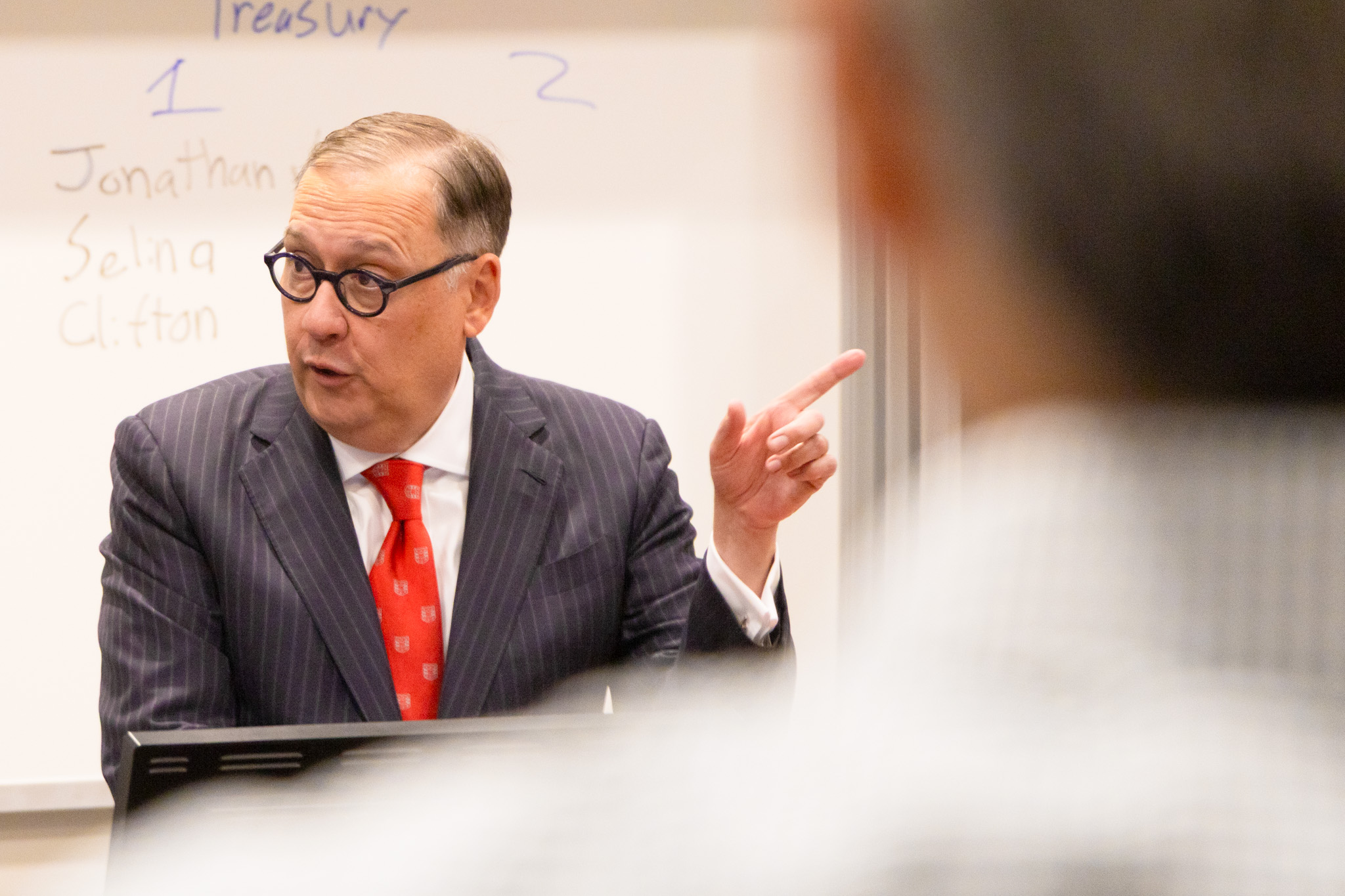
Chancellor Andrew D. Martin spoke about WashU’s political engagement in Washington, D.C., threats to federal research funding, and rationales behind larger expenditures by the University in a joint Student Union session on Sept. 29. This annual event allows SU representatives to speak directly with Martin about issues pertinent to the student body.
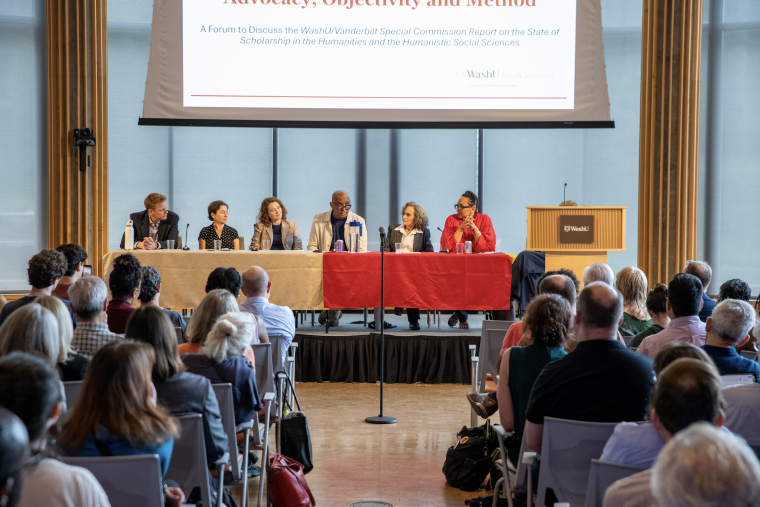
During the meeting, Martin confirmed he was unable to attend the Center for the Humanities forum on Sept. 16 due to a visit from U.S. Secretary of Education Linda McMahon. He reiterated the importance of his conversation with McMahon on WashU’s place in rural health within WashU’s School of Public Health.
The Report on the State of Scholarship in the Humanities sparked intense debate on campus and within higher education as a whole. The report claims that political ideologies have negatively affected research in the humanistic fields. In response to a range of criticism about the report, Martin clarified the report was largely a “theoretical exercise.”
“I take the report for what it is. It’s the views of the committee, some of which I agree with, and some of which I do not,” Martin said.
Martin also spoke about the recent “National Call to Action” letter from the U.S. Department of Education, which asked higher education institutions to issue a public response to the letter by the end of the calendar year. Martin stated the University’s intentions to reply and to form a committee tasked with determining how best to respond.
Martin highlighted WashU’s continued engagement in Washington, D.C., as the University has had an increasingly greater presence there, especially since the beginning of President Donald Trump’s second term.
“We have increased our presence and capacity in Washington to ensure that WashU is informed, engaged, and represented as decisions affecting our mission are being made. We now have three full-time employees in Washington, D.C.,” Martin said.
Some of WashU’s work in D.C. includes advocating for federal research funding. According to Martin, a National Institutes of Health (NIH) funding cut could cost the University $200 to $250 million each year. Martin acknowledged that the University has slowed capital expenditures, deciding to prioritize “the academic mission” and “overall operating performance.”
Despite fiscal concerns, the University made larger expenditures, such as the purchase of the Fontbonne campus in 2024 and the University of Health Sciences and Pharmacy in February. Martin defended those purchases as “generational opportunities” that would bring new residential and recreational spaces to the University, although the specifics are still up in the air.
“When an opportunity falls in our lap, we’re not going to be so conservative as not to take it,” Martin said.
Following a question on relationship and sexual violence (RSV) prevention in the wake of criticism of Cornell’s RSV policies, Martin reiterated WashU’s compliance with Title IX, as well as the numerous offices and resources available for those who have experienced RSV. He then handed the question off to Vice Chancellor for Student Success Anna “Dr. G” Gonzalez, who expressed the importance of the Relationship and Sexual Violence Prevention Center and the student community in preventing sexual violence.
“What are you all doing to help educate your peers to make sure that you are taking care of one another, [being] active bystanders, and also supporting those who have been victimized, but also preventing this from happening as well?” Gonzalez asked.
In the meeting, Martin highlighted the diversity of the Class of 2030: Students came from 48 U.S. states and 29 countries. He also emphasized financial diversity among first-year students: 19% came from moderate-income families (an increase from previous years), 45% are receiving need-based financial aid, and the average financial aid package is about $78k a year.
Additionally, Martin discussed WashU’s latest ranking of #16 in the recently released U.S. News & World Report ranking of national universities.
“These rankings are salient for some prospective students and their families, so I guess that this is a good thing,” Martin said.
Martin expressed optimism about the state of affairs at the University.
“It’s been a really terrific start to the semester from my perspective.”
Ethan Yang contributed reporting to this article.
Stay in Touch!
Get the latest and top news from StudentLife delivered to your inbox