Scene
A seat at the Shabbat table: Shabbat 1000 unites WashU
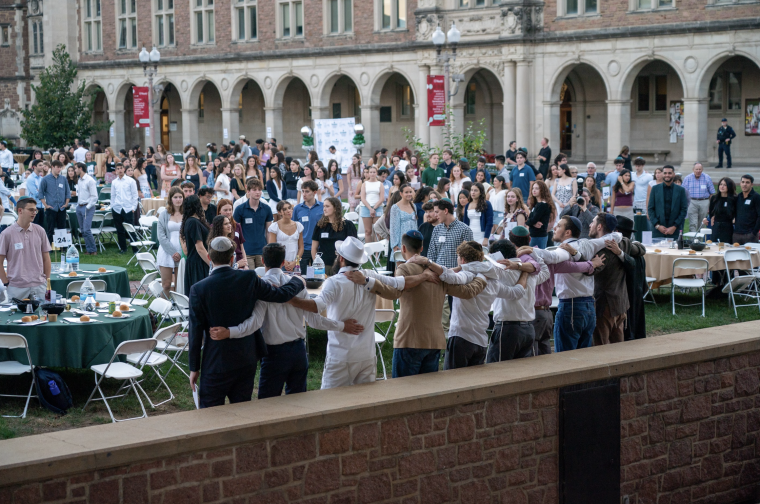
Around 800 students, faculty and community members gathered in Brookings Quadrangle this past Friday for WashU Chabad’s first ever Shabbat 1000. From a Poppi-sponsored drink station to local St. Louis kosher catering and inspiring speeches from Chancellor Andrew D. Martin and Rabbi Hershey Novack, the largest shabbat in WashU history brought people together for a night of connection and celebration of WashU’s vibrant Jewish community.
Shabbat is one of the most important Jewish holidays, celebrated every week beginning at sunset on Friday and ending at sundown on Saturday. It is a day of rest and spiritual renewal when Jewish people put down work, technology, and the stress of everyday life to connect with God and each other.
The first annual Shabbat 1000 was organized by the WashU Chabad team and student leadership who hoped to create a large event that honored Jewish pride and identity similar to other campus events that pay tribute to diverse cultures and their traditions.
“We hoped to offer the broader WashU community a window into Jewish tradition. Just as Black Anthology, Carnaval, Diwali, LNYF and other celebrations bring the university together while highlighting aspects of their particular cultures, Shabbat 1000 was our chance to share something from our culture and tradition with students from every faith and background,” WashU Chabad staff wrote in an email to the WashU community on Oct. 2, 2026.
The planning began in February 2026 when students first appealed to SU for funding, started gathering a list of vendors, and reaching out to sponsors. From there, table groups were solidified, speakers were secured, and logistics were finalized. Chabad Outreach and Engagement Chair Mushka Cohen oversaw the event and helped guide students. Chabad Board President junior Jonathan Lewin and Vice President sophomore Aviva Kleinhaus were the key student organizers along with former Chabad Vice President, Hannah Bess, a junior.
“One of my favorite parts was watching our student leadership get very involved throughout the planning process. It came together so beautifully months and months and months down the line,” Cohen said. “It was really powerful for them to experience, and as a staff member to be able to facilitate and work with them on that was also really powerful.”
Shabbat 1000 kicked off with the Matzah Ball mixer. Filled with tables promoting different organizations such as Taglit-Birthright Israel, WashU Kulanu, the Jewish Federation of St. Louis, Poppi, and local restaurants such as Bagels and Bliss, students and community members had the opportunity to socialize against the backdrop of a bustling atmosphere.
Other tables at the mixer focused on raising awareness for Jewish organizations such as Sharsheret, a nonprofit based in America that supports individuals battling breast cancer.
“Sharsheret was my favorite table at the mixer. I [did] a lot [of work] with Sharsheret during my high school years, and now it’s awesome to continue that work here on campus,” Kleinhaus said.
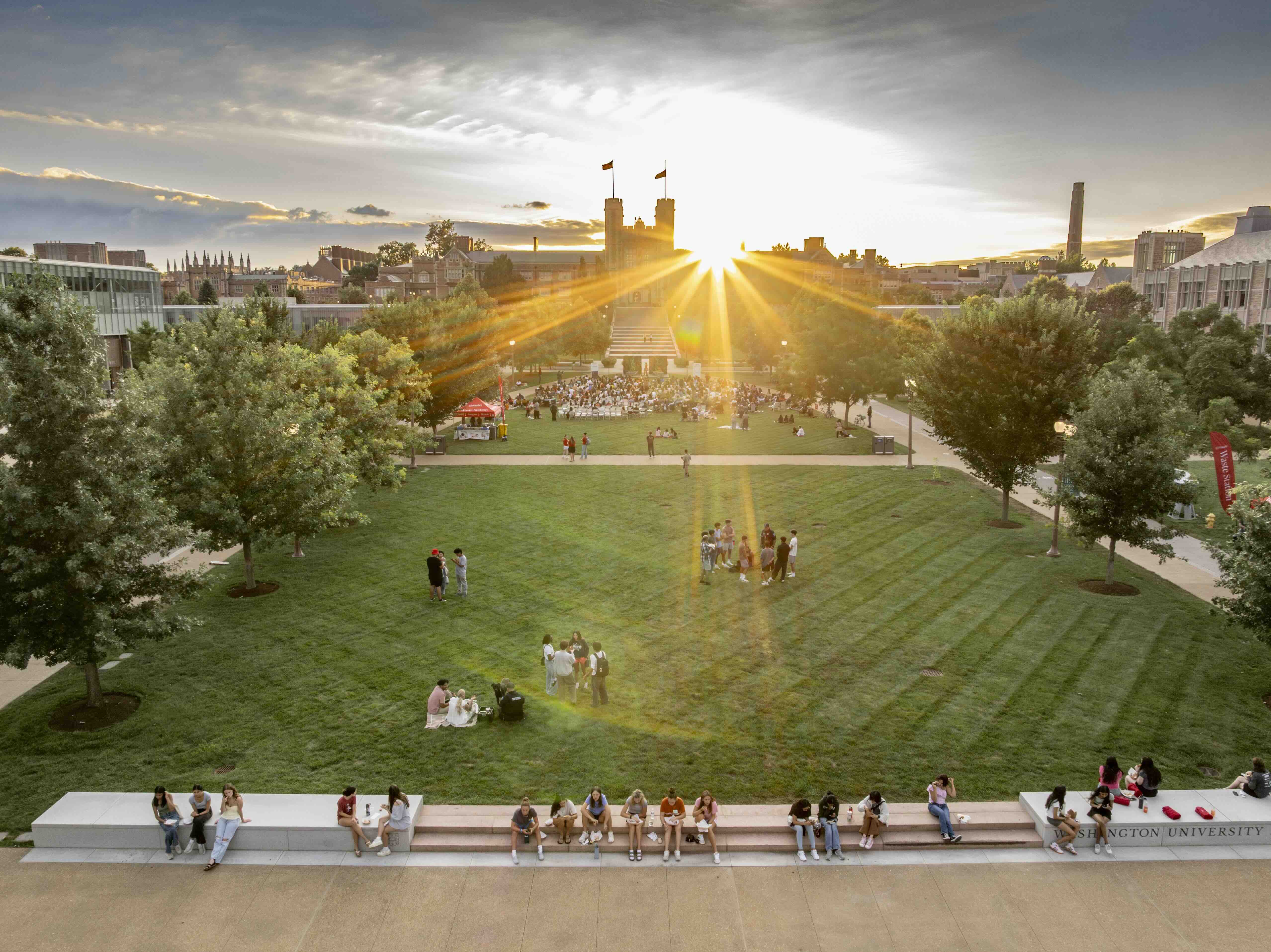
As the sun set on Brookings Hall and the mixer came to a close, individuals found their seats as various members of the Jewish community led the crowd in song and prayer. Chancellor Martin and other Chabad students and staff members addressed the audience with moving speeches honoring WashU’s commitment to fostering a safe environment for Jewish students to thrive in. Tik Tok-famous American Jewish rapper, Ari Lesser, took to the stage infusing the evening with spirit and pride. Dinner and dessert from local kosher restaurants followed shortly after.
“One thing that we really took into account was to only use local vendors. Catering a kosher event is really complicated and tough, but still we were really committed to local resources. The three places we used were Nates Catering, and this was the largest event they had done, Bagels and Bliss for the challah, and a local kosher bakery,” Cohen said.
What set Shabbat 1000 apart was the strong sense of unity cultivated through students groups uniting and community members coming together. Through unique dialogue and creating cross cultural connections, individuals had the opportunity to learn about Judaism and the shared sense of connection that unites us all.
“I really liked how Shabbat brought a really wide range of the WashU community together. There were not just Jewish students that go to Chabad every week, but also people from other communities and non-Jews who were able to experience Jewish culture and the Jewish tradition for the first time,” Lewin said.
But this is not just distinctive to Shabbat 1000. Since its founding, WashU Chabad has served as an inclusive and inviting space for students of diverse identities.
“I think Chabad has an awesome message of just saying everyone’s welcome no matter what kind of background you have. Making Shabbat 1000 a tradition would be awesome,” Kleinhaus said.
Through an evening full of warmth, spirit and togetherness, Shabbat 1000 confidently made its mark as a WashU tradition in the making.
Stay in Touch!
Get the latest and top news from StudentLife delivered to your inbox