Scene
Diwali Fireworks: The unifying light of South Asia’s biggest holiday
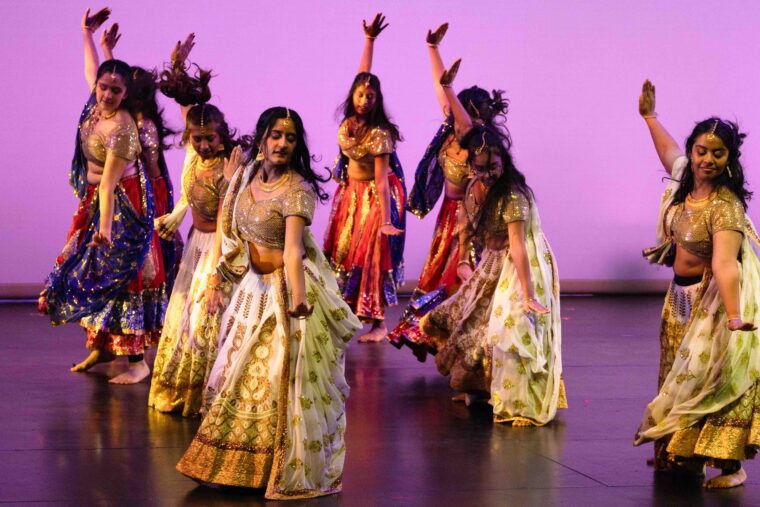
Diwali, one of the biggest holidays in South Asia, took place from Oct. 18-22, with people around the globe celebrating the festival of lights. WashU’s Asian American Association (AAA) and Ashoka, WashU’s South Asian Student Association, are bringing the festivities to campus on Saturday, Oct. 25; the two groups are teaming up to host the annual fireworks show outside of the Danforth University Center (DUC).
Months of tireless effort from the two clubs’ executive boards aim to make this year’s event bigger than ever.
“I think that’s something we’re really excited for because when we work together, the scale of events is just bigger,” junior Rishi Sattaluri, one of AAA’s co-presidents, said. “We just have more food and more activities … I’m really excited for that collaboration to happen again.”
In its religious context, Diwali is a predominantly Hindu holiday commemorating good prevailing over evil, or of light over darkness, hence the symbolism of light. The holiday is also celebrated by several other religious groups. According to Sattaluri, Diwali is “kind of like a festival of new beginnings.” Junior Shreya Srivastava, Sattaluri’s fellow AAA co-president, added that Diwali “could be considered our biggest festival in our culture.”
AAA and Ashoka seek to bring Diwali’s significance to WashU, providing a welcoming and heartwarming space for all students — regardless of background — to both celebrate and learn about the holiday.
“More than the religious aspect, I think Ashoka really focuses on bringing together the cultural aspects,” senior Ankitha Vontela, one of Ashoka’s co-presidents, said.
“Our goal with this event is to … give [students] an opportunity to celebrate it again with their friends here,” Srivastava said. “Or if they just don’t even know anything about Diwali [and] have never been to a Diwali Festival, this is a great representation of what it’s like.”
Each event organizer brings a touch of their own traditions, which inspires their passion for planning the event.
“I remember during my first year, being able to kind of plan this event, I brought a lot of elements of how I used to celebrate it back home,” Srivastava said. “I try to replicate it as much as I can.”
“We actually haven’t really celebrated in India, at least since I was born,” she continued. “But we have our own tradition where my mom and I make rangoli, [where] you use different colored rice to make patterns, and they’re usually mandala patterns.”
Srivastava went on to discuss that her family keeps all of their lights on and puts out diyas, the small clay lamps traditionally used for Diwali, in their house.
“We go watch fireworks. And we also just spend the night eating a lot of food and playing card games,” she said.
Similarly, Sattaluri described how his family puts out lights around the inside and outside of their house. He recalled fondly how his mom decorates with a type of art analogous to rangoli.
“My mom does it every year. It’s with colored powder, [and] it’s called kolam,” he said. “It’s always nice to have it.”
Vontela recalled how massive the celebrations are in her hometown of Hyderabad, India.
“The evening of Diwali, you come out, and you see fireworks across the sky,” she said. “And even if it’s not fireworks, you see every house lit up with lights.”
She also echoed similar memories of spending time with family and eating food together to celebrate.
Senior Shruthi Madhugiri, Vontela’s fellow Ashoka co-president, described her memories of Diwali while growing up in the United States.
“I would collect little lamps and stuff from around our house and light them [and] leave them on the staircase,” she said. “I’m a classical singer, so we would always just randomly sing different songs and always have like family over for dinner.”
All four of the co-presidents expressed how Diwali celebrations at WashU created a strong sense of community that they missed since leaving home. Sattaluri specifically recalled coming to the event as a first-year and appreciating how WashU recreated the community of the holiday. He hopes to provide that same experience to those who come this year.
“I’m excited to be on the other end, planning and organizing. I’m seeing the event come together from the other side. And I think it’s going to be fulfilling and really cool to see people having fun at an event that I helped plan,” Sattaluri said.
The co-presidents also discussed how, despite differences in Diwali traditions, they hope to unify the community in celebration.
“South Asia is so wide, and all the states celebrate it in so many different ways … Although it might not be the same way you celebrate it, [Diwali Fireworks is] the shared space that people kind of miss when they come away from their home,” Vontela said.
At the show, expect tables with different activities and an abundance of lights in the Edison Courtyard. The activities include dandiya stick decorating, henna, diya painting, and an educational station, Srivastava shared. After getting stamps from the activity tables, visitors can enjoy free Indian food before the fireworks show begins. “The food’s going to be great,” Madhugiri added with a laugh.
A new addition this year is a live performance.
“It’s three or four undergraduate students. They have a band … It’s live Bollywood music, all instrumental,” Madhugiri said.
Vontela is looking forward to the event this weekend, as she has each fall in years past.
“I think it’s important to be so loud and proud about being South Asian … and I think Diwali is just the best way to show that and show our culture,” she said.
This year’s Diwali Fireworks celebration will be on Saturday, Oct. 25, starting at 6:30 p.m. in the Edison Courtyard, outside of the DUC. The fireworks will go off at about 8:15 p.m. The festivities will continue on Nov. 7 and 8 with Ashoka’s annual Diwali cultural showcase.
Stay in Touch!
Get the latest and top news from StudentLife delivered to your inbox