Scene
Bridging science and care: WashU advances psychedelic-assisted therapy
Anna Dorsey | Illustration Editor
As evidence grows that psychedelic-assisted therapies could transform treatments for psychological disorders such as depression and PTSD, the new WashU Center for Holistic Interdisciplinary Research in Psychedelics (CHIRP) is bringing together scientists, clinicians, and social workers to study not just how these potent medicines affect the brain, but also how they might be delivered safely and equitably.
Launched in 2024, CHIRP is currently led by a team of medical and social researchers, with co-directors Dr. Ginger E. Nicol, a professor of psychiatry at WashU Medicine; Dr. Leopoldo J. Cabassa, co-director of the Center for Mental Health Services Research at the Brown School; and Dr. Rebecca Lester, a professor of Anthropology and Women, Gender, and Sexuality Studies in the College of Arts & Sciences.
The Center is building infrastructure that supports research ranging from basic neuroscience to policy implementation. Its goal: to prepare for a future in which psychedelic-assisted therapy moves from the lab into everyday health care.
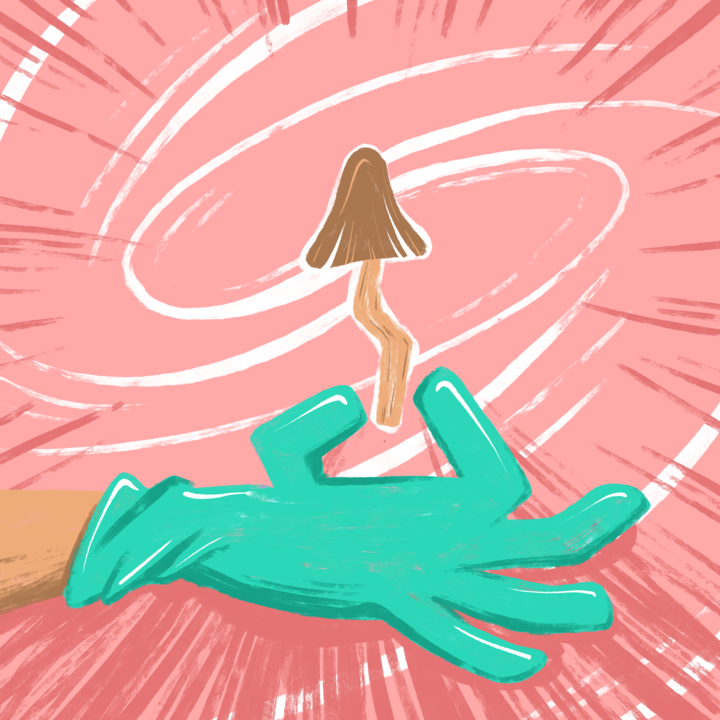
Interest in psychedelics has surged in recent years as clinical trials suggest they may provide rapid and lasting relief for people who do not respond to conventional treatments, particularly those targeting clinical depression. Unlike antidepressants that must be taken daily, psychedelic therapies typically involve one or two high-dose sessions of drugs like psilocybin, a naturally occurring hallucinogenic found in mushrooms, paired with several hours of psychotherapy.
Participants undergo screening and preparatory sessions before treatment, then spend six to eight hours in a controlled environment, often wearing eye shades and listening to music while monitored by two trained therapists. Afterward, they take part in structured meetings designed to translate the experience into lasting behavioral and psychological change. Early clinical studies have reported that a single high-dose psilocybin session, combined with therapeutic support, can significantly reduce symptoms for weeks or, per Nicol, even months.
At CHIRP, Nicol provides the clinical and neuroscientific perspective. She was a co-author of a 2024 Nature study that applied precision functional mapping — a brain imaging technique developed at WashU — to examine psilocybin’s effects on human patients.
The study found that psilocybin temporarily disrupted the brain’s default mode network, a system linked to self-reflective thought and memory. During the drug’s acute effects, participants’ brain activity patterns became more similar to each other and less like their own baseline scans, mirroring their reports of losing their usual sense of self.
Nicol’s team believes this temporary loosening of rigid self-focused patterns may help patients break free from cycles of rumination and negative thought that underlie disorders such as depression. While the altered state itself fades within hours, follow-up scans and clinical studies suggest that the experience can open a window for longer-term changes in mood and cognition. This, according to Nicol, is consistent with the concept of neuroplasticity, which posits that the brain adapts to new circumstances, experiences, and disruptions, literally changing its physical structure.
“Those changes create a window during which therapy can help people reshape thought patterns and sustain improvements, even after the drug itself has worn off.”
Studies have shown that while SSRIs (Selective Serotonin Reuptake Inhibitors), a class of antidepressant medications that includes Lexapro, Prozac, and Zoloft, do promote changes through neuroplasticity, Nicol says early signs indicate psychedelic treatments may effect them more rapidly.
While other animals also exhibit neuroplasticity, humans have an unusually great capacity for such change. This, however, diminishes with age, as longstanding behaviors grow more ingrained post-adolescence — thus, per Nicol, pairing psychedelics with behavioral treatment provides a crucial synergistic effect. Such an effect is also noted with other drugs, such as SSRIs.
WashU is also serving as a trial site for a Usona Institute-sponsored study testing psilocybin-assisted therapy for treatment-resistant depression. Nicol leads the trial and currently holds the university’s only license to work with Schedule I substances, which remain tightly regulated at the federal level.
Schedule I is the federal government’s strictest classification for controlled substances, applied to compounds considered to have a high potential for abuse and no accepted medical use. Conducting research on these substances requires special approval from both the Food and Drug Administration (FDA) and the Drug Enforcement Administration (DEA).
“There needs to be guidance, staff trained in safety, and an infrastructure that doesn’t typically exist in normal clinics,” Nicol said. “It takes time, resources, and careful setup to make this kind of research possible.”
This tension between preparation and regulatory constraints is part of a long history of psychedelic research. In the 1950s and 1960s, researchers studied LSD and psilocybin as potential therapies for alcoholism, depression, and anxiety. Their work largely ended after the Controlled Substances Act of 1970 classified psychedelics as Schedule I.
Research has slowly resumed over the past two decades, supported by advances in brain imaging and renewed public interest. Studies at Johns Hopkins, NYU, and other institutions have found that a single dose of psilocybin, combined with psychotherapy, can produce lasting reductions in depression and anxiety. In 2025, the U.S. Department of Veterans Affairs announced funding for psychedelic research, and the Department of Health and Human Services created a $22 million grant program to study psychedelic-assisted therapy for chronic pain in older adults.
While clinical trials are still ongoing, Cabassa is focusing on implementation and health equity. “We need to start thinking about how we’re going to prepare routine practice settings like community health centers and federally qualified health clinics for these treatments,” he said. “Who’s going to deliver these therapies, how will they be paid for, and how do we make sure they’re safe and accessible for underserved populations?”
Cabassa and his team are working to prepare the mental health workforce for potential FDA approval of these therapies. At the Brown School, faculty are building new academic pathways, including a Master of Social Work course titled Foundations of Psychedelic Healing in Clinical Social Work, which launched in fall 2025.
The course is part of the University Psychedelic Education Program (U-PEP), which supports faculty across the country in integrating psychedelic-assisted therapy content into curricula. Cabassa also co-leads the Psychedelic-Assisted Therapies Learning Community (PAT-LC) at the Brown School, which connects students and scholars with emerging research and training opportunities.
“If these treatments are to make a real impact, we need to integrate training into schools of social work and other clinical education programs now,” Cabassa said.
In addition, CHIRP has also organized several working groups to address research needs beyond clinical trials. One team is conducting a policy analysis of psychedelic legislation across the United States, tracking developments such as Oregon’s and Colorado’s legalization of psilocybin therapy. The aim is to compare how states regulate therapist training, clinic requirements, and patient access, and to anticipate which models may prove most sustainable.
Equity is central to these efforts. Cabassa pointed out that most participants in current industry-sponsored clinical trials are non-Hispanic white individuals, raising questions about whether results will apply broadly.
“If the people in the trials don’t represent the racial, ethnic, economic, and clinical diversity of the populations who will eventually be using these treatments, then we’re not going to know if they work as well, or in the same way, for everyone,” he said. “We may have to adjust our treatment models to accommodate people’s needs.”
These efforts include creating supportive infrastructure in community health centers and federally qualified clinics, where appointment times and session lengths often differ from the intensive dosing and integration schedules required by these therapies.
Cabassa also highlighted the importance of representation and regulation among the providers and research teams themselves. By training a diverse group of clinicians, facilitators, and regulators, the field will hopefully have a strong enough collective understanding of the diverse cultural, economic, and social contexts to deliver treatments equitably. “We need to find ways to get treatments and therapies to those that most need it and let them access it in a timely, affordable, and safe manner,” he said.
Safety, according to Cabassa, is paramount in ensuring CHIRP can achieve its goal of reducing disparities in who benefits from these therapies.
“We need safeguards and regulations in the process. We don’t want to repeat the mistakes of the past like the psychedelic backlash that happened in the late 1960s or more recently the opioid epidemic.”
Building an Academic Home
Within its first year, CHIRP convened more than 20 faculty members across WashU to identify research priorities. The Center now runs a monthly seminar series and an interdisciplinary journal club that draws faculty, graduate students, clinicians, alumni, and community members from St. Louis and beyond. Each session involves reading and discussing a recent study, focusing on both the scientific findings and their broader implications. Attendance averages 10-12 people, per Cabassa, and partners from the University of Missouri regularly join as well.
CHIRP also serves as a hub for interdepartmental collaboration. The Center has recently partnered with WashU’s Buder Center for American Indian Studies to ensure cultural knowledge informs both research design and workforce training, including the origins of practices like using music during therapeutic sessions.
Keeping such efforts going requires stable support. At present, CHIRP is funded through the University’s Transcend Initiative and several private foundations, but it has not yet secured NIH funding for psychedelic research.
Cabassa noted that this creates unique challenges for training a workforce around treatments that remain illegal outside of clinical trials. “It’s hard to get government funding to prepare for something that hasn’t yet been FDA approved,” he said, “but if we wait until that happens, we’ll already be behind.”
For Cabassa and colleagues, the challenge is twofold: establishing scientific evidence of safety and efficacy while also ensuring that the treatments can be delivered responsibly and equitably.
“These medicines have been used for thousands of years, particularly by indigenous populations in the Americas,” Cabassa said. “Our task is to do rigorous science, learn from communities, and figure out how to bring these treatments into practice in a way that benefits everyone and honors the traditions and wisdom of indigenous communities.”
Following the leads of both age-old practices and new-age psychological and neurological science is the path to a momentous leap forward in depression treatment. This, says Nicol, is how psychedelics would revolutionize the industry.
“Psychedelics induce rapid changes in the brain,” Nicol said. “But without careful guidance and therapy, those changes may not result in safe or lasting improvements. It’s the combination of medicine and structured support that allows people to truly benefit.”
Stay in Touch!
Get the latest and top news from StudentLife delivered to your inbox