Forum | Staff Editorials
Staff Editorial: This semester, let’s take a break for mental health.
Right now, the semester still feels fresh. We’re about three weeks in, so exam season and club commitments are not quite yet in full swing. We hope the start to this semester has been full of joyful reunions, new friendships, and opportunities to focus on life outside of your academic and extracurricular commitments.
If you’re returning to WashU, however, you know that students’ stress levels tend to increase in the coming weeks. As we approach the busy part of the semester, we’d like to send a reminder: everyone at WashU — from the administration to the student body — plays a part in cultivating a campus culture that encourages healthy and mindful living.
WashU, like many of its peer institutions, has historically struggled with student mental health. Beginning this semester, we must all reckon with how our school culture may contribute to mental health challenges.
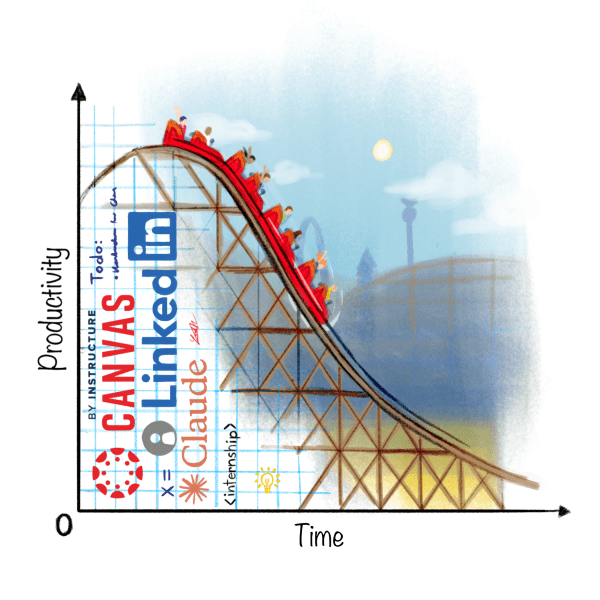
WashU prides itself on the collaborative nature of its campus, but students here still feel competitive pressure that encourages them to take on excessive responsibility. Look at any WashU student’s Google Calendar, and you’ll likely see a dense jigsaw puzzle of classes, clubs, meetings, and more. Whether it be pre-med students packing in research and clinical hours or business majors coffee chatting excessively, this “grind culture” overwhelms students with unhealthy pressure to perform.
This phenomenon does not exist in a vacuum — college students across the country are experiencing widespread mental health issues that point to larger societal problems. Just look at the horrific state of the entry-level job market or the recent online trends that encourage “optimizing” one’s day through unrealistic loads of productive work.
While solving this mental health crisis at a national scale is outside of our scope, we can all be active participants in the change we want to see on campus.
First, to WashU’s administration, we ask for more systems-based interventions to fight the chokehold of grind culture on WashU. Although we appreciate how WashU sponsors a slew of mental health resources for students, such as free counseling and psychological services, our institutional strategies to fight poor mental health should reach beyond crisis management tools such as helplines, on-demand counseling. We need preventative measures that address the root cause of this issue — a hyper-productive culture that encourages students to overwork themselves.
We would like the WashU administration to think more deeply about how it can change the school culture. That way, students can truly enjoy their time here instead of spending it in cycles of stress and pressure.
WashU should more strictly enforce the policy that prevents major assignments from occurring in the days immediately following breaks, carefully ensure that the intensity of weed-out classes does not continue leading to student mental health decline, and encourage students to seek help beyond emergency management.
As students, we must be intentional about rejecting the toxicity of grind culture on campus. It is common to hear WashU students quasi-brag about their all-nighters, their hours and hours of work done over breaks, or their busy schedules that afford no time for rest. But the student body must recognize how celebrating this mindset directly perpetuates the mental health crisis.
Romanticizing intense workloads and complaining about stress can bond people, but this feeling of solidarity is not worth the risk of accidentally encouraging someone to maintain a workload that is unsafe for their mental health.
This semester, let’s remind ourselves that protecting our wellbeing is more important than adding an extra class or commitment. Let’s normalize checking in regularly with friends and peers on how they are doing. And let’s call each other out when we may begin to embody the kind of culture we do not want.
If you take anything away from this article, we hope it’s this: there is a direct relationship between our behavior and culture at WashU and mental health problems on campus. The “grindset” is not necessarily compatible with healthy living. It’s up to us to decide what is.
The following mental health resources are available for students at WashU: WashU Cares, WashU counseling, Uncle Joe’s, SARAH, the RSVP Center, and BHR, a 24/7 resource hotline at +1(800)811-4760. Additionally, these national resources are available: National Suicide and Crisis Lifeline (988), 988 online chat, National Grad Crisis Care, and the Crisis text line.
Staff editorials reflect the opinion of the majority of our editorial board members. The editorial board operates independently of our newsroom and includes members of staff.
Maddie Morgan | Forum Editor
Jake Isenberg | Scene Editor
Apurva Ganti | Head of Training and Recruitment
Kate Theerman Rodriguez | Forum Editor
River Alsalihi | Forum Editor
Hannah La Porte | Managing Scene Editor
Sophie Schwartz | Scene Editor
Elle Ludwin | Scene Editor
Lucia Thomas | Managing Illustration Editor
Dion Hines | Managing Forum Editor
Campbell Crum | DEI Editor
Alex Dering | Photo Editor
Stay in Touch!
Get the latest and top news from StudentLife delivered to your inbox