Scene
Soundcheck to South 40: Songyee Park Makes her WashU Debut
Songyee Park is luminescent. On stage for K-pop girl group Woo!ah!’s debut performance in a sparkling oversized jersey over white safety shorts, her movements are perfectly in sync, hitting every bouncy “bada bada bing” with precision. She beams in frames of kaleidoscopic glamor shots, surrounded by disco balls and party streamers. Throwing the camera a charismatic wink, she proclaims that “no matter what others say / without hesitation / I just go,” as her group mates play with sparklers and Polaroid cameras. Underneath her cover of Yoon Mirae’s “Black Happiness,” the comments section gushes over her voice and visuals with a mirage of heart emojis, praising her as the “golden member” of the group.
The Songyee Park under the fluorescent lights of an overbooked Olin study room on a Thursday evening is something closer to the real person. This is the first time she’s really talked to anyone about her experience, she tells me. A few friends back at her old high school in Korea knew (plus a K-pop superfan in her class), but she doesn’t go around sharing it as her icebreaker fun fact.
She wonders how people started talking about the K-pop idol on campus in the first place, and I tell her that the WashU admissions team had mentioned her during a January Zoom for early-decision students. She hadn’t been on the call and didn’t know that WashU was going to use that specific tidbit of information until a friend had frantically texted her.
Still, she’s willing to share about her stint as a K-pop idol. As one of the relatively few former idols with a frank willingness to criticize the “dark side” of a highly idealized industry, her perspective is rare. Even so, it sometimes seems that the shadow of the industry that bodily shaped her adolescence looms over her. Throughout our interview, she speaks with what I first read as hesitance and later saw as a careful, measured balance of the words she chose. She often looks skyward during her sentences, as if seeking guidance about the right, PR-friendly phrasing, even during her harshest criticisms of the industry.
“Sometimes, I feel guilty for telling. Like it’s supposed to be hidden, to protect the fantasy,” she said when asked about why she hasn’t spoken very publicly about her stint in the industry before.
And on the surface, it seems Park’s path to WashU took somewhat of a turn in the fantastical.
Park was born in Virginia, crisscrossing the country between Los Angeles and New Jersey before moving with her family to Korea at the age of 10. Throughout middle and high school, she developed a love for dance, joining school music clubs and posting her own covers on Instagram. It was there, online, that she was discovered by talent scouts for NV Entertainment, who reached out to her via direct message.
“I thought it was fake, at first,” said Park. Receiving an unsolicited message from a brand new, unestablished company inviting her to audition was strange, and Park had never considered the option of becoming an idol before.
“I wasn’t ready. I hadn’t prepared anything.” Laughing, Park sheepishly said, “My audition song was ‘All I Want for Christmas’ by Mariah Carey because it was November-ish.”
Despite its last minute nature (or maybe inspired by the holiday cheer), Park’s audition impressed the judges enough that they told her she’d not only gotten into the company, but secured a debut spot in their upcoming girl group; this was unheard of in an industry notorious for its meticulous system of intense, years-long training and obsession with perfection.
For most K-pop hopefuls, the training period begins in the preteen years, when trainees are plucked from home to live in company-managed dorms. Trainees face immense pressure from their companies to drop out of school, replacing their education with long, grueling hours of training in singing, dancing, rapping, acting, and foreign languages. Despite all their work, little of a trainee’s future is guaranteed. In a relentlessly competitive industry full of determined bright-eyed hopefuls, a trainee could be praised one day, then cut from the company the next.
“Some [trainees] were called back, they trained again, and then they still got cut again,” Park said. “I feel like it’s really cruel for everyone because they’re all young. If they go back to school, they need to catch up with everything, and they don’t know what to do.”

Illustration by Sophie Leong
Park’s parents were conflicted about the opportunity. On one hand, her mom was hesitant to let her give up her future — she was in her sophomore year at a big international school, with plans to return to the U.S. for college, and the path to idolatry was a stark departure from her past dreams. Her dad was more supportive and encouraged her to take what could be the chance of a lifetime.
Looking back, however, she understands their hesitance. For 12 hours a day, Park and her group mates sang, danced, and rapped under meticulous scrutiny. She was told to delete her social media and had limited contact with her friends and family. Instead, live-in managers in cramped dorms followed their every move from morning to night. Ahead of their debut, Park was ordered on a strict diet to lose around 10 pounds as practices stretched ever longer, up until 4 a.m. They underwent media training and language classes to appear internationally marketable, and the company assigned them idol images, or personalities, to fit with their concept.
“You start losing your identity,” she said. “There was this one member who was really talkative and really liked interacting with people. But the company told her not to say anything on stage or on camera, because that’s how she gets her ‘aura.’”
Park was cast as the “gaegujaeng-i maknae,” or the mischievous youngest of the group. When she gleefully tells me about her secret Instagram account from her trainee days or texting her friends back home stories to expose and complain about the “dark sides of K-pop,” I almost see it.
But when I ask if she would ever let her own kids go through the trainee process, her views are resolutely her own.
“Never, never, never.”
Woo!ah! debuted on May 13, 2020, with “Exclamation,” a glitzy, onomatopoeia-filled pop track. The debut process was a whirlwind of stage performances and media appearances to promote the new album. Currently, the music video for the single sits at a cool 2.1 million views, and at least 10 of those watches can probably be attributed to my “research.”
Park treasured the precious moments on stage, where her passion for dance shines through. In some early performances, she’s visibly a little tense under the stage lights, but it’s obvious with every beat how ingrained the moves are in her body.
The group were relatively unknown rookies, but the album peaked at No. 20 on the Korea Circle charts, and the group was nominated for the Best New Female Artist award at the year-end Mnet Asian Music Awards (MAMA). For Park, adjusting to life as a minor public figure was exciting.
“We started seeing our fandom grow,” she said. “It was really cool because we’d get fan letters and presents, and I felt really thankful and really appreciated.”
Her 10,000 hours of hard work had paid off.
From atop the pedestal, though, the view was less picturesque. Sure, there were the chance encounters with K-pop legends like Twice in the hallowed halls backstage, but for the most part, they “were trapped” in waiting rooms, chaperoned everywhere by their managers between chaotic 6 a.m. call times and long days spent hurry-up-and-waiting for performance time.
Entering into a well-established lineup late proved to be another challenge. Besides being the newest addition, Park was also the youngest, and chafed against the strict hierarchical structure of Korean society she’d never encountered growing up in the U.S. or within the bubble of her international school. The other five girls had been training with each other for months or years before her surprise arrival, which made forming the close, familial bonds K-pop fans demand difficult.
“They were already used to each other,” Park said. “I was also the youngest, and there were things that were considered disrespectful in Korea that wouldn’t be considered disrespectful at all here, like talking before the eldest.”
Ultimately, she felt out of place in Woo!ah!. Compared to the other girls, her lack of expertise left her with a feeling of imposter syndrome, as if she’d just “gotten lucky” at her audition. While she liked performing, her ultimate goal lay beyond the stage.
“I felt it wasn’t fair because it wasn’t my dream. There are millions of other people who want to be K-pop idols, who devote their whole lives to becoming a trainee. And I just feel like I got in too easily. Instead, I just wanted to study more about business and to use my skills to do something that would fit me better.”
Park left Woo!ah! just three months later, in August 2020. Perhaps more tricky than getting signed to be an idol in the first place was getting out: K-pop contracts are notoriously tough, and usually stretch around seven years, around the length of a respectable career for a mid-size group. Remarkably, she managed to part with the company on good terms.
She transferred to another international school and repeated her sophomore year. After over a year of primarily speaking only in Korean, she found her English skills had regressed, something she continues to struggle with today. She found it harder to approach new people after her experience with her group members, and news of a former K-pop idol spread around campus.
Still, she settled back into regular life and set her sights resolutely on the future. Park made WashU her dream school after a visit in junior year, where the dorms, she reports, are certainly better than the living conditions as trainees.
She occasionally misses being on stage or the thrill of performing. She still listens to K-pop, but tries to avoid her old group, whose last album was released a year ago. Now when she watches a stage performance, it’s with an eagle eye for the details that make up the illusion.
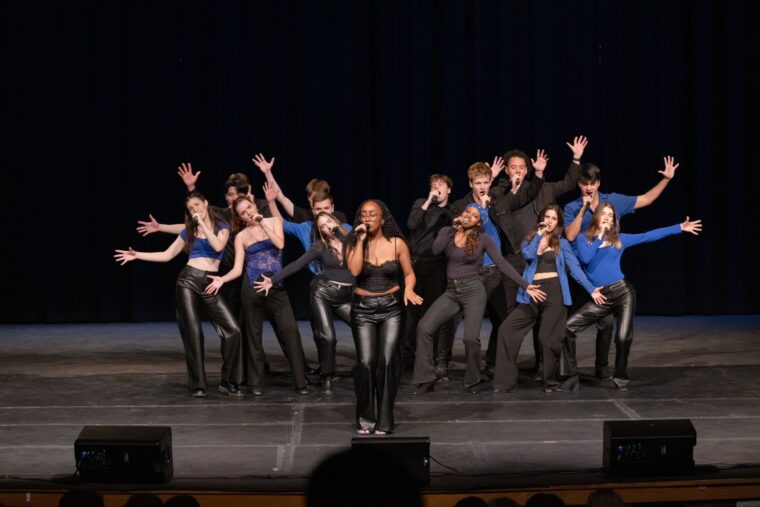
Today, her face lights up with pride when she talks about joining the WU Hip Hop Union (already tagged in her Instagram bio, and pointedly not K-pop oriented). She thinks about changing her name, or at least going by an English name — one that won’t automatically populate searches.
She’s currently undecided in her major, but thinking about transferring to business school to study entrepreneurship. She has big aspirations of getting back into the industry, but from across the table, by starting her own entertainment company. With her first-hand experience, she knows she could create a better, less stressful environment for others following in her footsteps. This time, she’d do it right.
“At the end of the day, I left for a reason. And now I’m here, at my dream school, and it’s all I wanted.”
Stay in Touch!
Get the latest and top news from StudentLife delivered to your inbox