Scene
The pandemic hasn’t stopped this student-run garden from growing
This semester, for many, has been marked by an uptick in screen time and a lack of a fresh air. Washington University’s response to the COVID-19 pandemic has moved many things online and into our bedrooms. Student groups are no exception. At least, mostly.
 Curran Neenan | Student Life
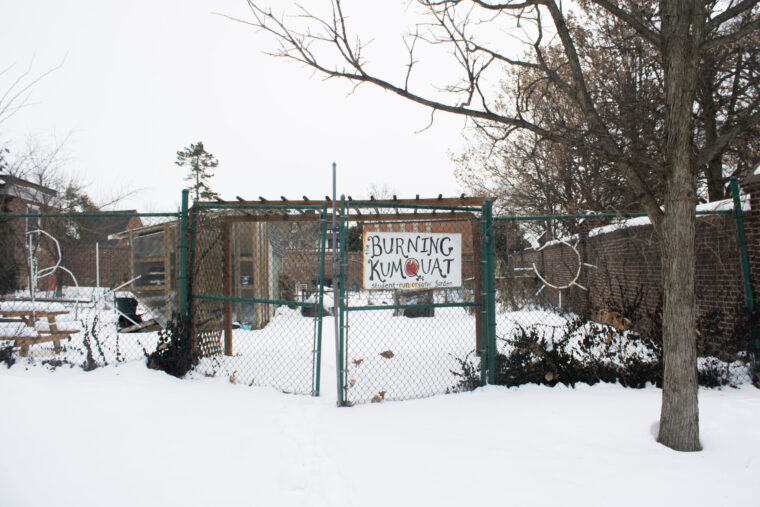
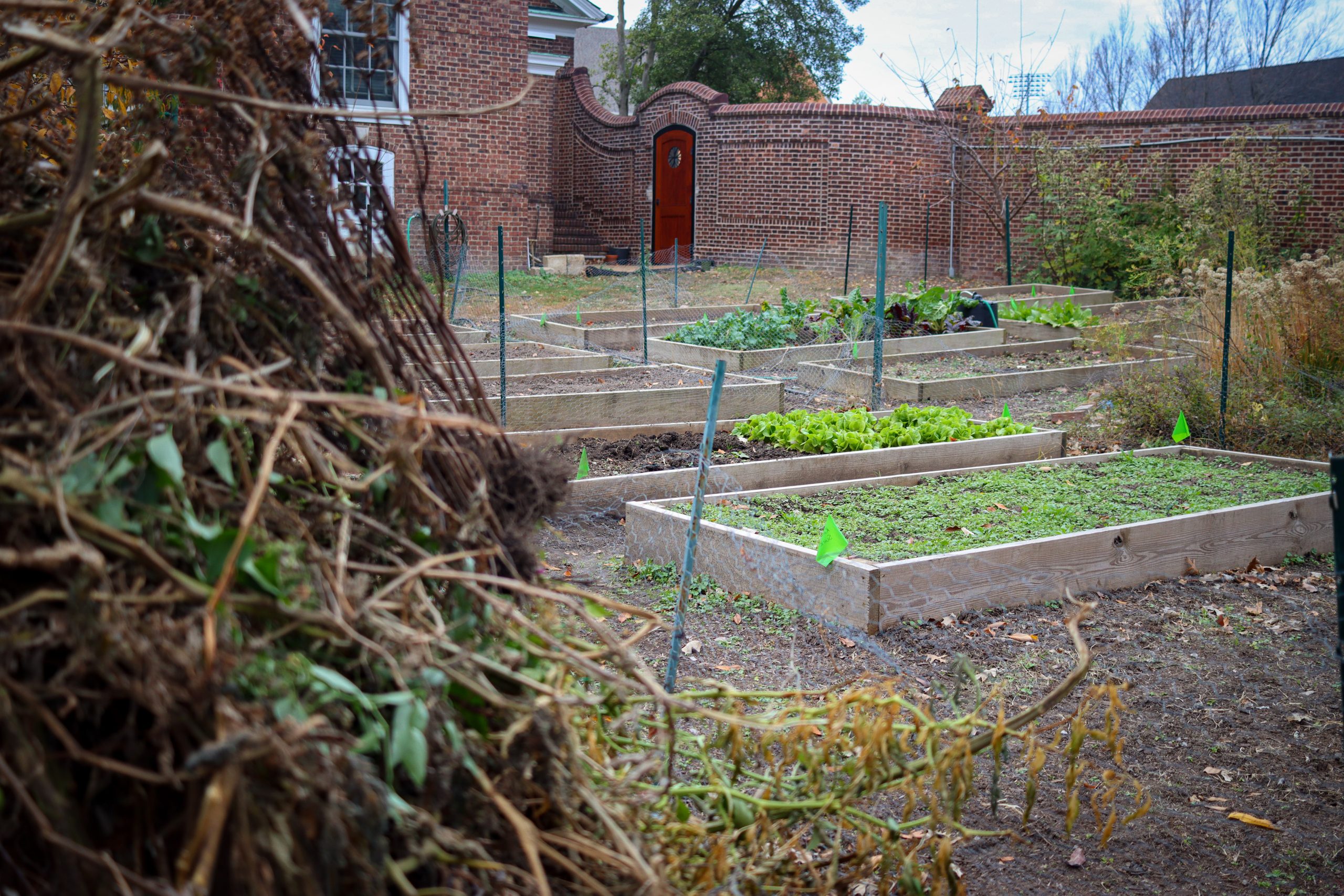
Some clubs, despite the shift to the virtual, have been able to maintain some in-person components. One of these clubs is the Burning Kumquat, the University’s student-run organic garden. The group grows crops year-round, harvesting them to either sell to the University community and Bon Appétit (the company that manages the University’s dining services) or to donate to food banks around St. Louis.
With a large outdoor space that allows them to meet in person and an ability to continue to perform the majority of their activities, the Burning Kumquat is in a unique position this year, a fact that has not gone unnoticed.
“We have a lot of privilege with being able to continue to meet in person,” acknowledged sophomore Sindhuri Ivaturi, co-president of the Burning Kumquat. “We’ve continued to be able to have a lot of the same activities that we usually do, we’ve just adapted them to COVID times.” Ivaturi further explained that most of the student groups she had been a part of prior to COVID-19 have mostly been shut down or limited in what they’re able to do.
Even though the Burning Kumquat enjoys being able to meet in person, this presents new difficulties, due to additional guidelines and requirements to follow, said co-president sophomore Maya Tsingos. The club has to be extra careful when scheduling its “workdays” for members of the group. In past years, workdays took place over two hours on Saturdays or Sundays.
This year, the club has implemented a sign-up system so that students can space out their work throughout the week. The activities students complete during workdays, though, have remained the same, Ivaturi said. Students are able to go into the garden and “get their hands dirty,” doing whatever needs to be done, whether that be weeding, planting or harvesting.
Like many other student group leaders, Ivaturi and Tsingos’ summers looked quite a bit different than typical years when it came to preparing their student group for the coming semester. They still had to tend to the garden even though they weren’t able to physically look after it. “We had a team of faculty fellows taking care of the garden for us, so a lot of the summer was spent coordinating with them and with the Office of Sustainability to make sure that our space was still there for us when we came back,” Tsingos explained.
Although the Burning Kumquat is primarily known as a garden, it has expanded beyond that, recently focusing more on advocacy and education, as well as providing a space where students can have fun and relax, typically with some form of art-based activity. For these, the club has had to go virtual. Documentary screenings and painting events are just a few examples of what the group’s virtual components look like.
 Curran Neenan | Student Life
On the advocacy side of things, the club has also had a number of meanings dedicated to discussing topics such as urban farming and environmental racism. Most recently, the group screened the documentary “Urban Roots,” which is about the urban sustainability movement, Ivaturi said, and held a discussion about it.
For Tsingos, these Zoom events have in some ways been an improvement. “I feel like this year compared to last year through Burning Kumquat I’ve met loads of people, which is really nice,” Tsingos said, citing the cause of this to be the more frequent one-on-one interactions she’s been able to have over Zoom.
Additionally, the virtual formatting of these events has seemingly made it easier for students to get involved with the Burning Kumquat, Tsingos said.
“Since Wash. U. had a big push to move all their advertising online for student groups, we were able to get a lot of initial interest at the very start of the year and that allowed students lots of different pathways to get involved,” Tsingos explained. “Maybe some students don’t want to go to workdays at all because they don’t feel comfortable. They can still come to all of our social events.”
One of their more recent social events involved a Burning Kumquat tradition: garden names. Each year, members of the group were asked to name themselves after a fruit, vegetable or something else garden-related. And at one of their arts-and-crafts events this year, Ivaturi explained, members were given small canvases on which to paint something that represented their garden name.
The participation in the Burning Kumquat’s virtual events have exceeded Tsingos and Ivaturi’s expectations, primarily because of the students. “We were not expecting to get this much engagement, especially from the first-year body.” Tsingos said. Ivaturi agreed, pointing out what seems to be a trend of increased freshman involvement this year.
“Class of 2024 has been so incredibly engaged, not just with the Burning Kumquat, but I’ve noticed across the board that this class of first-years has been really active in the community, and showing a lot enthusiasm for getting involved and getting their hands dirty,” Ivaturi explained.
However, while the Burning Kumquat’s virtual events have been a success, Ivaturi and Tsingos believe there is still room for improvement.
“We need to work on being more inclusive of [remote students],” Ivaturi said. She explained that many of the activities they do over Zoom require additional materials, and that so far the club has not been focusing on making those materials available to those who aren’t on campus. “I know there are people who are probably interested in being mailed things so that they can continue to participate in our activities.”
Another area of concern for the Burning Kumquat is what to do next semester. Because club activities depend on whatever the University decides to do, the Burning Kumquat has been developing ideas for what to do if the situation improves, worsens or stays the same. So far, the University has not communicated any changes, Ivaturi said, so the current plan is to continue activities as they have done, with in-person workdays and virtual social events.
“This is so unprecedented that it is so hard for everyone, the University included, to keep an eye on all the student groups,” Tsingos explained. “So, unfortunately, it is up to the student groups themselves to find the initiative and the resources to change the whole direction of their club for a semester or a year.”
Even with these difficulties, though, Ivaturi and Tsingos are happy with what the Burning Kumquat has been able to do this semester.
“The Burning Kumquat has exceeded most people’s expectations for how adaptable a club can be in COVID times.” Ivaturi said.
And it’s not just the Burning Kumquat that’s been able to adapt to this pandemic era. This has been a good learning experience for all student groups.
“I think [this year] just shows in general, not just us, but other student groups, how effectively we’re able to respond to certain situations,” Tsingos said, “I’m very happy and proud of us and all the other student groups on campus for navigating this year.”
Stay in Touch!
Get the latest and top news from StudentLife delivered to your inbox