News
New housing project could displace the Burning Kumquat
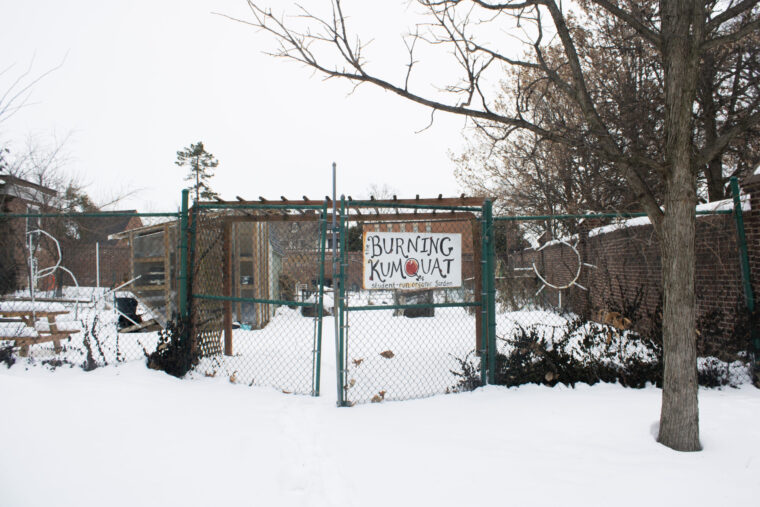
The Burning Kumquat’s current location on the South 40. (Charlotte Balla | Contributing Photographer)
The Burning Kumquat, a student-run garden on the South 40, faces potential displacement due to the construction of new dorm buildings.
The garden has more than 40 beds and has been around since 2007. Student volunteers take care of the garden and receive free vegetables in return.
Members of Burning Kumquat had not heard about the potential effects of construction on the garden from the administrative team. Rather, first-year Diego Carmona saw a blueprint of the construction project through a post on Sidechat and noticed that one of the buildings overlaps with the garden’s current location.
“Are we going to move to a new place? Is the construction even going to happen? We are just not sure,” senior Cameryn Berryhill, co-president and “Sun” of Burning Kumquat, said.
Berryhill oversees the garden side of the club.
“We are kind of nervous because this spot has been ours since 2007,” she said. “It is a really nice spot. It’s huge, and we get to hang out there. We get to have [pit fires] there.”
The club executive team is currently in discussion with the Division of Student Affairs, including Associate Vice Chancellor for Student Affairs and Dean of Students, Rob Wild, and Vice Chancellor for Student Affairs Anna “Dr. G” Gonzalez regarding the future of the garden.
“[From] what the school has told us…we would have to leave by June 1,” senior Eden Naureckas said. She manages the external side of the club.
“The ultimate goal would be to stay exactly where we are, [and] I don’t think that is off the table at this moment,” Naureckas said.
The club’s backup plan would be to relocate the garden to a different location still on the South 40.
“If we were to move anywhere, the next couple of years are going to look like rebuilding, putting in new beds, and re-grappling — not really gardening,” Naureckas said. “At the beginning of that process, it would certainly involve a lot of construction, rather than plant growth and harvest.”
Many club members express that they have had memorable times in the garden and say it has become an important part of their time at WashU. Until they receive more communication from the administration, the club is still running and preparing for upcoming projects.
“I am graduating, but I am really sorry for the rising members of our garden,” Naureckas said.
However, whether or not their current space is taken over by new dorms, the Burning Kumquat will persist.
“The garden isn’t just valuable to people who already know a lot about gardening, about plants,” Naureckas said. “I think one of the most important functions of the garden is being a community space and a natural space.”
Naureckas emphasized the importance of the Burning Kumquat to the entire WashU community.
“I would encourage, especially as the weather gets warmer, everyone to pay the garden a visit and stop by and help us out and to get a real sense of who we are,” she said.
Stay in Touch!
Get the latest and top news from StudentLife delivered to your inbox