Forum
The necessity of civil disobedience: Breaking through our fears of retaliation

August Moon | Staff Illustrator
As a St. Louis native, I vividly remember being in awe of the vibrant community of activists on campus at WashU, even before becoming a student here. I recall passing by students protesting for Palestinian liberation while driving to Forest Park and longing to join the fight against imperial oppression. Longing to join the community of people with the courage to stand up against an institution as powerful as WashU.
So when I first came to campus last year in the post-encampment era and found a fearful silence rather than the activism that drew me here, I was disheartened. Fear of retaliation amongst students, faculty, and even my fellow journalists at Student Life seemed to be ever present. To utter the word “Palestine” publicly seemed to be a cardinal sin, a potential offense to the status quo of Zionism that is present on our campus. There were organizing efforts, but these efforts didn’t dare to cause any disruption to campus life, with plans for demonstrations falling through in the face of potential suspension. The excitement and hope I had dimmed as I faced a repressed and beaten-down student body.
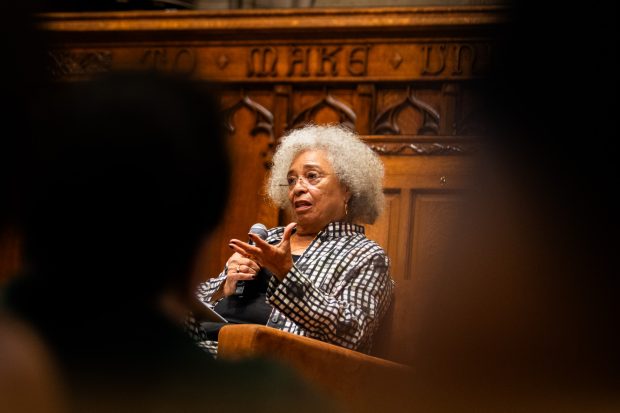
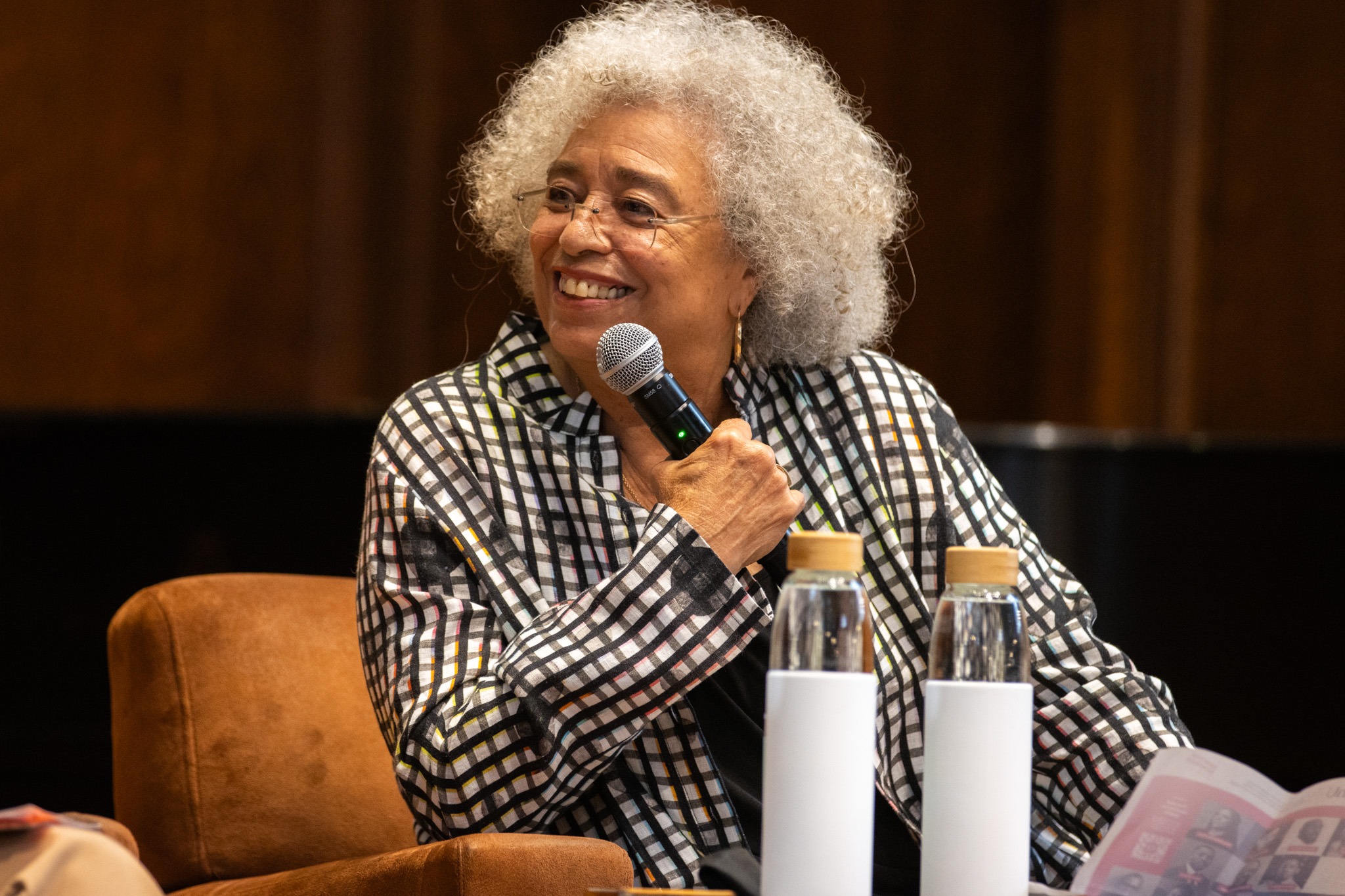
When I found out that Angela Davis was coming to campus this year, I knew exactly what I wanted to ask her: How might campus activists break through fear of retaliation and continue to mobilize students for causes of political oppression?
Her answer was beyond profound.
Davis replied to me, saying, “People often don’t recognize that when they react by not doing the organizing because they think it will make them vulnerable, they are actually accomplishing the opposite of what they set out to do. They are making themselves vulnerable.”
If she is right, then, oh, how vulnerable we are to political oppression.
We, those who believe in the liberation of all people, have self-censored our morals and thoughts while those who conform to imperialistic, Zionist, and colonial ideals get to express themselves freely at WashU. We have given up fighting against the universities that denounce and apologize for those who condemn the genocide happening in Palestine. We have allowed our spirits to be crushed by harsh retaliation from the people who hold power over us. Who hold our education and livelihoods in their hands while we stay because we have found community and knowledge here. Our silence as the progressives, radicals, liberated, anti-Zionists, anti-racists, anti-imperialists, or whatever you want to call us, has made us the most vulnerable group of students on campus.
This cannot continue.
We must look upon the wisdom of activists who came before us and the principles of civil disobedience that they employed in their fight.
The Children’s Crusade of 1963 took place in Birmingham, Alabama, and child protestors intentionally sought to be arrested for their protesting as a strategy to fill the local jails and fight against segregation. The children who participated and their parents who allowed them knew they would be arrested and were even taught how to politely submit to arrest. Children as young as 9 years old were jailed. On the second day, they were brutalized by police and firefighters, bringing to light police brutality against Black Americans and serving as a turning point in the Civil Rights Movement.
Like those in the Children’s Crusade, Nelson Mandela, Gandhi, the British suffragettes, the protestors in Iran for Mahsa Amini, and the participants of the 1968 Brookings Occupation that happened on our very own campus, we must channel this energy of civil disobedience. We must intentionally break the policies put into place by our university administration that oppress our academic and political freedom in the name of not being “disruptive.” We must expect the consequence that comes from this, not fear it.
I understand that not everyone can participate in activism in such extreme ways, but everyone has a place within the sphere of organizing. Even if you do not feel comfortable putting your body on the line, you can write, educate, fundraise, and support using any privilege you have. All you need is courage.
I, like many others, am scared. I am scared to even write this article. I, like many others, have a desire to leave WashU with a degree, to be educated, to have a career. We must not, however, let our fear paralyze us.
The humanities and academic freedom are under attack by our federal government. The targeting of innocent civilians through mass killings and rapes in Sudan continues. The overturning of Roe v. Wade leaves reproductive justice under threat in many states, including ours. ICE continues to kidnap families off the streets. Black Americans are still being found hanging from trees across the nation. The genocide of Palestinans is not over. Political oppression remains ever present, and the work we have to do leading to the liberation of all oppressed peoples in our nation and globally is far from done.
Whatever you are most passionate about, whether it be issues happening locally or across the globe, what is most important is that you do not let fear paralyze you into not speaking up and taking action against the policies, the condemnations, the lack of protections, and the oppression of free speech that leaves us most vulnerable.
So go on, triumph over your fear, and disobey.
Stay in Touch!
Get the latest and top news from StudentLife delivered to your inbox