Forum
Freedom is indeed a constant struggle, so we must keep working
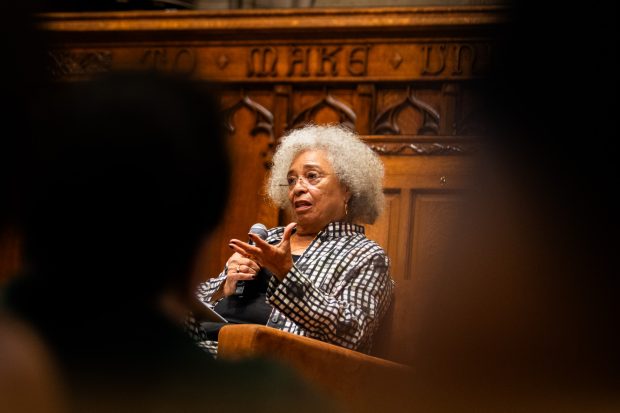
Hannah Dorval | Staff Photographer
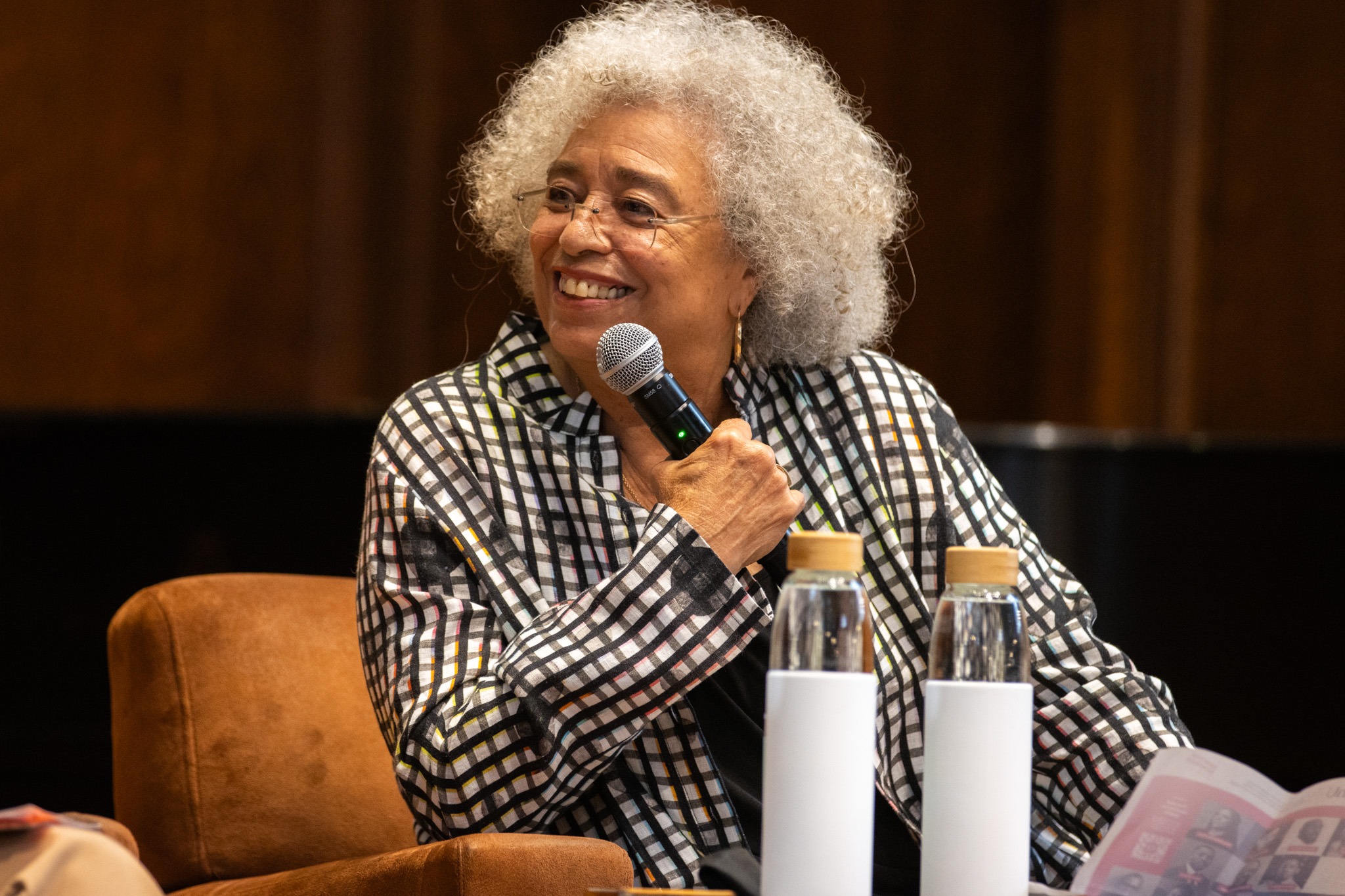
I believe that academic freedom is integral to the self-actualization that people around the world need to achieve true social and political liberation. I am vehemently anti-Zionist and understand Israel to be a station of Western imperialism in the Middle East. So when I heard that the African and African American studies department was hosting a lecture and Q&A with scholar and activist Angela Davis at Graham Chapel, I was exhilarated.
The focus of the talk, which took place last Thursday, was academic freedom, a topic that has returned to the spotlight with the Trump administration’s attacks on higher education. When asked to speak on the topic, Davis emphasized that many of the conversations that are happening today — which range from the “politicization” of academia to Israel’s occupation of Palestine — were happening in her time as much as ours. She offered this fact not to discourage future political organizers that may have been in the audience, but to emphasize the importance of constantly working toward political and social change.
Davis and the talk’s moderator, Professor of Sociocultural Anthropology Shanti Parikh, repeated the word “community” throughout the lecture. Davis emphasized power in numbers on the topic of protesting: “The only way to make yourself less vulnerable is to become larger and larger and larger.”
This emphasis on community is why Parikh’s deification of Davis — calling her “queen” and portraying her life as an epic — has particularly unsettled me. Davis is the daughter of two teachers who instilled in her a passion for education, not a savior sent from the heavens. Yes, Davis has accomplished a nearly unfathomable amount of work during her lifetime, but turning her into a “goddess” strips her of her humanity. It has the same echo of the racist belief that Black women are magical superhumans that can’t get hurt and thus don’t need support. It makes her activism seem unattainable and irreplicable, something that requires otherworldly courage, something that the average Joe like you and I can’t do.
But the fact of the matter is that Davis did not see herself becoming a spokesperson for a movement. It was a position that she fell into and accepted after recognizing the need for change. She also was not alone. Dr. Davis received hundreds of supportive letters, ranging from schoolchildren to government officials, during her incarceration. Her sister, Fania Davis Jordan, and a close friend, Franklin Alexander, founded and coordinated the National United Committee to Free Angela Davis — which, as the name suggests, advocated for Davis’ acquittal. Not everyone can do what Davis did alone, but many people can do what she did with a group of others at their side.
So what do we do now? If freedom is a constant struggle, and all of the conversations we’re having now have already been had before, what hope can we have when these centimeters of progress don’t feel like enough? Davis responds: “We must realize that hopelessness is not an option.” There can be no progress in a movement, not even those centimeters that we resent, if we have no hope. WashU administration has shown us that they are comfortable arresting 100 students and community members to repress the movement. The arrests weren’t examples of administrative power but rather proof that the fight for true expression and academic freedom simply needs more hands.
Not everyone will feel confident organizing an encampment or “putting their body on the line,” but those same people can do more community-based work, whether it be educating or building a rapport with others in their organizing space. But while doing the forms of activism that keep us safe, we must also understand that, at some point, we’re going to have to be comfortable risking something.
Before the talk, while waiting to enter Graham Chapel, I sat beside a retired judge named Judy. She told me about her upbringing in a military family that was constantly moving; of how she met her husband, George, a proud St. Louisan and Missouri Supreme Court Justice, and their commute back to St. Louis after receiving their degrees to practice law; of the struggles that she faced being a Black female attorney.
She asserted that, back then, it didn’t matter what you knew but rather who you knew — especially if you were a well-off white man. I told her that her past mimics my present.
“What’s that saying? The more things change,” she started. I ended, “The more things stay the same.”
Stay in Touch!
Get the latest and top news from StudentLife delivered to your inbox