News
‘Hopelessness is not an option’: Angela Davis on academic freedom and the future of higher education
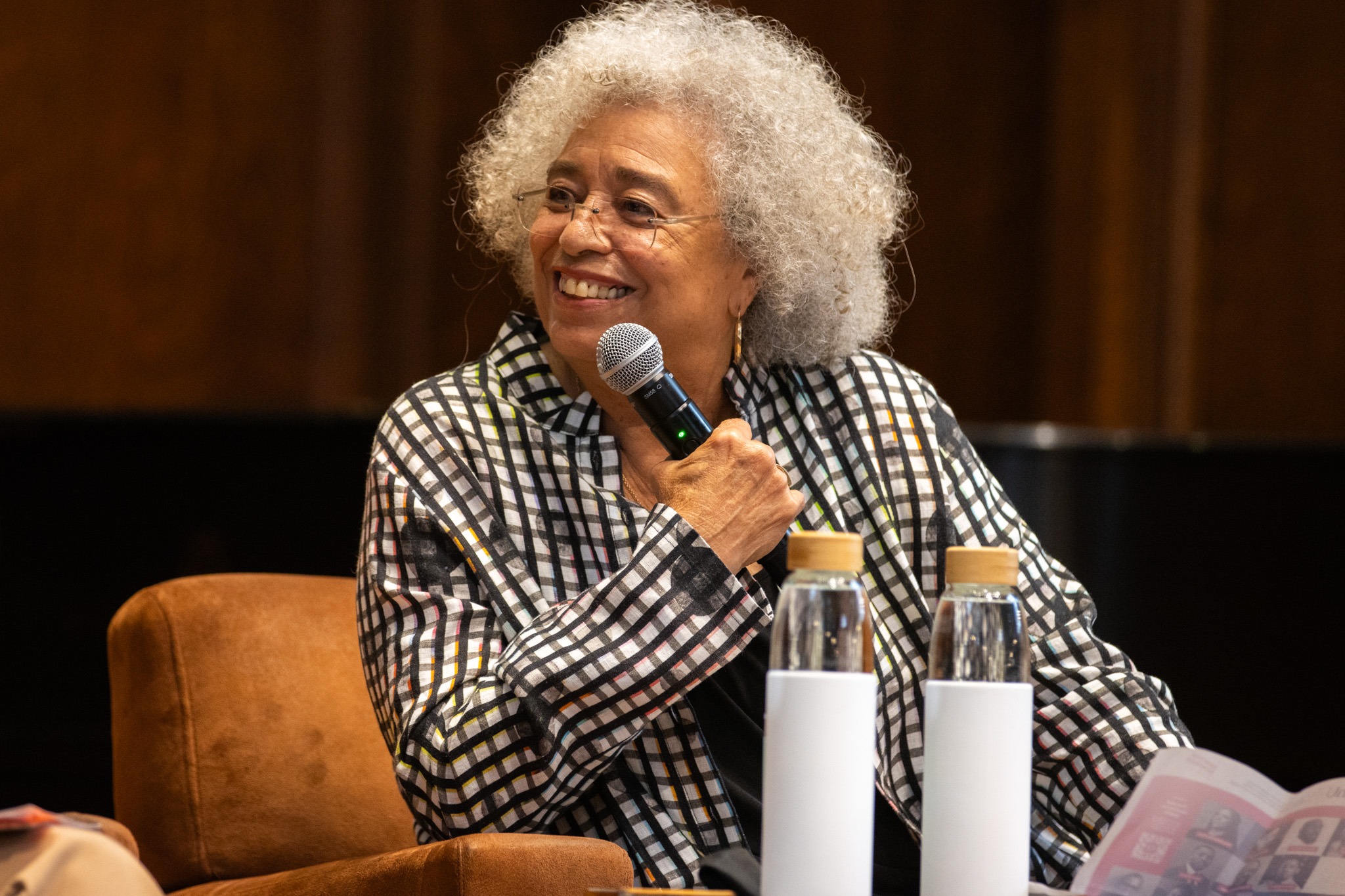
Angela Davis speaks at Graham Chapel Thursday night (Hannah Dorval | Staff Photographer)
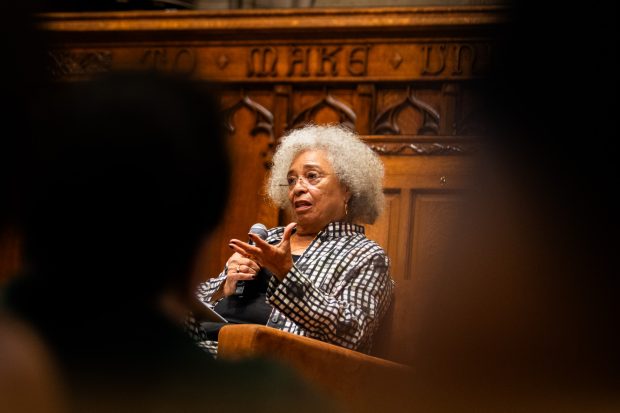
Angela Davis, Black revolutionary, philosopher, and author, visited WashU as part of the new Sawyer Seminar Lecture Series and spoke out against censorship in academia and the elimination of humanities departments in universities across the nation. The conversation took place in Graham Chapel and around 750 members of the WashU community were in attendance.
Known primarily for her activism with the Black Panther Party in the 1960s and 70s, Davis has written extensively on prison abolition, human rights in Palestine, and intersectional feminism, amongst other topics. Davis encouraged student activists to continue pushing for intellectual freedom at universities and building community.
“The university has never been, as an institution, a radical institution, but it has been made radical by those who populate it, by the students and the faculty,” Davis said.
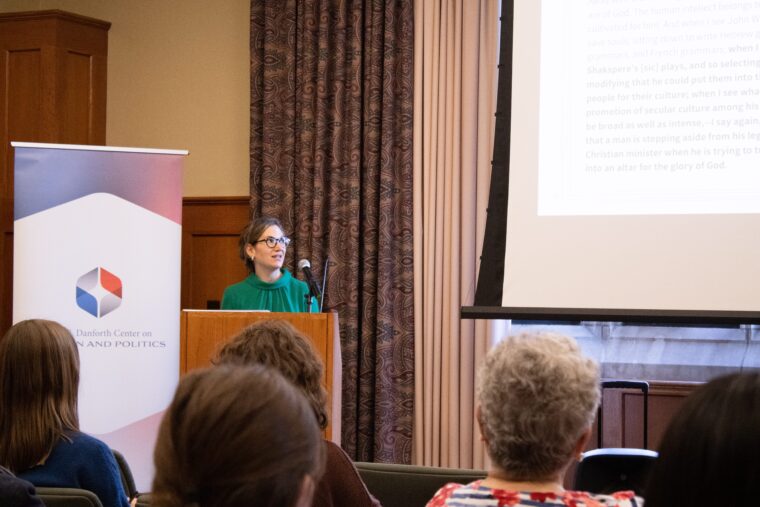
Davis spoke in conversation with Professor of African and African American Studies Shanti Parikh. Parikh began the lecture by recounting the story of Davis’ wrongful termination from the University of California, Los Angeles (UCLA) in 1969 because the university regents discovered she was a member of the Communist Party. Although the university’s chancellor and faculty supported her reappointment, Davis was not permitted to teach.
Davis said the fight for liberation and education has always been intertwined, especially in a moment of increased government interference and regulation in higher education curricula.“If you look at the whole history of liberation struggles, it has always also been a struggle for education,” Davis said. “[The university] is a place where you can devote your time learning how to be critical … This will be the only time that you get to spend almost all of your time reading and thinking.”
Davis also discussed how her ideas of what revolution should look like have shifted over her years, as attention has been brought to queer struggles and climate justice.
“In my twenties, we were all convinced that the revolution was right around the corner and that we would dismantle capitalism. We were going to put an end to racism,” Davis said. “But we really didn’t know enough for us to have made the kind of revolution that would have benefited everyone.”
Senior Mazie Drummond said she appreciated Davis’ reflections on how her idea of revolution has expanded.
“I think so often we have a tendency to idealize the ’60s and ’70s and the social movements in the ’60s and ’70s, and they were of course groundbreaking, incredible movements, but the truth is that we also know more now because of them, and we can do important work that’s grounded in that,” Drummond said.
Davis told students to act on the systemic problems of their time. When asked how student activists should mobilize for issues like Palestine amidst fear of retaliation from the University, Davis said movements die when communities stay silent.
“People often don’t recognize that when they react by not organizing because they think that will make them vulnerable, they are actually accomplishing the opposite of what they set out to do — they are making themselves more vulnerable,” Davis said. “The only way to make yourself less vulnerable is to become larger and larger and larger.”
Senior Justice Crandall said they appreciated Davis’ message to continue organizing and creating hope for change they want to see.
“Even in the most oppressive and difficult situations around the world historically and presently, the creation of art and the organization of communities and the love within those communities is what creates hope, and to be hopeless in a time like this, no matter the scale of the attack, isn’t an option for us,” Crandall said.
Stay in Touch!
Get the latest and top news from StudentLife delivered to your inbox