News
“The best speech you will ever hear”: Faraz Harsini gives talk on veganism
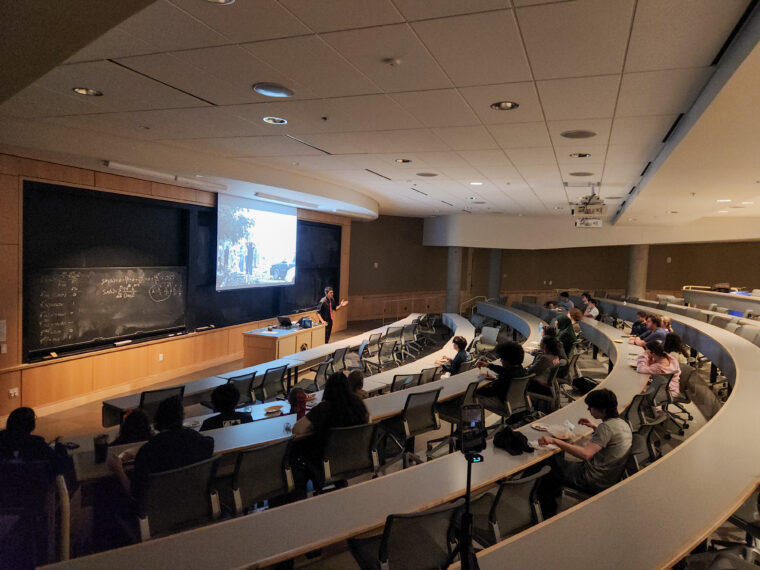
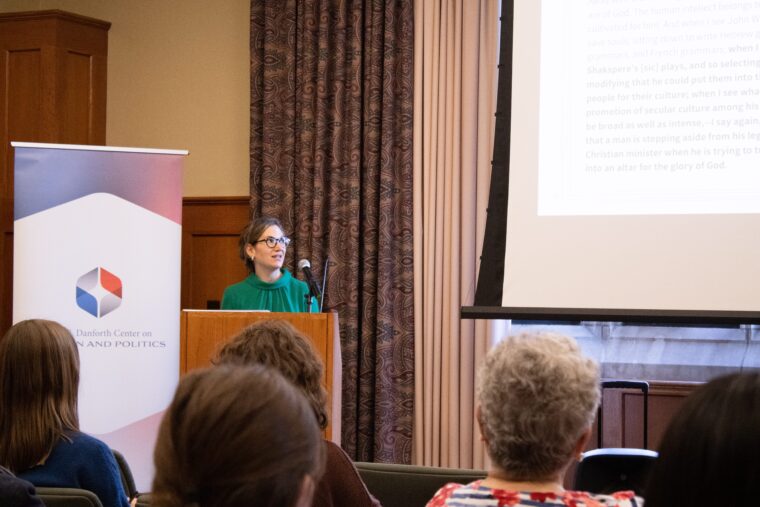
Faraz Harsini presents to WashU’s ASAP chapter about his work and activism. (Photos Courtesy of Grace Tyau)
“Show me any other form of injustice and source of pain and suffering and exploitation in the world today that causes more suffering than this. I will shut up and go focus on that form of injustice,” Founder and CEO of Allied Scholars for Animal Protection (ASAP) Faraz Harsini said at a WashU ASAP chapter event on his life story and work with vegan activism on Feb. 19.
The talk covered his search for satisfaction that led him to animal rights activism, the benefits to a vegan diet, and the injustices that occur within the meat and dairy industries daily.
The event is part of Harsini’s national tour of universities with ASAP chapters, where he has been delivering this speech, ASAP WashU chapter Founder and President Grace Tyau said.
The mission of the speech was to both inform the audience about why going vegan is beneficial on the basis of ethics, human health, and the environment, as well as to cultivate the movement’s next leaders, Tyau said.
“The reason I’m in front of you giving this lecture in universities is because how much I believe that you are going to be the next generation of leaders, people who will change the society, people who will change politics and the way we live our lives,” Harsini said.
Harsini was born and raised in Tehran, Iran. Growing up, he ate meat and dairy without much consideration as to how the food got to his plate. However, after the death of his pet chicken, Happy, who was killed by Harsini’s grandmother and put in one evening’s chicken soup without Harsini’s knowledge, Harsini knew that speciesism — the preference of some species over others — was real.
“[Eating the soup] didn’t bother me because I didn’t think it was Happy. So what is up with this double standard that we have in society? It’s not about taste, not about pleasure. It’s that, could it be that we are fundamentally wrong in the way that we’re treating animals of other species?” Harsini said.
Harsini posed many questions to the audience as to the ethical implications of devaluing individual animals, comparing speciesism to other now widely unaccepted modes of prejudice like racism and sexism.
“Do you think just because something is legal and normal, those are good reasons to continue something? Can you think of other things that used to be legal and normal, and today we look back with horror?” Harsini said.
Harsini then explored the intersectionality of women’s rights and the rights of dairy cows.
“There is nothing further away from women’s rights than the entire game industry, which is fundamentally based on exploiting [the] reproductive system of cows,” Harsini said.
He then systematically broke down common marketing phrases that the meat and dairy industries have utilized to falsely relieve the moral conscience of consumers. “Humanely” raising and killing animals is impossible, Harsini argued.
“Humane means act of kindness and compassion,” Harsini said. “Can you truly kindly and compassionately kill someone who doesn’t want to die? That is not humane, that’s not kind and compassionate … That’s the opposite of being humane.”
The fact that ordering chicken salad is identical to ordering potato salad shows how removed from these individual animals our society has become, Harsini said.
“We have victimized these animals to a point that we do not consider them victims anymore.”
In addition to the moral destruction the meat and dairy industries have produced, Harsini spoke about the environmental impacts of the industries. 70%-80% of antibiotics medically relevant to humans are fed to farm animals, who then can lead to antibiotic resistance in humans. Additionally, lagoons full of antibiotics and hormones next to farms harm the environment.
As to human health, the leading causes of death are heart disease and cancer, which can be linked to carcinogens like meat.. A plant-based diet can help prevent common causes of death and specifically cutting out dairy can help with acne, Harsini said.
Raising awareness about the health benefits of a plant-based diet is one of the goals of ASAP, Tyau said. The club takes a three-pronged approach: outreach and education, cultivating the next generation of leaders to end factory farming, and advocating for dining changes at the university.
Charlotte Minnigh is a first year at the Sam Fox School of Design & Visual Arts, where she plans to study sustainable architecture and environmentalism. Minnigh has been vegan for seven years.
“I don’t think you can be an environmentalist and consume the meat from the meat and dairy industry, which is one of the largest carbon producers out of any industry in general,” Minnigh said.
Minnigh attended the talk to support her moral standings with more evidence, she said.
“I think we should all have a goal to not live in ignorance and actively pursue information about our actions and what we do daily,” Minnigh said. “Eating is one thing that we do three, four, five times a day.”
The biggest challenge of being vegan at WashU is how other people treat her, Minnigh said.
“They’re always like, ‘Oh, I could never do that,’ when I never even asked,” Minnigh said. “I think it’s because people do feel guilty inside, and they know that their morals are maligning. So when they see that you’re taking the extra step, it kind of clicks for them that this means that they’re doing something wrong.”
After reading “Why Vegan” by ethicist Peter Singer in the summer of 2024 after her sophomore year of college, Tyau decided to go vegan.
“A lot of people have a misconception that going vegan means you have to change something about yourself,” Tyau said. “But the truth is that nothing really changes about you at all. I’ve always had the values of wanting to protect the vulnerable, not wanting to cause harm, and hating violence and injustice. I was just aligning my actions with my values.”
Stay in Touch!
Get the latest and top news from StudentLife delivered to your inbox