
Forum
More parties for sapphics, by sapphics
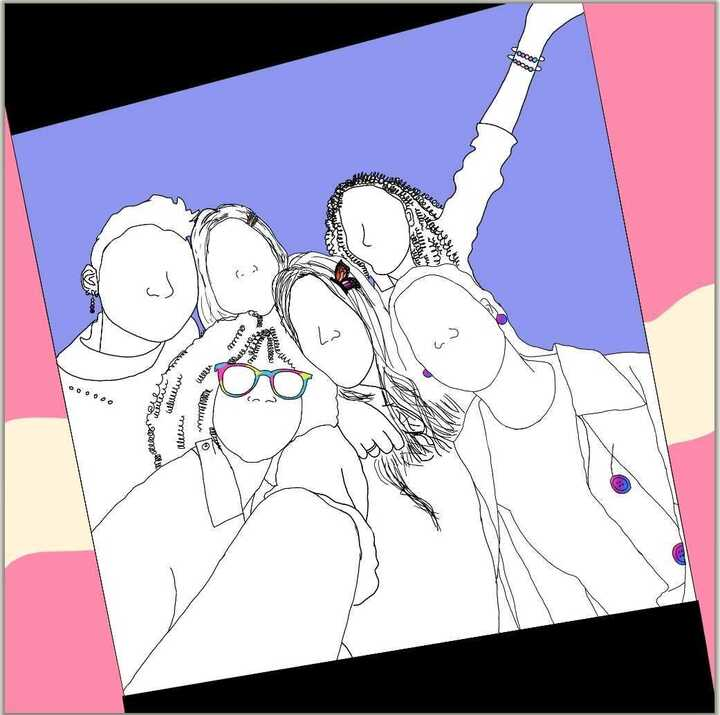
Diya Gupta | Contributing Illustrator
I (Kaylee) tragically found myself the day before Halloween with no costume and no plans, recovering from my first situationship with a woman. I coped with this combo by Instagram doomscrolling, which presented me with the solution to all my problems. Final Girls Club was listed among my recommended accounts. The account is dedicated to sapphics in St. Louis, and in their bio was news of a sapphic Halloween party that night.
Sapphics as a community don’t typically get events tailored to us, despite the applicability of the term. It includes all non-men who like non-men, meaning the label encompasses multiple identities, like bisexual and nonbinary, all of which provide a demand for parties.
Because of the large sapphic demographic of WashU students and the lack of sapphic parties, we had to go because we didn’t know when the next one would be.
This was a party for people like us, exactly when we needed it. Among the mutual followers of the Final Girls account, we (Lyn and Kaylee) found each other. We work together at Student Life and were casual friends, but we had no clue we were both queer.
We also did not have many sapphic acquaintances at WashU. We got in contact on Instagram and formed a group of WashU students to go to the event with, creating a little network of sapphics just from the followers of the account. Walking into the party, we immediately recognized familiar faces, revealing even more mutuals we had no idea were queer. The most commonly used phrase of the night was “Oh my gosh, I didn’t know you were gay!”
Suddenly, we knew two to three sapphics in each of our social circles. The community already existed; we just needed a way to see it.
When we are able to find sapphics to befriend, we are also able to find sapphics to date. We identify as femme sapphics, meaning people tend to perceive us as straight. However, in a sapphic space, queerness is assumed, and people see us in a more authentic way. People can approach feminine women in these spaces without having to figure out if they’re gay.
We can express our interest in others confidently and safely. At other parties, any expression of sapphic intimacy can and will be sexualized by men. In a space not built for us, we will never be able to comfortably and safely pursue people romantically.
It might seem trivial, but it is important to have sweaty dance floors where queers can make out, too. PDA is not everyone’s favorite thing, but sapphics have just as much of a right to show affection and have intimacy.
Still, any fun has its limits. As is stereotypical of insular queer communities, some people at the party realized how much their ex gets around. Also, due to space limitations, many people were stopped at the door, yet there were many cis men in attendance.
On one hand, these men are taking limited spots from sapphics. On the other hand, policing who can and cannot enter seems contrary to the spirit of inclusivity in the queer community. For us, the simple solution would be to host more sapphic events. People won’t crowd a single event thinking it’s the only sapphic event of the year, and there will be room for everyone who decides to attend.
This Halloween, we connected with many other sapphics. We formed individual bonds (including between us two) as well as a network of sapphics at WashU. This shows how the more sapphics who create community events, the more connections we will be able to make with each other.
The Final Girls party showed us just how much sapphic WashU students needed a place to meet, dance, and flirt in a safe, fun environment. However, we can’t let this be the peak of our sapphic nightlife. This hosting role is not isolated to Final Girls. If you feel called to start a sapphic community club or open your apartment to sapphics of WashU, then do it! We have to let our gay Halloween party be the start of a wave of sapphic events, not the end.
Stay in Touch!
Get the latest and top news from StudentLife delivered to your inbox

![‘I’d like to see sex ed [get] raunchier’: Queer sex therapist Casey Tanner on sex, sexuality, and relationships in college](https://www.studlife.com/files/2025/02/Casey-Tanner-1-401x600.jpg)