Cadenza
‘Dragon Quest: Your Story’ is a love letter to the JRPG genre
The first-ever “Dragon Quest” game was released nearly 34 years ago, essentially giving birth to the Japanese role-playing game (JRPG) genre as we know it today. The medieval setting, level grinding, spell acquisition, turn-based, side-view combat—all of these elements that are now stereotypical of the genre were defined right there in 1986. “Dragon Quest” is to JRPGs what Superman is to superheroes—the genesis.
I didn’t grow up playing “Dragon Quest.” I didn’t actually play one of the games until I bought the port of the first one on my Nintendo Switch over Winter Break this year. I beat it in about 11 hours over the course of a week. A lot of elements of the game felt reminiscent of other games I had played before. The combat, move and level system felt straight out of “Pokemon,” the overworld map and cryptic dialogue from NPCs from “Legend of Zelda II: Link’s Adventure.” But what was really striking was the amount of freedom the game gave you to do whatever you wanted. There are no dungeons, no bosses beyond the final Dragon Lord, no collectibles. You don’t even have to save the princess if you don’t want to. The game for all intents and purposes is pretty barren, yet you still could easily find yourself spending hours and hours exploring.
This emptiness is deceptive; it pushes you to seek out every last drop of the game and really explore everything the overworld has to offer. That’s what has run through the entire “Dragon Quest” series and made it as popular as it is, and exactly what I think the people who made a movie about the series didn’t get.
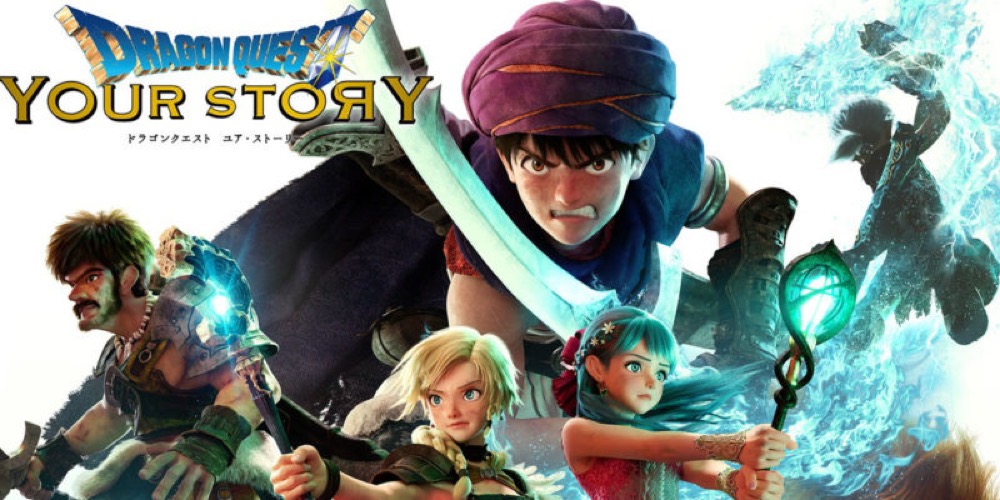
“Dragon Quest: Your Story”—the animated retelling of the story up until the fifth game in the series, “Hand of the Heavenly Bride”—was recently released on Netflix. The movie doesn’t pay much service to the aspects of adventure and exploration, and is severely bogged down by its run time. You can’t get that same engagement of exploration and discovery from being told about an adventure as opposed to experiencing it. The movie suffers from the problem that any long-running series, book or game has when it’s converted into a single film. When condensing 30+ hours of game time into an hour and 30 minutes, you end up losing the spirit of the source material.
The story of a game like “Dragon Quest V” wasn’t meant to be experienced in that short of a time span. “Dragon Quest V” tells the story of a boy growing into a man and starting a family. You as the player are not just watching this life unfold, you’re experiencing it. You make the choice of where to go, which monsters to allow to join your team and who you will marry. The main character isn’t defined like Mario or Geralt of Rivia; it’s you. When main characters from “Dragon Quest III,” IV, VIII and XI were added to “Super Smash Bros. Ultimate,” they weren’t given their canonical names, they were simply named “Hero.”
Other than forgoing the iconic Akira Toriyama art style of the series for CGI, the biggest sin of “Dragon Quest: Your Story” is giving the main character an actual name. Luca isn’t a silent protagonist like the character in the game. He has a personality and dialogue all his own, preventing viewers from imagining themselves in the role of the protagonist.
This cuts to the heart of the appeal of JRPGs entirely, except with the big twist at the end. Before the final resolving action of the movie, it is revealed that Luca isn’t an arbitrary name given to our hero—he’s actually just some guy playing the game on a new virtual reality mainframe. He, like many others, is a person who played “Dragon Quest V” on the Super Nintendo when it was first released and has replayed it over and over again because of how it and games like it got him through tough times by escaping to a world where he could live a separate life, go on massive adventures and be a hero.
What “Dragon Quest: Your Story” amounts to is one part terrible adaptation of one of the most acclaimed games of all time, and one part love letter to JRPGs. Given my limited experience with “Dragon Quest” as a series, my resonance with this sentiment comes from my similar experience with other JRPGs, specifically “Pokemon.” Those same elements of popping in a game cartridge and getting lost in the world of a game completely centered around you and your choices is exactly why I’ve kept up with a series like “Pokemon” for over 16 years, just like Luca. And this can be applied to any game in the genre you may feel attached to, whether it be “Chrono Trigger,” “Earthbound” or “Final Fantasy.”
“Dragon Quest: Your Story” isn’t a particularly good movie, but I recommend it to fans of JRPGs as a whole, because it directly hits on the sentiments of why so many people connect to these games and hold them so dearly to who they are as a person.
Stay in Touch!
Get the latest and top news from StudentLife delivered to your inbox