Scene | Scene Says
‘Forgotten Island’ is too furry
Luvia Thomas | Managing Illustration Editor
There is hardly enough time to catch your breath during Januel Mercado and Joel Crawford’s exuberant new animated film “Forgotten Island,” a chaotic adventure that is as heartfelt as it is unmistakably furry.
“Forgotten Island” follows two best friends, Jo (H.E.R.) and Raissa (Liza Soberano), trying desperately to get back home after they are transported to the magical Filipino island of Nakali. But as they encounter the island’s strange inhabitants, Jo and Raissa’s memories of their deep-rooted friendship threaten to disappear.
“Forgotten Island” gives a good chuckle, and it’s attention-grabbing, original, and fairly easy to get swept up in. It is also densely packed with action in a way that feels as if it was designed to withstand the modern attention span by simply never stopping.
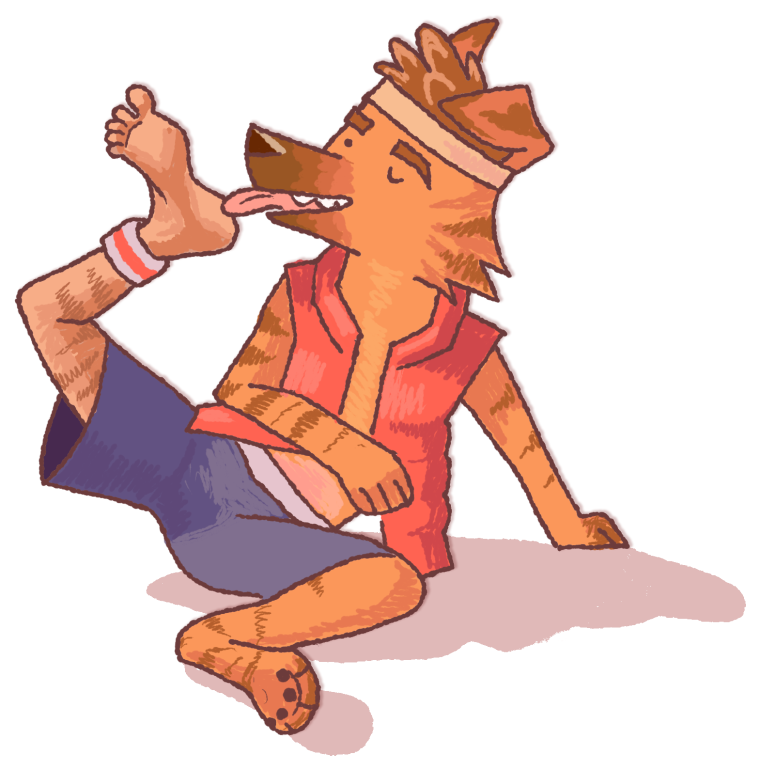
Yet it is difficult to talk about “Forgotten Island” without addressing the character of Raww, a mythical weredog searching for his pack. The inclusion and depiction of his character follows a trend in DreamWorks films from the past decade of pandering to the furry community. The studio has increasingly embraced anthropomorphic characters, from “The Bad Guys” franchise to “Puss in Boots: The Last Wish” and “Kung Fu Panda 4.” Raww, however, takes these depictions to the next level.
His perpetual “just can’t help it” human to dog transformations make the connection particularly apparent, while his character’s exaggerated toony design pulls straight from the visual language of furry art. And although not emblematic of the entire furry community, feet and pee humor continually stay at the “foot” of the jokes related to Raww’s character, a seeming nod to furry internet culture. This further creates a sense that the film is attempting to engage with an audience beyond the animated children’s movie crowd in a manner that pulled us out of the story.
Still, dismissing Raww for being a furry would undersell the genuine feelings of loneliness he expresses throughout the film. His search for a pack is based in a deep sense of isolation, and that desire for belonging clearly has some resonance to furries — a community that is built around finding acceptance through unconventional means.
There is something conflicting about his character because his loneliness invites empathy, but the film’s conspicuous attention to his furry identity repeatedly distracted us. Still, “Forgotten Island” remains an engaging and heartwarming adventure with bold visual imagination and emotional sincerity.
Stay in Touch!
Get the latest and top news from StudentLife delivered to your inbox