News
Shakespeare as ‘Secular Scripture’: Notre Dame’s Jillian Snyder discusses bardolatry
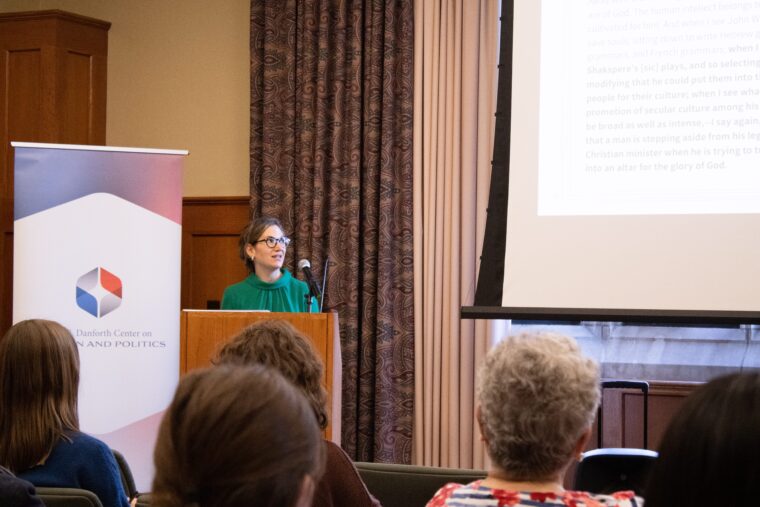
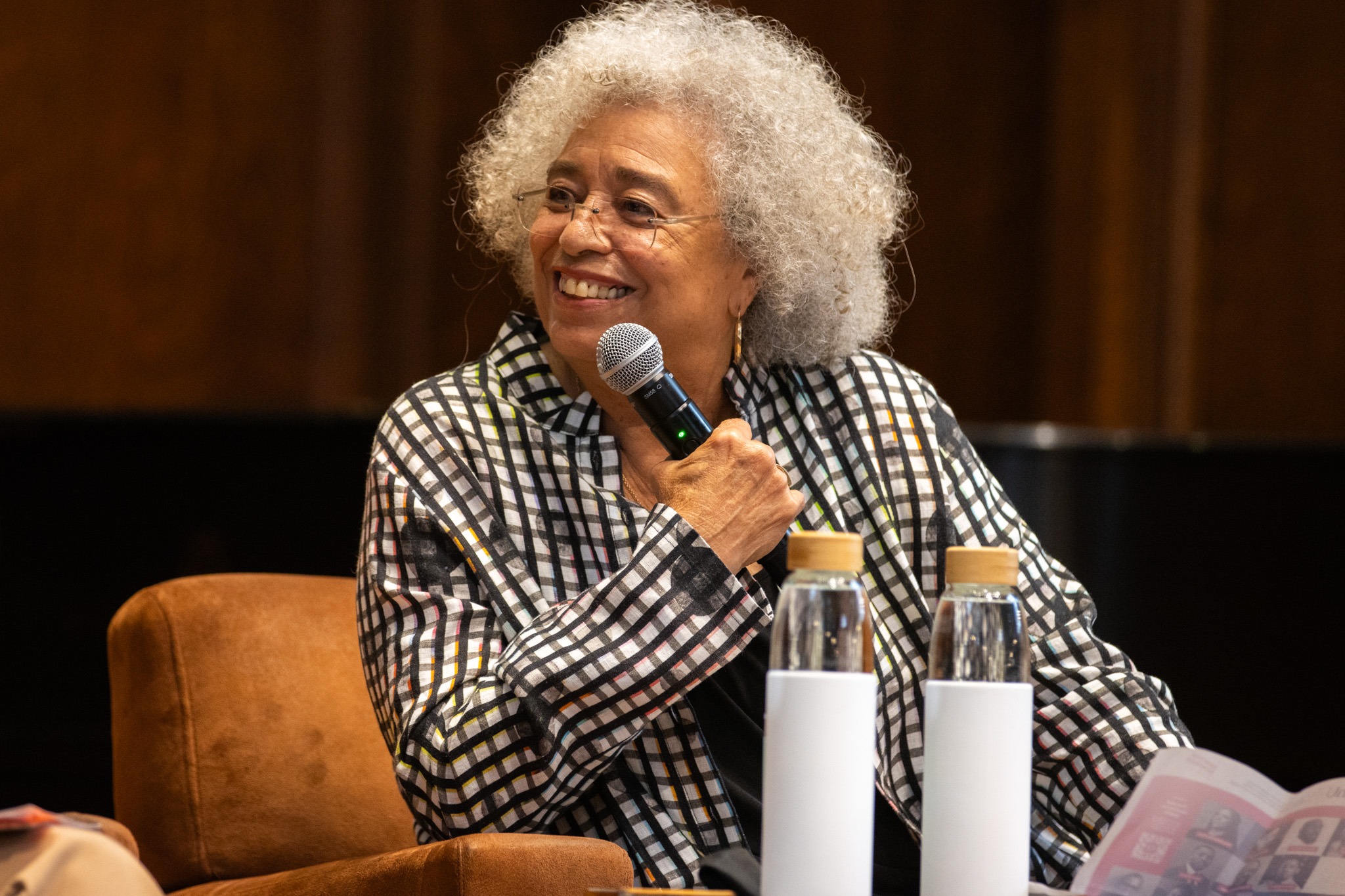
Synder contextualized Shakespeare as an “American superstition” in relation to bardolatry in her research (Rachel Benitez-Borrego | Staff Photographer).
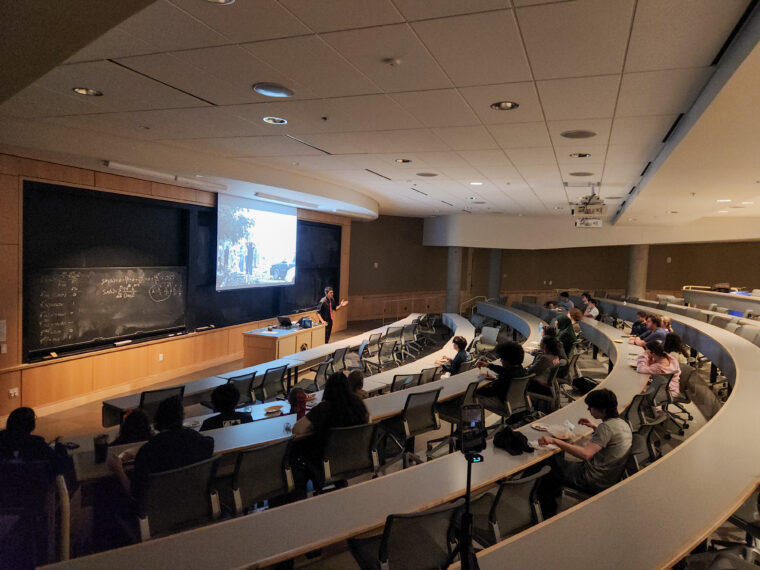
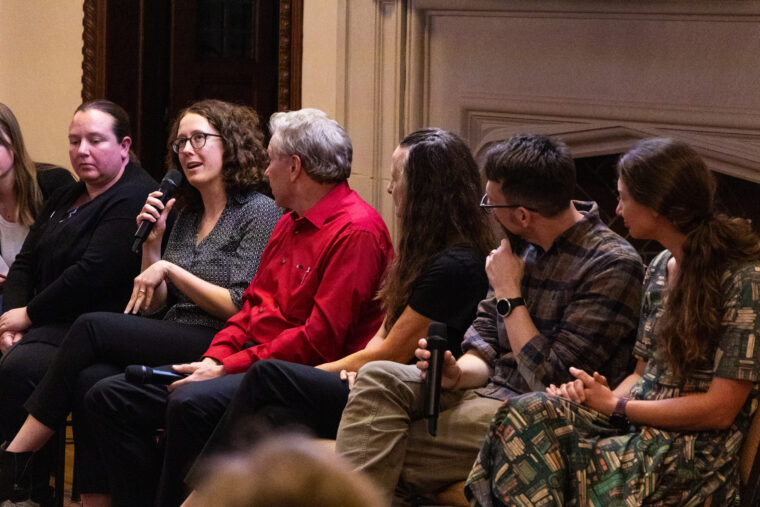
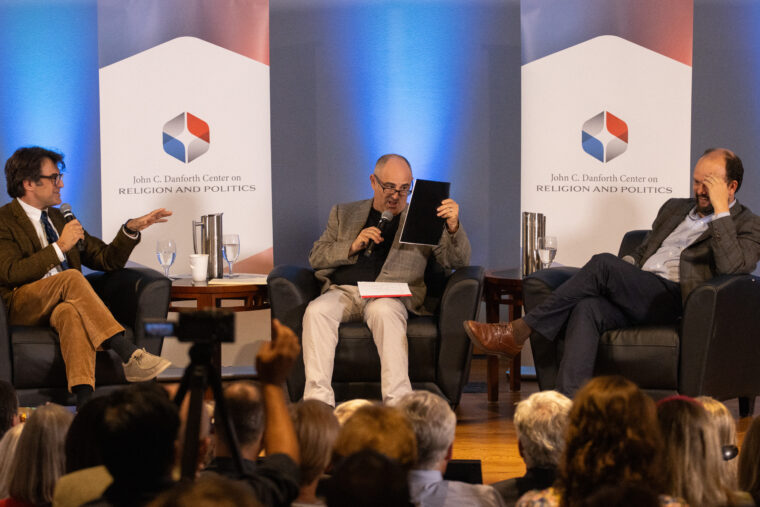
The John C. Danforth Center on Religion and Politics hosted Notre Dame assistant teaching professor, Jillian Snyder, to discuss her research on how William Shakespeare’s works have, historically, been perceived similarly to biblical texts. Snyder drew in a small but engaged audience, mostly composed of graduate students and faculty.
Mark Valeri, director of the Danforth Center on Religion and Politics, invited Snyder after attending her talk at the Renaissance Society of America’s annual meeting.
Snyder broke her talk up into three “acts”: bardolatry (the excessive admiration of Shakespeare), how lessons from Shakespeare’s work have been integrated into religious services and programs, and finally, Bob Jones University’s (BJU) focus on unusual films and rendition of “Macbeth.”
Valeri spoke on the importance of examining the “strange” history of Shakespeare and its renditions, particularly by BJU. He suggested that engaging with history as it is, rather than reshaping it to fit modern assumptions, allows for a fuller understanding of its complexity.
“I’m really eager to have the whole WashU community take history seriously in its own terms and not always to drive towards any contemporary lesson, but just to sit with the history for a while and do it really well and allow voices from different times and places to speak,” Valeri said.
Snyder said Shakespeare has often helped people understand humanity.
“For many, Shakespeare acted as a sort of constant vigil who helped guide people through the dark woods of human nature,” Snyder said.
Snyder is currently working on two book projects, one of which is about bardolatry and how Shakespeare’s work is treated as a “second” and “secular” bible. The other is about the Protestant Reformation.
In Act 2, Snyder described how the Chautauqua movement, founded in 1874 as a Protestant Sunday school training program that evolved into a broader adult education movement, regularly included Shakespeare lectures and performances as part of its cultural programming.
“Shakespeare was listed alongside other authors as what [John Heyl] Vincent would call the distinguished students of human nature, whose stories were ministers against the false philosophy of each age,” she said.
Snyder showed the audience two short clips of the BJU rendition of “Macbeth” during Act 3 of her talk. The scene of Macbeth’s downfall caused laughter among the attendees, but Snyder quickly redirected their attention towards the reason she chose to show these clips — the fact that BJU chose to cut lines out of the production related to the devil, witchcraft, and other sins.
She posed the question of why the producers might have made this choice to the audience, prompting history Ph.D. student Ben Wexler to reflect on how art can be analyzed differently across various spaces and points in time.
“There are lots of different ways to read literature, and part of what’s both exciting and I guess frightening about it sometimes is just how mutable it can be,” Wexler said. “Different people can take such drastically different things from reading someone like Shakespeare, from reading the Bible, any of these things.”
Naomi Kim, a Ph.D. candidate in the English department, expressed interest in Snyder’s research methods.
“I think that her analytical and historical methods are very impressive and sound and persuasive,” Kim said. “I think her method of the literary historian approach, where she looks at different adaptations and different ways in which Shakespeare has been taken up and through how Shakespeare has been taken up across time, is really interesting, and that helps us historicize literature and religion.”
In an interview with Student Life after the event, Snyder explained what inspired her to pursue her interest in the relationship between Shakespeare and religion.
“I find that literature has an interesting way of capturing human story, and that religion does the same thing,” Snyder said. “We’re trying to kind of narrate ourselves through the world and through our lives in the world, and give our lives meaning. And so I find bringing those spaces together actually can create insights [as] to who we are as people.”
Stay in Touch!
Get the latest and top news from StudentLife delivered to your inbox