Forum | Sex Issue | Sex Issue 2025
‘Accidates’ are ruining relationships
 Elma Ademovic | Staff Illustrator
 How many times have you been asked or asked someone else to “hang out?” It doesn’t even have to be in a romantic context. It’s such a common, vague statement that it can be applicable to almost any situation. Our generation is obsessed with nonchalance, so this is a safe and comfortable way to shoot your shot. You have enough plausible deniability to deny any romantic intention if you get rejected. If someone accepts, though, then your feelings are requited, right?
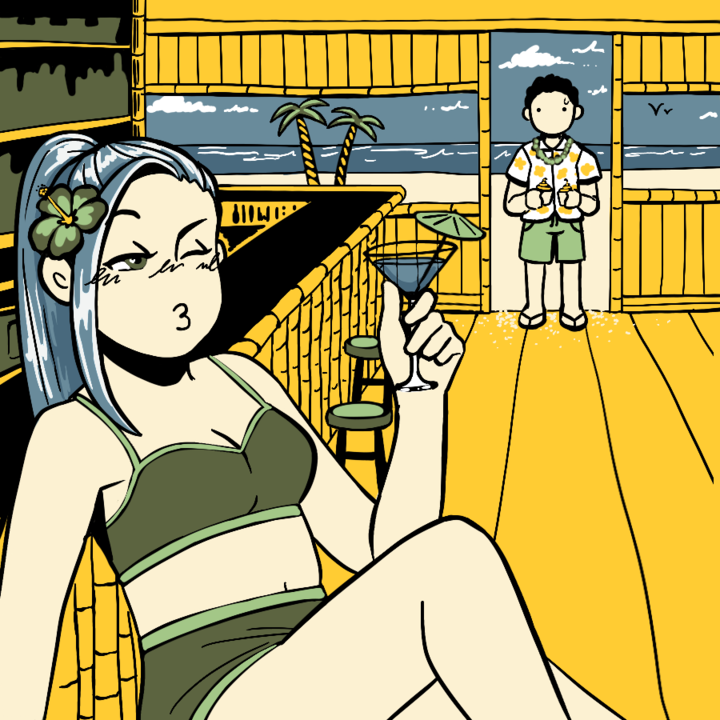
The issue with this logic is the intentional ambiguity. Having been on the receiving side of the romantic version of the statement, I can confirm that this method is fundamentally flawed because the statement is used for so many situations. The amount of times I’ve accidentally gone on dates I thought were chances to make friends is both excessive and embarrassing. I created a term for it: the “accidate.”
It’s awful for everyone involved. Having to tell someone that you only agreed to go on a date because you didn’t realize it was a date is a harsh rejection. I hated delivering it, and others hated receiving it. I hated the accusations of leading someone on, and I hated having to constantly reassert the friend zone in my interactions. It often felt unfair, but for a long time, I believed the experience was caused by my individual obliviousness. However, I’ve recently discovered that this issue transcends levels of social awareness.
The issue seems especially prevalent with men asking out women. Many of my female friends have ended up in that awkward misunderstanding with a guy friend. This happened with one of the most socially aware girls I know. She is incredibly perceptive, but she still ended up on an accidate with her guy friend of four years. How was she supposed to discern the difference between this “hang out” text in comparison to the numerous other “hang out” texts in their four years of friendship?
The more I use the term “accidate,” the more I discover that the experience is extremely common, frustrating me more. It is unreasonable to expect your romantic prospects to read your mind to find the subtle (or, more accurately, nonexistent) romantic tone or cues, but people still do. Friendships end because of these instances. It is an impossible standard to hold anyone to, and it creates unnecessary tension and stress in forming bonds with other people.
Even when someone reciprocates those romantic desires, the accidate — at the very least — complicates things. Another friend of mine got accidated by her current partner. It worked out, and they are still together. However, this blurs the first date threshold that would usually establish an anniversary. It also unnecessarily delayed them getting together and made my friend anxious about the status of their relationship. The friend zone looms more menacingly when you obscure the communications about the type of encounter you are pursuing.
Moreover, this intentional lack of clarity leads to modern plagues on love. We lament the lack of labels in today’s situationships, but we perpetuate the cycle by building relationships on an indefinable foundation. If we want to see more clarity in our relationships, we must begin in our attempts to initiate these bonds. We must make the trajectory of the relationship clear and agreed upon by both parties.
Accidates are also a sign of the plague of dying romance in today’s love. Dates were once expressions of feelings. They were meant to be an act of romance, and asking people on dates was a declaration of affection. Part of the reason romance is dead is because we are killing it by avoiding this clear chance. There is no romance in asking someone to “hang out” in a setting that could just as easily be platonic. We have to leave behind the comfort of plausible deniability. Right now, romance is suffering because we are all too afraid to even use the word “date.” If we want romance back, we have to start pursuing it directly. It will require bravery and change, but it will produce better relationships and love stories for us all.
Stay in Touch!
Get the latest and top news from StudentLife delivered to your inbox