Scene
The Spring Ensemble’s annual concert takes individuals on a journey through time
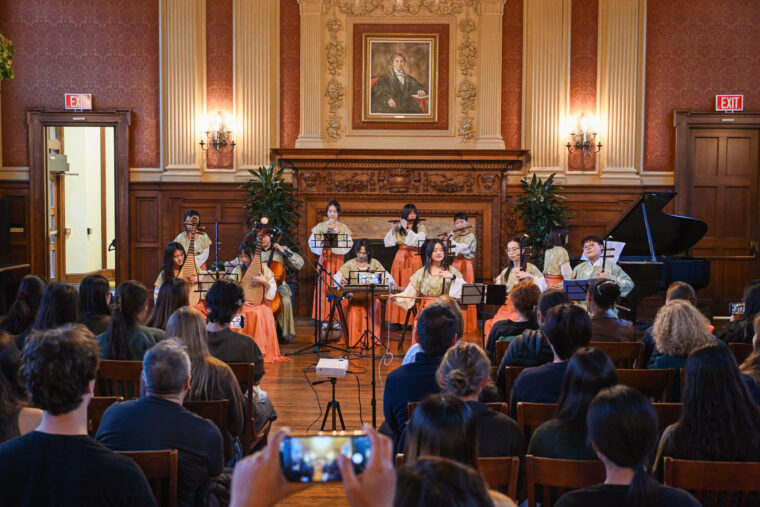
Photo Courtesy of Gloria Zhang
The annual concert of the WashU student music group Spring Ensemble took place on campus on Sunday, April 19, at 7 p.m. The event, titled “Echo of the Spring Hills,” featured many traditional Chinese instruments. As an international student from China, it’s been too long since I heard any of those instruments, so I decided to check it out. Turns out, it was indeed worth my time, as I witnessed how music genuinely brings people together across times and cultures.
When I arrived in Holmes Lounge, where the concert was taking place, the chairs originally felt a little bit squished together, but that feeling quickly went away beneath the warm lights asthe audience chitchatted merrily among themselves. When the host and the first group of performers came on stage, things quieted down as the audience waited for the start of the show.
The show opened with an a cappella cover of “Is This What Love Is?” by Wasia Project and “Isha’s Song” by Eason Chan, featuring the student a cappella group Sensasians. The ethereal, harmonizing vocals captivated the audience’s attention in full.
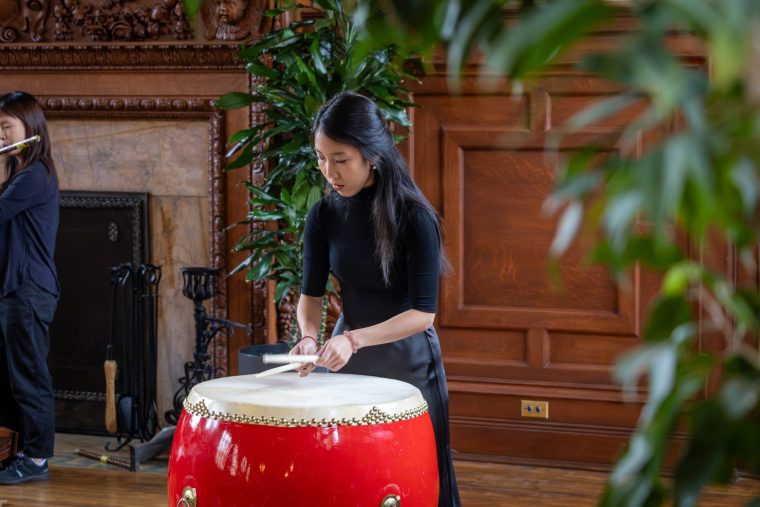
Next up was “Fearless” by Jay Chou, a pop song inspired by the life of the Chinese martial artist Huo Yuanjia. The big drum (dagu) anchored the tempo and practically made the floor tremble throughout this piece. The deep, reverberating beats were met with the smooth melodic elegance of the dizi, a bamboo flute. Joined by many other instruments, they carried the audience away into another world. It was amazing to hear all of the sounds come together into a flow without a conductor.
Another definite highlight of the show was “Bring in the Wine,” performed by the student rock band The Half-Body Harp. “Bring in the Wine” is a poem that was written 1,200 years ago by poet Li Bai, and like all traditional Chinese poems, was intended to be performed through song. Even though the original song for “Bring in the Wine” was long lost in history, the band brought it to life once again with electric guitars and a five-piece drum set.
The concert concluded with another cheerful contemporary piece, “Climbing Spring Mountain,” which served as a callback to the name of Spring Ensemble. The performers walked off the stage and mingled with the audience, bringing their instruments along. This was a rare opportunity for many to get up close with traditional Chinese instruments and learn how they work.
The concert was quite an emotional experience and it was clear that the performers put a lot of thought into the playlist. They took the audience on a trip through time, navigating deftly between the traditional and the contemporary. They also found a delicate balance between the unique character and strength of each traditional instrument. The audience and the performers connected with each other across cultural backgrounds, and the experience truly embodied the Chinese saying “高山流水遇知音 [gao shan liu shui yü zhi yin],” which describes how people find deep mutual understanding through music.
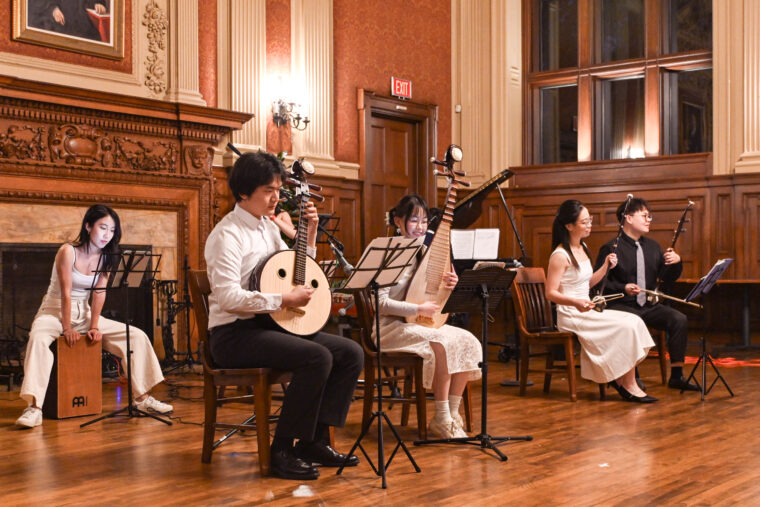
Photo Courtesy of Gloria Zhang
Stay in Touch!
Get the latest and top news from StudentLife delivered to your inbox