Scene
‘Love, Scene’: Professing love

It’s August 1981. It is orientation for newbies, and a flustered latecomer takes the only empty seat left in the room. He whispers, “What did I miss?” to the pretty girl sitting next to him, completely unaware that this woman is his future wife.
While this may sound like a classic meet-cute between two college first-years, this is actually the story of WashU Professors Lynne Tatlock and Joe Loewenstein. And they are far from the only example among WashU’s faculty. There are several couples that students might not know of.
Although working at the same institution has its perks, navigating life as a couple in academia can be difficult. But, as the cliché goes, love always finds a way.
Lynne Tatlock and Joe Loewenstein
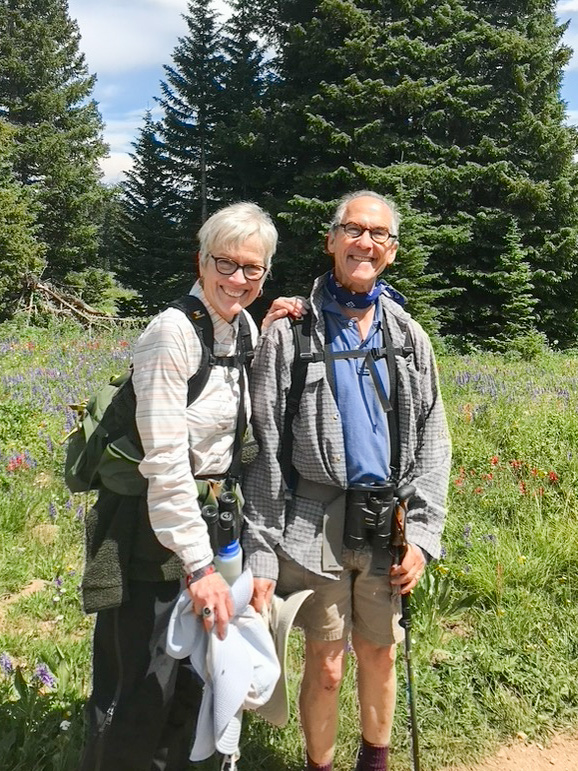
Photo courtesy of Lynne Tatlock and Joe Loewenstein
Tatlock and Loewenstein met as new faculty members at the University. The couple married in 1988, and they have been navigating life as married academics ever since.
“In some ways, I’m only fit to be married to a fellow academic because our pace of life is different [from non-academics], and you don’t have to explain everything,” Tatlock said. “We’re not nine-to-five in any sense … [we’re] more 24/7.”
Loewenstein, a professor of English, and Tatlock, a professor in the humanities, have had the opportunity to collaborate on several articles, allowing them to spend time together as colleagues and as husband and wife.
While it’s not every day that you get to work with your spouse, it is even less common to have your husband as your student. Unless, of course, you’re Tatlock, who has experienced both.
“Joe, except that he doesn’t do his homework, [is] a good student,” Tatlock said. “What was really gratifying [was when] I’d come home and [I would say], ‘Oh, that class wasn’t so good.’ And he’d always [say] how great the class was and how much [he] learned.”
Loewenstein took one of Tatlock’s introductory German classes in preparation for an article the two were writing together. The two have co-authored three articles in total.
“It was difficult at times, because if there’s a deadline, I finish two weeks in advance, and if there’s a deadline, Joe finishes a week late,” Tatlock said.
While both Loewenstein and Tatlock appreciate the opportunity to work at the same institution as their spouse, they recognize that this unique experience comes with its own set of challenges.
“The disadvantages are that one doesn’t fully escape from the other person’s world, and I would imagine that normal people escape from each other’s world more than we do,” Loewenstein said.
Kristin and Abram Van Engen
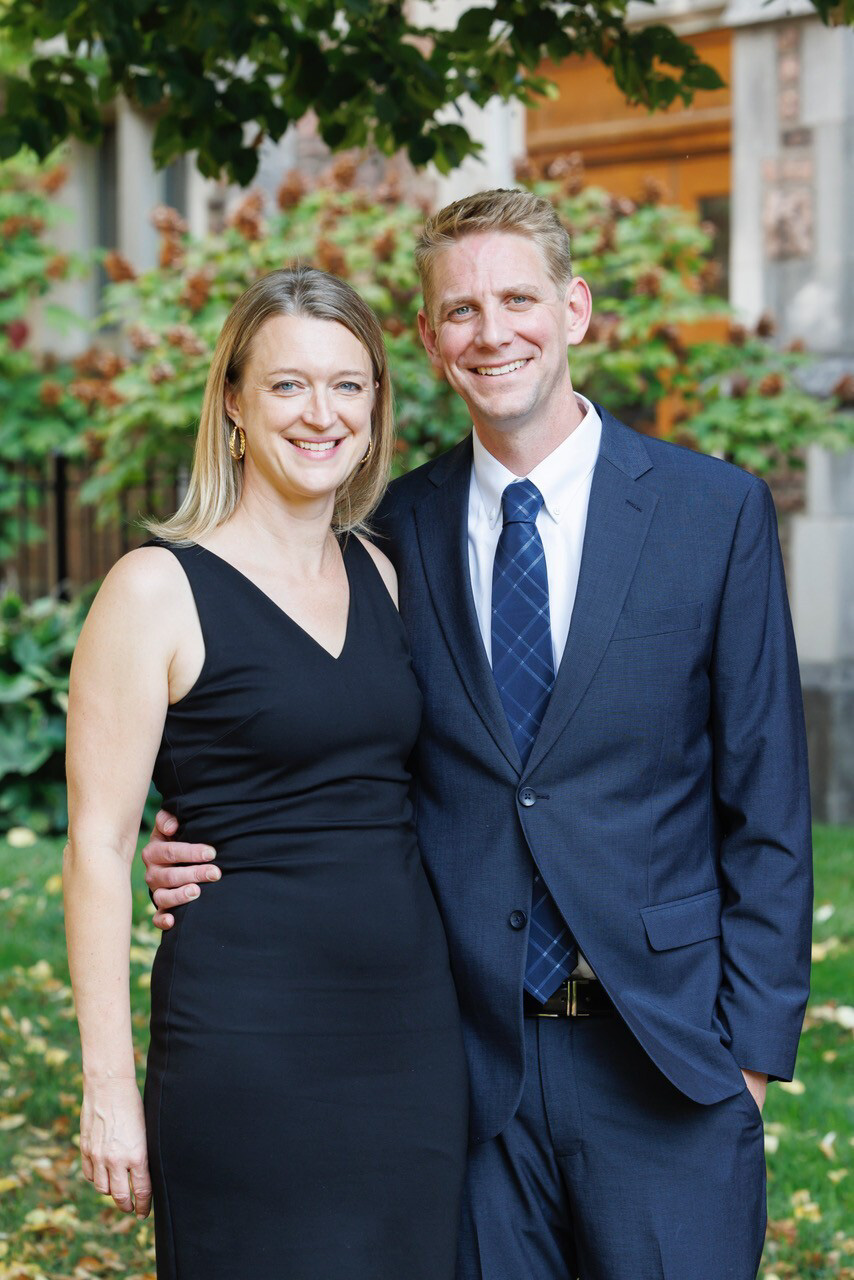
Photo courtesy of Abram and Kristin Van Engen
Professors Kristin and Abram Van Engen’s story is more common for couples in academia, as the two did not meet at WashU. Rather, they were previously married and both took jobs at the University after a position was offered to Abram.
Before coming to WashU, the Van Engens worked at two separate universities in Texas that were 85 miles apart.
“It was harder for either one of us to dig into the communities at our universities [in Texas],” Abram said. ”Being both here really allows us to both be a part of WashU much more than it would be at different places.”
For many tenured professors, part of the job includes participating in some sort of leadership role in the University. Abram is no exception, serving as both the chair of the Department of English and the director of the John C. Danforth Center on Religion and Politics. For Abram, having a spouse in a different academic field (Kristin is a professor of Psychological & Brain Sciences and Linguistics) has helped him be a more understanding and knowledgeable leader.
“He understands the University better, which I think has benefited him, especially in leadership roles,” Kristin said. “He knows what it’s like to be applying for grants as a scientist, and that kind of thing. [He] understands other parts of the University well because he lives with somebody who’s doing it.”
William J. Maxwell and Julia Walker
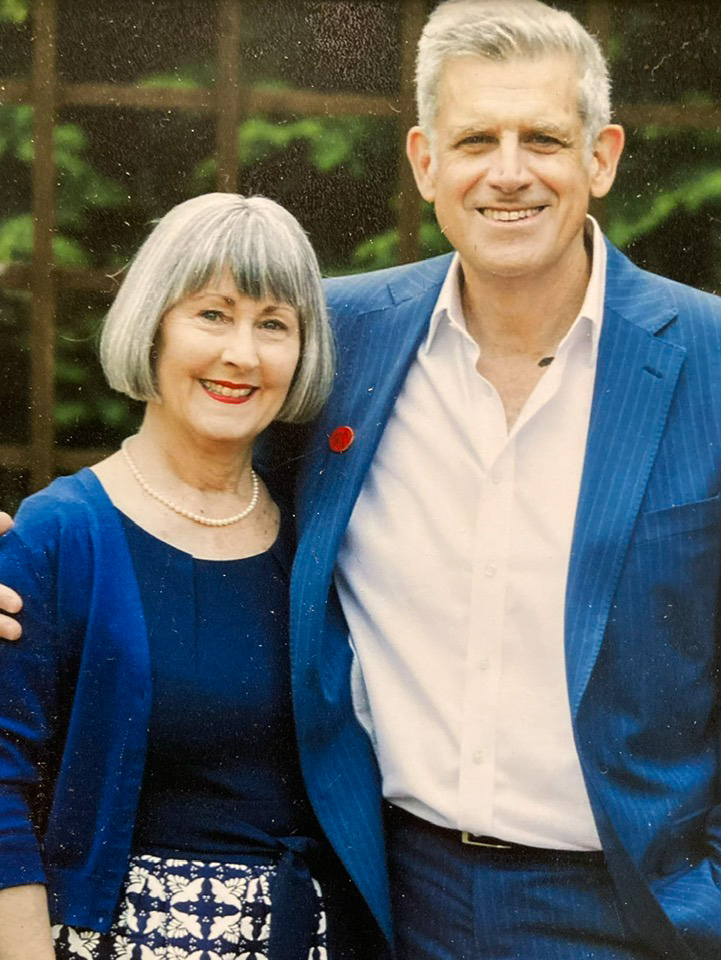
Photo courtesy of William Maxwell and Julia Walker
Like the Van Engens, Professors William J. Maxwell and Julia Walker worked at different universities for years before ending up at University of Illinois, Urbana Champaign together in 1999. In the mid 1990s while Walker finished her degree at Duke, Maxwell worked in Switzerland at the University of Geneva. The pair came to WashU together in 2008.
“[Switzerland] began a pattern in which we would be together for a year, through hook or by crook, and then one of us would get hired somewhere else … We would not be together constantly during those years,” Maxwell said.
Unfortunately, this pattern of long-distance marriage is not unique to this particular pair of academics.
“This pattern of long-distance commuting is very familiar to many academic couples because it’s a great job, but you really don’t get to choose where you’re going to be,” Maxwell said.
Now, Walker and Maxwell enjoy seeing each other every day and even set aside time consistently to have a 5 p.m. happy hour and discuss non-school-related topics. Maxwell is a professor of English and African and African American Studies, and Walker is a professor of English and Performing Arts.
According to Maxwell, while the two are very good at establishing boundaries to separate their work life from their home life, he appreciates being able to turn to Walker when necessary.
“Julia is my last and favorite reader,” Maxwell said.
Stay in Touch!
Get the latest and top news from StudentLife delivered to your inbox