Scene
German artist Anselm Kiefer featured in new Saint Louis Art Museum exhibit
Mac Motz | Staff Photographer
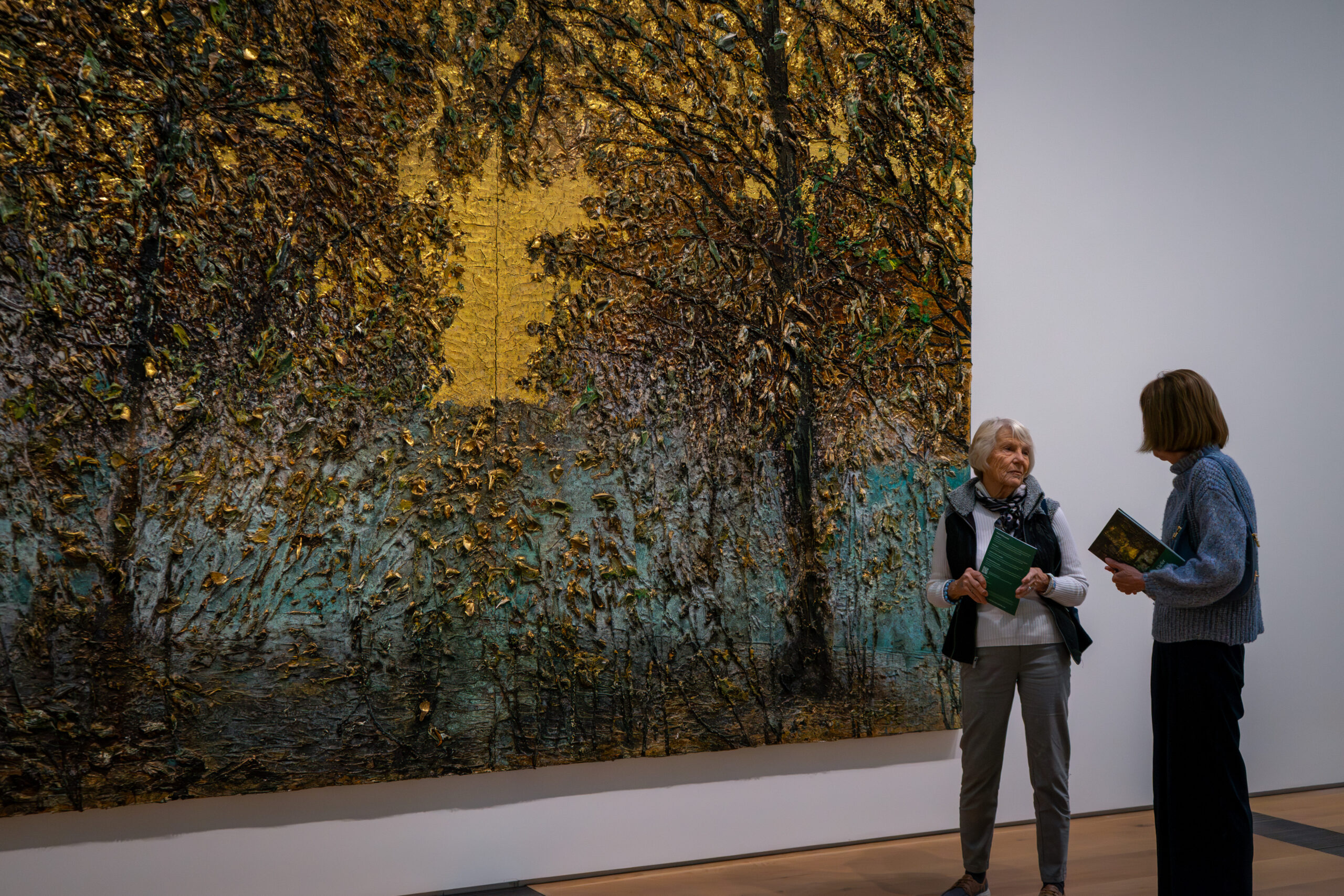
After 2 1/2 years of development, the Saint Louis Art Museum (SLAM) unveiled German artist Anselm Kiefer’s “Becoming the Sea” exhibit on Oct. 18, 2025. The exhibit, which encompasses nearly 30,000 square feet, has proven to be one of SLAM’s most ambitious undertakings in recent years. The exhibition is multipronged and reflective of Kiefer’s personal ambition to touch the hearts and minds of his viewers.
Kiefer’s artistry is deeply influenced by his life experiences, made apparent throughout the exhibition. It features paintings he made while his wife was in the hospital, artworks inspired by his studies as a constitutional lawyer, and pieces that delve into themes of anti-nationalism and philosophy.
The inspiration for this strenuous project came from Kiefer’s 1991 visit to St. Louis, during which he is said to have strongly resonated with the deep history of the community and the Mississippi River. His connection to the region is that his childhood home is on the German Rhine.
“[It is] unique of him to build this exhibition to connect with the St. Louis community,” said Melissa Venator, SLAM’s Andrew W. Mellon Foundation Assistant Curator of Modern Art.
The making of this exhibit was no small feat. These enormous paintings were shipped across the Atlantic Ocean, many coming from Kiefer’s studio in the suburbs of Paris, and needed to be cut in halves, thirds, or even fourths to accommodate shipping dimension restraints.
“[It was] an incredibly ambitious, huge financial undertaking, huge logistical undertaking [with] paintings the length of a city bus,” Venator said.
SLAM placed an enormous importance on interactivity and community outreach, including family events, an interactive guide, and a showing of Kiefer’s documentary on Nov. 21-22. Kiefer went so far as to request that the museum not implement stanchions (the restrictive wire typically in front of art pieces) on any of his paintings or artworks, aiming to encourage full immersion and personal understanding, as he desired the interpretation of his artworks to be entirely up to the visitor.
“[Kiefer] wants to prioritize the visitor’s encounter with the artwork,” Venator said.
The exhibit’s visitor guide contains limited descriptions of each piece, an intentional decision made by the artist. SLAM copyeditor Anne Handley-Fierce was responsible for working with Kiefer to create visitor descriptions and spoke on how particular and interesting it was to collaborate with an artist whose pieces are still evolving. It played a major role in differentiating this exhibition from many others.
“[It is] different to work with a living artist,” Handley-Fierce said.
Kiefer views his art as perpetually evolving, downplaying the importance of maintenance and protection for the sake of letting the pieces change naturally. Transformation is a major motif in this exhibit. In many ways, SLAM had to undergo a transformation of its own to fit Kiefer’s vision by making unconventional changes to its typical curation protocols.
A prime example of this is the museum’s window shades. Shades are typically lowered to accommodate the light-sensitive nature of artworks, but Kiefer requested that the shades be kept up.
“[This is to] encourage connection with the outdoors,” Venator said.
As a whole, the exhibit is filled with deep, historical richness and meticulous artistic decisions. With the immense support of the SLAM, Kiefer’s exhibition aims to have a profound impact on the St. Louis community — encouraging risks, invigorating new ideas, and, as Venator would describe it, inspiring its viewers to be “a river unafraid of becoming the sea.”
Stay in Touch!
Get the latest and top news from StudentLife delivered to your inbox