Scene
A semester of SLAM
The St. Louis Art Museum (SLAM), located in Forest Park, has a permanent collection of over 30,000 works, spanning centuries and collected from across the globe. However, as well as displaying approximately 2,700 pieces from the permanent collection, SLAM presents various special exhibitions throughout the year. Here’s a few from this past semester.
Art in Bloom
There is a striking irony to the annual “Art in Bloom” exhibition at the St. Louis Art Museum (SLAM). Lasting only three days, from Friday, Feb. 27, to Sunday, March 1, the exhibition juxtaposes ancient artworks with floral masterpieces that barely survive through the weekend. Oftentimes, the artists even have to replace and refresh parts of their design multiple times throughout the weekend, because the flowers wilt quickly. Once the exhibition is over, the arrangements are deconstructed, and the blooms are disposed of or reused if possible, although they are usually too withered to be repurposed. Overall, the exhibition is the embodiment of transience.
Each ephemeral floral arrangement is inspired by and paired with a permanent piece from the museum, many of which are well over a thousand years old. Every year, the museum chooses 30 pieces from its collection, then opens applications to floral designers in the St. Louis area, who will randomly be assigned a piece to inspire their floral creation. In addition, the museum has a featured display in the Sculpture Hall that tends to be the centerpiece of the exhibition; this year’s arrangement was by New York-based floral designer Rachel Cho.
At SLAM, “Art in Bloom” began as an invitational event with only around 7,000 attendees. The exhibition expanded several years back, becoming an open call to any floral designers within a 100-mile radius of St. Louis, and last year’s celebration saw over 30,000 attendees.
“It’s an incredible weekend, an opportunity to connect with new people to build connections and to experience joy together, no matter where people are coming from, no matter their walk of life, no matter their background … and then you’re getting a whole new side of art while you’re there,” said one of this year’s floral designers, Darien Burress.
Alex Dering | Photo Editor
Currents 125: Blas Isasi
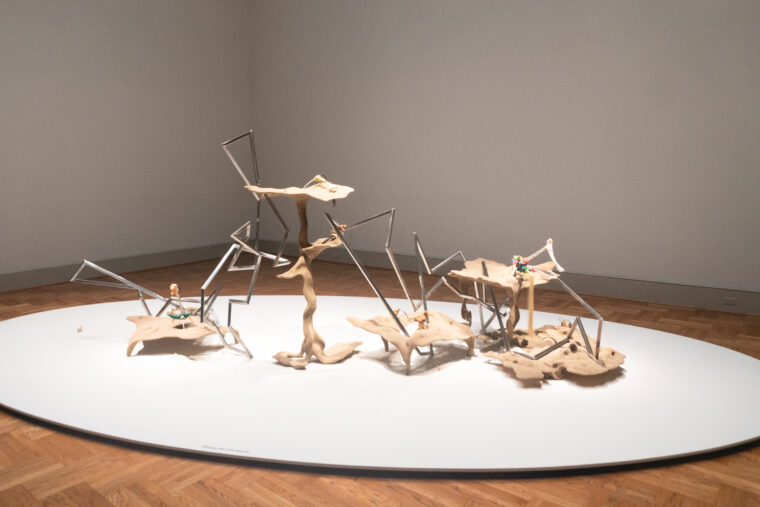
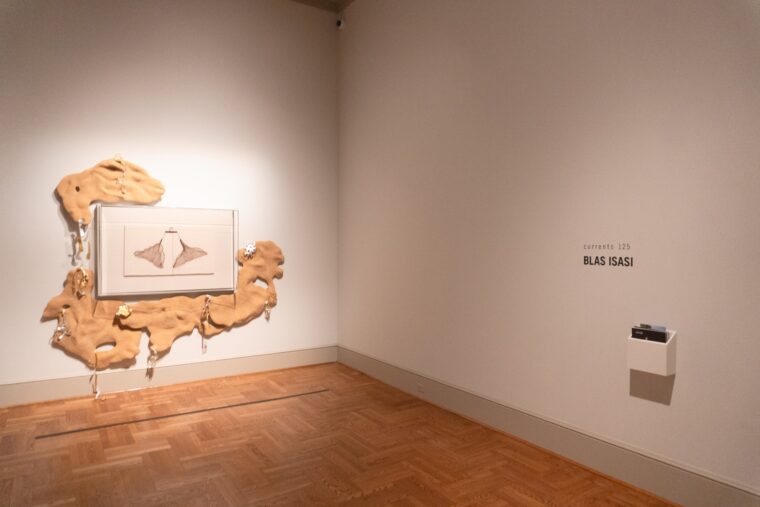
On Feb. 6, 2026, SLAM opened Peruvian artist Blas Isasi’s “The weight of a gaze (is to listen to the sound of a kilogram)” as part of the museum’s “Currents” series. This series occurs annually as part of WashU’s Henry L. and Natalie E. Freund Teaching Fellowship.
The fellowship, which includes a single-class teaching position at the Sam Fox School, offers artists a $45,000 teaching award, studio space, access to the Sam Fox facilities, and the solo exhibition at SLAM. SLAM presents the exhibition each year under the title “Currents,” but Isasi also titled the exhibition using his characteristic poeticism and meaning. “The weight of a gaze (is to listen to the sound of a kilogram)” is inspired by a Chincha Inka balance that Isasi came across in SLAM’s permanent collection. Isasi incorporated the balance itself into his exhibit, surrounded by sandstone sculptures with aluminum foil pieces.
Isasi’s current work strives to embody the desert geography of Peru, and especially of his home city, Lima. Alongside the natural landscapes of Peru, Isasi has attributed much of his inspiration to ancient Andean civilizations, such as the Moche and the Sicán. In addition to being inspired by Andean art and and architecture, he explores ancient Andean analyses of the nature of existence through mythology, called ontologies, as well as cultural narratives that explain the origin and structure of the universe, or cosmologies.
In addition to exploring the histories and mythologies of non-Western and pre-Western cultures, especially those of the Andes, Isasi hopes that his art can bridge the gap between the future and the past, allowing people to envision a different world.
Alex Dering | Photo Editor
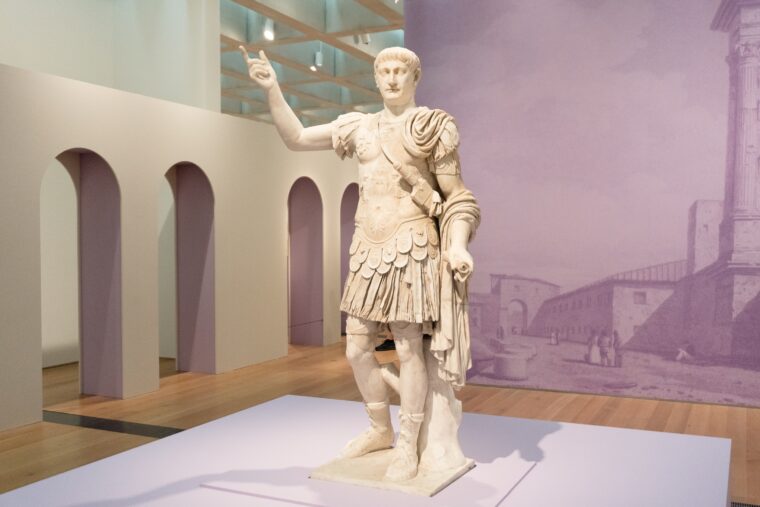
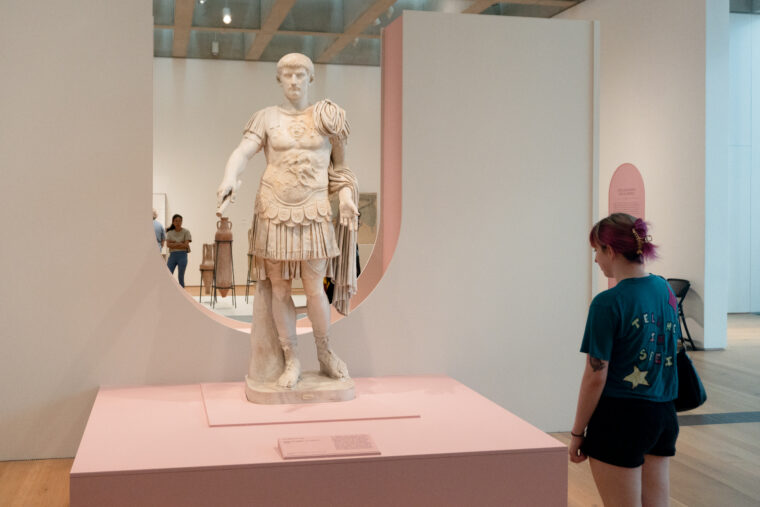
Ancient Splendor: Roman Art in the Time of Trajan
“Ancient Splendor” is a traveling exhibition and is being shown in only two museums in the U.S. Before making its way to SLAM, the exhibition was shown in The Museum of Fine Arts, Houston in Houston.
The show has been in the works for several years and is a unique exhibition because of the way it came to be. Rather than being organized solely by SLAM, the show was put together by an organization called StArt that specializes in arranging shows on Italian art to send to foreign institutions. The chief curator of “Ancient Splendor” was Lucrezia Ungaro, the now-retired director of the the Museum of Imperial Fora in the Trajan’s Markets.
While four of the sculptures and many of the coins in “Ancient Splendor” come from SLAM, most of the works come from four major Italian institutions: The National Roman Museum, the Archaeological Park and Museums of Ostia Antica, the National Archaeological Museum of Naples, and the Vatican Museums. For many of these pieces, this is the first time they have left Italy.
According to Hannah Segrave, an associate curator at SLAM who also curated the show, the exhibition is separated into three sections: The first two rooms focus on Trajan and the imperial household, the next few rooms explore the households of everyday Romans during Trajan’s reign, and the final section of the show delves into the public sphere of Roman life, from theater to gladiators, food to shipping, and Roman baths to religious practices.
Segrave’s main goal in the exhibition was to engage the St. Louis audience in a way that is less serious and dramatic than the way that many Americans tend to view the ancient Romans. She also wants to reflect stories that are easily overlooked: the lives of women and enslaved people and the different aspects of class and labor.
The exhibition has also been paired with another small exhibition, called “Visions of Antiquity,” which explores portrayals of ancient Rome by artists in later centuries.
Stay in Touch!
Get the latest and top news from StudentLife delivered to your inbox