Scene
‘Movements are always about hope’: New sociology professor Zakiya Luna’s faith in sustained efforts of social change

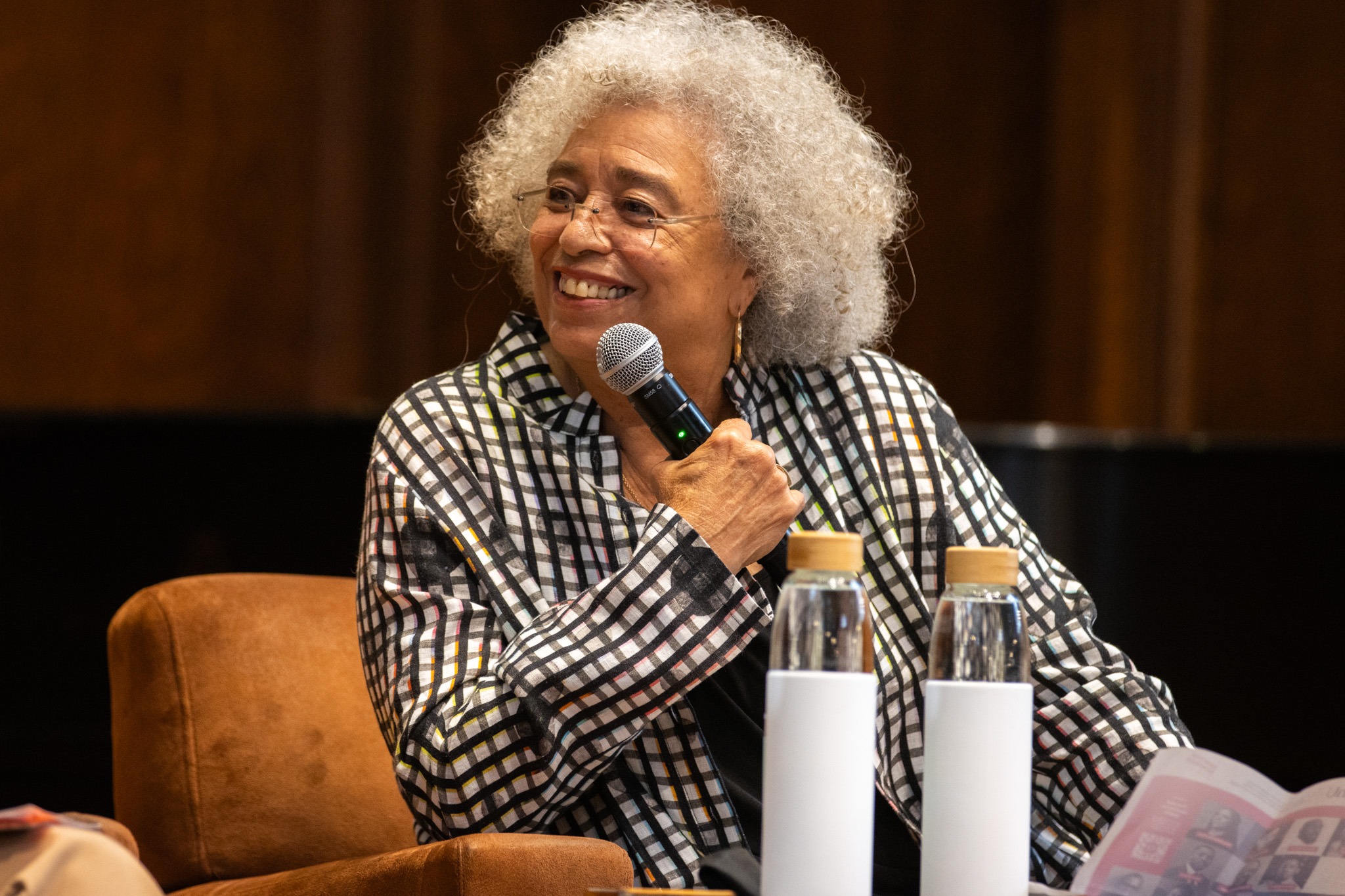
Zakiya Luna is joining the University’s sociology department as an associate professor, bringing expertise in areas including social movements and reproductive rights. (Courtesy of Zakiya Luna)
Associate Professor of Sociology Zakiya Luna has early memories of her mother bringing her to anti-apartheid rallies and other protests.
“From a pretty young age, I was exposed to the idea that it’s important to speak up for issues that are affecting the world,” she said.
Luna carried that sentiment with her throughout her youth, eventually coming to study and write about social movements throughout history. In September of last year, Luna released a book about the intersection of reproductive rights and the often glossed-over activism championed by women of color, titled Reproductive Rights as Human Rights.
In spring 2022, Luna will start teaching undergraduate and graduate sociology courses at Washington University. She is one of four new hires that joined the University’s faculty as part of the first round of the race and ethnicity cluster hire initiative launched in 2020.
Luna comes to Washington University from the University of California, Santa Barbara, where she worked as an associate professor of sociology and feminist studies. She continues to be passionate about the history and future of societal and political development.
“I study movements, because to me movements are always about hope,” she said. “Because there’s some level of imagination that’s involved, because you’re imagining a different world than what is present right now.”
At heart, Luna is an optimist about social change — noting that even though not every protest happening today will bring immediate change, “sustained action over time” is what really counts.
“Something that might look like a defeat now, you don’t know [whether] in five years, it could actually have been a catalyst for a major policy,” she said. To illustrate her point, Luna pointed out the tumultuous path taken by Stacey Abrams — who went from electoral defeat to heading a major voting rights movement — and how protests about the Vietnam War eventually led to a lowering of the federal voting age.
In the same vein, Luna is also optimistic about change on a smaller scale — namely, within WashU’s sociology department. In 2015, the University revived the then-dormant department and has since continued efforts to expand it, partly through the cluster hire initiative. Luna said she was glad to witness and be a part of this process.
“When you bring together people who have experiences from so many different types of institutions and different types of projects, and you’re committed to using that wisdom of experience, it’s really exciting,” she said.
Apart from the hours she spends teaching, writing and reading over graduate and faculty applications, Luna doesn’t have much free time. In fact, she laughs at the term, joking that as a professor, she isn’t familiar with it.
When she does get free time, however little it may be, Luna focuses on centering herself. She enjoys baking, and spent a few years perfecting her pie crust, inspired by the Instagram-account-turned-cookbook “Pieometry.”
Luna also centers herself through color. Her blue nails, blouse and keyboard cover remind her of water, where she always finds comfort.
“Water is life,” she said. “Any body of water for me is calming, whether it’s the Mississippi River or [the] Pacific Ocean.”
Lastly, Luna finds herself rooted in the people around her. “Wherever I go, I build community,” she said. “And the reason why those things — like building community and sharing resources, for example — [are] important is that that’s what is building relationships.”
Luna sees herself as a part of a community that will work to create a sustained effort to educate about race and society at WashU.
“I think it’s really exciting that I’m part of an initial cluster hire, but there’s additional cluster hires happening,” she said. “It’s not just a one time commitment. . . there are people that came before me, but also there’s people coming after.”
Stay in Touch!
Get the latest and top news from StudentLife delivered to your inbox