Housing Guide 2025 | News
Three things to consider when picking upperclassmen housing
Ella Giere | Photo Editor
As you get older at WashU, the housing possibilities get greater and greater. The world (or at least University City) is your oyster. Hurray! However, as you get more housing choices to pick from, you also have to consider more factors. But don’t fret! Here are three things to consider when envisioning your upperclassmen housing experience.
1. Location + neighborhood
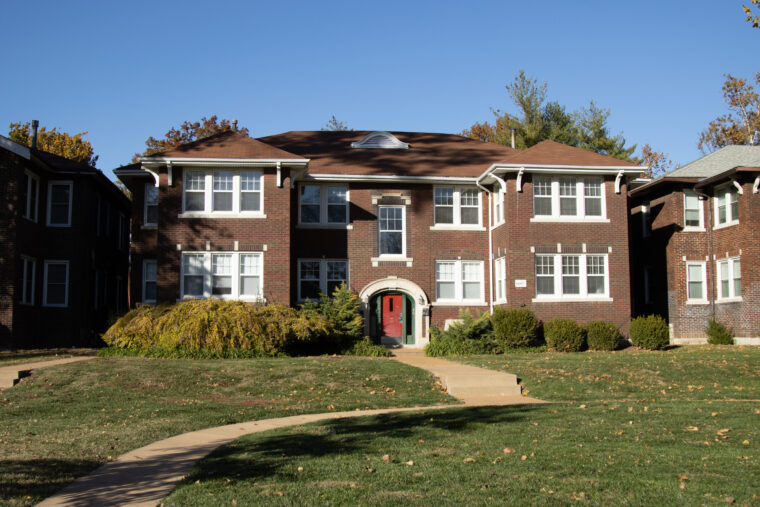
One of the most important things to consider is the location and neighborhood of your potential housing option. WashU upperclassmen housing includes University Drive, Greenway, the Lofts, as well as the Village on campus. Non-WashU housing includes many other options, like the Waterman, Pershing, and McPherson streets, or the University City and Skinker DeBaliviere neighborhoods, to name a few.
First, the big decision is whether to be on or off campus. The Village is convenient because you’re right on campus for your classes, and there’s a mix of grades and different apartment styles. Off-campus apartments can be a bit of a walk (to walk to Olin Library from Lofts, Greenway, and UDrive, it’s about a 20, 10, and five-minute walk, respectively), but there are also a lot of benefits. The Lofts, for example, are new and renovated, and you’ll be right on the Loop, which makes getting food or running errands very convenient. UDrive and Greenway are still close to campus while also giving you an off-campus apartment feel with decent space and variety in bedroom options. Non-WashU apartments are all really different, but each comes with its own neighborhood vibe.
Think about what environments you thrive in the most. My sophomore year, I chose to stay on the South 40 because it often feels a bit more social and lively than the Village. And while apartments are great, it definitely is a different vibe than living with friends and meeting new friends on a dorm floor.
2. Landlords + amenities (to Washu or not WashU)
After deciding on or off-campus housing, you also have to decide if you want to stay in WashU housing or lease an apartment. One of the biggest differences is the price. Depending on what type of housing you choose to live in, rent is typically lower than WashU-owned housing options, and you also get to determine how much to spend on housing instead of being forced into a price.
When considering whether or not to ditch WashU housing, be sure to consider the differences between the two options. In an off-campus apartment, you’ll often have to take care of utilities and Wi-Fi costs. Unlike WashU, you won’t have a maintenance team automatically available whenever you need something in your house fixed or you’re worried about whether or not those black spots are mold. You could also have a terrible landlord who isn’t responsive or just money-hungry. Taking apartments over from older friends is a great way to know the landlord and apartment are vetted.
Make sure that, when you’re touring apartments, you consider what amenities they have and what they may lack. Does it come with a dishwasher? An in-unit washer and dryer? While they may seem like little things, consider what you need in your apartment to have the most enjoyable living experience.
Also, trust your gut if a landlord situation seems off. I once considered housing from a landlord named Chad, who told me not to show the lease to any lawyer (safe to say I did not continue with that housing process). You should definitely read through your lease and understand what it says, and if something feels wrong, make sure to ask your questions and not sign blindly. Worst comes to worst, there are a lot of other apartments to choose from!
3. Who you want to live with + maintaining social networks
With different housing options comes variances in how many roommates you can have. It becomes more common for off-campus apartments to have two or three bedroom options, whereas most on-campus housing is in groups of four to six. Or, you could rent a house with a larger group of people. The possibilities are endless! That being said, it’s important to be thoughtful about who you want to live with in an apartment where you will have more responsibilities, since you won’t have a dining hall a few feet away or a cleaning crew to vacuum for you. If you have a messy roommate that you don’t get along with now, it probably won’t get better when you’re in an apartment.
Also, be prepared to compromise with your roommates. There’s no perfect apartment that checks every box you’re looking for. It’s important to work with your roommates to find a place that has a rent, location, and amenities that work for everyone. Since you have to start apartment hunting for off-campus apartments early, make sure to have conversations with potential roommates early too. Remember, it’s OK to not live with your best friends if they’re not the best roommates!
On the note of friends, keep in mind that friendships will take more effort to maintain when you are spread out among different neighborhoods instead of consolidated in the Village or South 40. If you and your friends are really coordinated and on top of things, you could try to share an apartment building or be neighbors with your friends (though that isn’t always likely). With your newfound space in an apartment, the hosting possibilities are endless, so you can still maintain friendships while living situations start to change.
At the end of the day, the most important thing is to go into the housing process with an open mind. No one housing option is guaranteed, and you can make any house feel like a home with good decorating and good company.
Stay in Touch!
Get the latest and top news from StudentLife delivered to your inbox