Forum
Starting a ‘Rabbit Renaissance’ and reviving campus culture
Kevin Kan | Illustration Editor
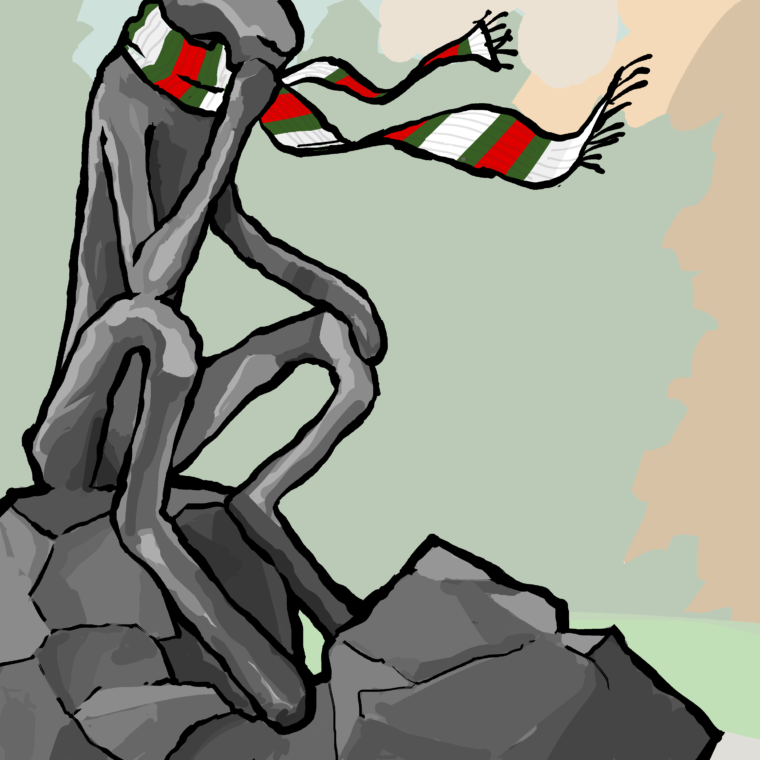
“Don’t touch the rabbit. Don’t touch the rabbit. Don’t touch the rabbit. And… they touched the rabbit.” This is something I often think when I see someone nearing the rabbit — officially, the “Thinker on a Rock” statue — as I watch in horror from the southwest corner of Olin Library. It’s always just sitting, staring, and being off-putting — it’s just a creepy statue in general. Yet recently, I have seen more and more people around the rabbit, whether they’re taking a picture of it or with it or pointing at it. As much as I hate to say it, this rabbit and the people taking pictures of it have got me thinking… The rabbit should play a greater role in our campus culture.
When I first visited WashU, I was told by a student that the statue is frequently decorated for events and shows. Yet, as I near two semesters here, I have not once seen anything on the rabbit. Past articles from Student Life and internet searches depict the rabbit in colorful clothing, but it seems the rabbit has not been decorated since the pandemic. I fear the prophecies from students in 2001 of the rabbit simply being insipid may have come true; the rabbit merely sits and thinks.
The promise of a decorated rabbit was a lie, and I feel that is something we need to change.
The culture I have experienced at WashU has revolved around getting the highest GPA possible and padding resumes, all while obtaining enough volunteer and clinical hours to make Dr. House weep with joy. Although this academically competitive atmosphere was something I expected, I did not anticipate the supreme lack of fun, low-commitment traditions. Nearly everything is application-based or requires exceptional amounts of work, and certain extracurriculars become a student’s entire life. In such an academically focused environment, too many commitments can often exacerbate existing struggles with the workload and making time for friends.
WashU needs fun and simple extracurricular opportunities. Students need publicized events that aren’t club- or school-based. We need more activities to decompress that promote campus culture while giving students a break. This is where the rabbit can help us.
Decorating the rabbit is a simple activity that can bring students together. It costs nothing and takes up minimal time. It poses no risk to your GPA or LinkedIn. Students should value the rabbit as a part of our campus culture and environment. Think of the wonder and awe future students might feel when they see a fully clothed rabbit.
There may be a logistical issue if tons of people suddenly choose to decorate the rabbit, but it’s an issue we should have. Too much engagement is something we want on our campus, rather than the lack we have now. Why not have events centered around decorating the rabbit?
Such a simple concept would leave a lasting impact on the WashU community. Think of it as a living tradition we all could reignite. An artifact that the students own and manage.
Campus culture doesn’t suddenly appear; it’s built by years of tradition and action. We are often so absorbed in our own clubs that it’s rare to see people visit extracurriculars they aren’t a part of. Students need to branch out, break barriers, and make new things. We need the rabbit.
For a second, look back to every memory you have of the rabbit. If you can think of some, I congratulate you, because I have few. Now imagine what could be: a WashU shirt for welcome week, a costume for Halloween, a textbook for finals, a scarf and mittens in winter, a Mardi Gras mask for Mardi Gras, a guitar for WILD, or a ThurtenE jacket for the spring carnival. The rabbit and its decor can be a competition, it can be a group project, it can be so many things.
“Thinker on a Rock” can be so much more, it just needs us to finally think about its usefulness.
All it takes is one scarf.
Stay in Touch!
Get the latest and top news from StudentLife delivered to your inbox