Forum
The U.S. needs to hop on the latest trend: Social media bans
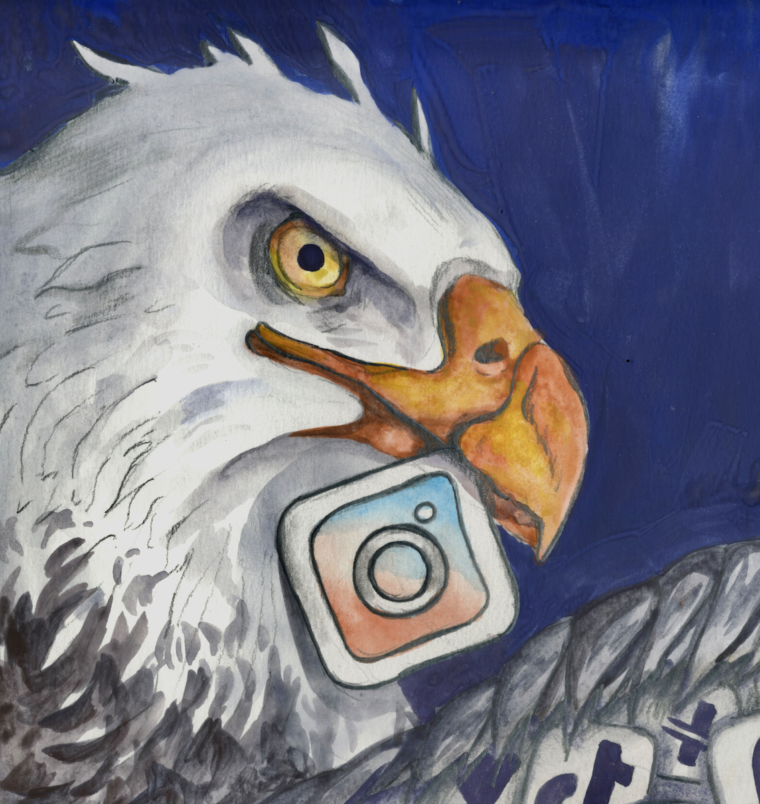
Liam Thomas McManaman | Staff Illustrator
Australia’s done it, Spain’s doing it, and the U.S. is… not?
The U.S. is the latest country to see legal fights over the negative impacts of social media on youth. For years, related cases have increased across the globe. Australia and Spain have both enacted restrictions on social media for minors, along with a host of other countries.
In America, January saw the first round of bellwether cases go to trial, meaning the strongest cases have been bundled together and their rulings will set a precedent for the other hundreds of trials to come.
Last December, Australia banned social media accounts for children under 16. Instead of punishing children or parents for infringing on the ban, social media companies can face fines up to $32 million. The law states that social media companies are responsible for taking “reasonable steps” to keep children off the platform by requiring government identification, facial recognition, or other similar measures.
On Feb. 3, Spanish Prime Minister Pedro Sánchez announced that Spain will begin to pass legislation banning those under 16 from social media, asserting that the government must protect youth from the “digital Wild West.” French President Emmanuel Macron and Denmark’s Prime Minister Mette Frederiksen have both announced they are working to implement similar bans for children.
The U.S. should follow suit. Everyone in the U.S. should pay close attention to the current legal proceedings — they can show us the harm of social media addiction and the platforms’ effects on political polarization, body image, and self-worth.
The plaintiffs of these trials include individuals, school districts, and entire states. The collection of cases appealing before the Los Angeles Superior Court allege that social media algorithms use the same behavioral and neurobiological techniques used by slot machines and the cigarette industry.
Although the international community’s push to regulate social media for minors seems obvious to us, social media plays a diverse, yet often personal, role in the majority of young people’s lives. We decided to interview some of the youngest people on campus because they are the closest to those who might be affected by a social media policy change.
Will Washko, a first-year at WashU, shared his opinion on the matter.
“Honestly, we need to do more than introducing restrictions. [We need to] think about better ways to make … more effective legislation. I mean, our government’s old as hell,” Washko said.
We think Washko has a point: Big Tech has blocked laws aimed at defending kids from the negative externalities of social media in states like Texas and California. Social media companies have pushed back against Congress’ attempts at regulation for years. While we are not policy experts, there are methods by which the government could successfully regulate social media to mitigate the multitude of negative impacts social media has.
One of the major questions addressed in U.S. legal battles is whether or not the apps are addictive and if they were intentionally designed to addict young people.
Representatives from YouTube, Meta (parent company of Facebook and Instagram), and other companies have argued that they have always supported their young users and question the validity of ties between addiction, tech usage, and harm to youth.
We both think the “addictiveness” of social media can’t even be questioned. For Zoe, working at a summer camp that forbids phones means seeing kids as young as eight in distress over not being able to see any social media content. At Lissy’s boarding high school, freshmen have their phones taken away during study hall between 7-10 p.m. every weeknight. Many students struggled with not being able to access social media for even three hours. However, this soon helped new students build reliable study habits and have more structured social media use while away from home for the first time.
Recently, both of us have started using Opal, a social media blocking app, after multiple conversations regarding how negatively the apps have affected our lives.
Since using Opal, we’ve both recognized a decreased urge to “doomscroll,” increased productivity, and less inclination to use our phones when hanging out with our friends.
Despite social media companies arguing that their products are not addictive, some WashU students would beg to differ. We asked some friends for their opinions on the legal battle.
“Yes, definitely. I think they’re super addictive,” first-year Eli Regardie said. “You never actually get satisfied because you’re not engaging with anything, you’re just passively consuming.”
For many young people, their usage of social media is not totally within their control — as with many other types of addiction, people often cannot quit of their own volition. Therefore, some type of government regulation is necessary.
“I think when your brain is barely developed and [you’re already] having to be conscious of how you’re presenting yourself, … [it’s] really bad for people’s self esteem,” first-year Kendall Carlish said.
First-year Austen Downey explained his view of the psychological effects social media can have on young users.
“One of the worst parts is comparing yourself to people that are older and more developed than you,” Downey said.
Still, many are hesitant about government intervention regarding social media use, including students we interviewed.
“I don’t think that the government should have a say in whether kids are on social media or not. I think that’s more about what a parent should decide,” first-year Apurva Ganti stated.
We understand the argument for personal freedoms, but not at the expense of young people’s well-being. Frankly, it’s not realistic that every parent is going to know the ins and outs of the threats and benefits of social media and regulate their children’s usage accordingly.
“I think banning it for younger children sounds good in theory, but … it definitely poses questions about censorship and activism, since it is such a huge way that teenagers get involved in politics and the issues that they care about,” first-year Leilani Billups said.
Billups is right that many young people get their news from social media, which propels them to act for certain causes. Still, social media can also disproportionately affect young people’s opinions and can spread misinformation faster than other sources of information, such as classrooms and in-person discussions with peers.
Regardless of how the bellwether trials conclude, the sheer volume and intensity of the legal fights against large social media corporations should inspire our generation and community to rethink our relationships with social media.
Consider whether regulations and age restrictions (actually enforceable ones) would have benefited or hindered your childhood, your relationships, and your opinion self-image. We believe that age-defined restrictions on social media in the U.S. would have benefited our childhoods, and yours, too. Contact your local, state, and federal representatives today to share your opinion on age restrictions for social media.
Stay in Touch!
Get the latest and top news from StudentLife delivered to your inbox