Forum
How to ethically ‘Chinesemaxx’
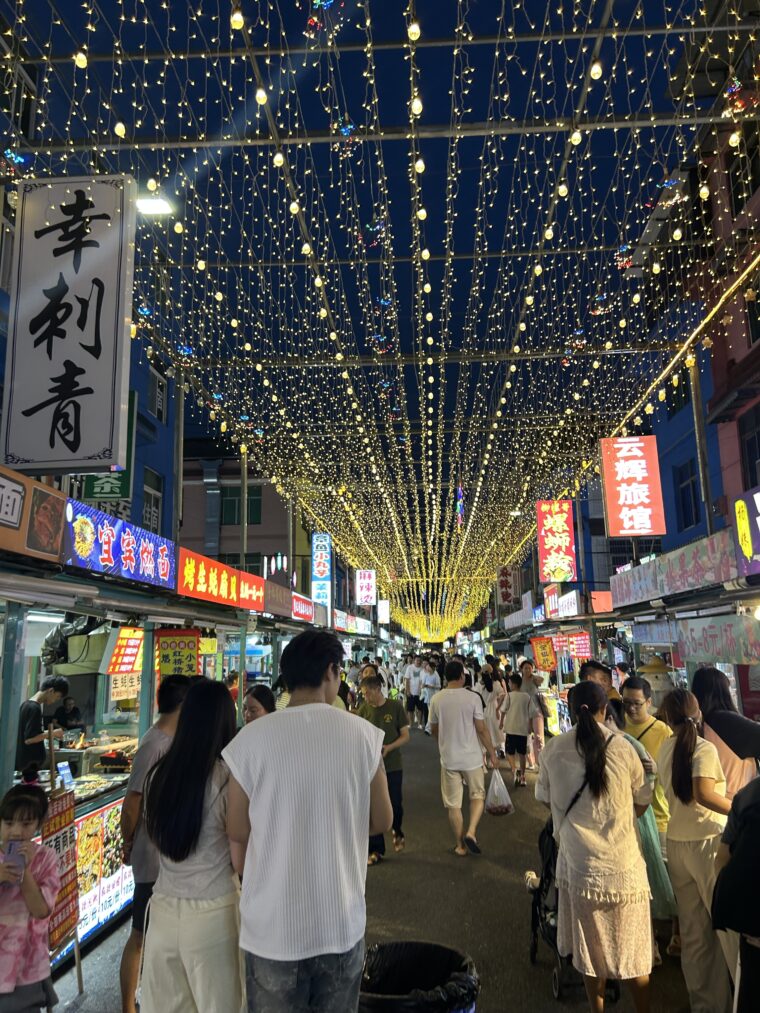
A photo Ben took in China
Will Mahony stands in front of the camera, shirtless, on a townhouse roof in New York City. He points to an easel with “CHINESEMAXXING 101” scrawled in Sharpie across it. “Today, WE are Chinese,” he says. His “very Chinese day” begins at a market where he shakes hands and bows to the smiling shopkeepers (whom he refers to as “low cortisol people”) before buying a $100 statue of a golden ram. Then he’s off to dinner, where he takes “10 Tsingtaos to the dome.” He smokes a few cigarettes before heading to the casino to end his night at the baccarat table.
Last summer, I watched videos like these from my dorm room in Beijing in frustration. Somehow, other Americans without Chinese backgrounds had discovered what I had thought was my secret to gatekeep: China is awesome.
A wave of “Chinesemaxxing” has swept the Internet over the past few months, prompting a slew of non-Chinese influencers to proclaim their Chinese-ness through activities like eating communally with a large group of friends, using traditional Chinese medicinal herbs, or only drinking warm beverages. People spanning race, age, and gender divides have decided that they are so interested in select aspects of Chinese culture that they “are Chinese.” To me, a Chinese major, it was a great offense. I put in hundreds of hours of work for the opportunity to drink with Chinese uncles, and they think a few instagram reels are enough?
Though the narrative pushed by the American government positions China as our chief adversary, this trend presented Americans with an opportunity to look past the U.S. government’s inflammatory rhetoric and instead reach out to the millions of Chinese people living in America and the thousands on our campus. It seemed as though the wave of anti-Chinese sentiment that had been building since 2020 was finally starting to flip.
I lived in Beijing for two months last semester as part of a study abroad program, and while I loved spending time with my American friends in the program, my best nights were spent without them. I would venture out alone with no plan but to see Beijing and experience China. Next thing I knew, I’d be eating lamb skewers with a couple who want to know if America really is the culture-war hellscape that they’ve heard it is, fighting with three college students to pay for the bill after they treated me to their favorite dishes at a local restaurant, or trying to explain in Chinese why I don’t have a girlfriend to the incredulous owner of a one-woman beef noodle soup shop. When my time was up, I returned to the beautiful city of St. Louis, excited to channel my friends’ newfound appreciation of Chinese culture into exploration. Instead, I found a completely different reality.
As the government waged war on Chinese students through rhetorical assaults, the promise to “aggressively revoke” visas, and performative legislation, our Chinese classmates got none of the love that we directed toward our favorite parts of their culture. Though online it seemed like Americans were finally ready to overcome the notion that Chinese people are our enemies, I didn’t see this reflected on campus. It didn’t seem like we were excited to welcome them or to show them the things that should make them love America in the same way I grew to love China. This is just as much a missed opportunity for us as it is for them.
Take my first-year dorm, for example. I would practice Chinese with a suite of international students across the hall from me, and we quickly became friends. Every other week or so, they would make a feast in our tiny dorm kitchen for a huge group of Chinese students who flocked to our building for the meals. But when I’d reference my friends by name to other people in the building, most of them didn’t know who I was talking about. It wasn’t until I called them “the Chinese group” that I got a flash of recognition. Most American students weren’t willing to take the slightly awkward step of saying hello, or better yet, inviting them to our parties and events.
Ignored by American students, most Chinese students remain in their insular bubble. One day, I asked my friend Edward why he was only friends with other Chinese students. “I tried to be in an American group,” he told me. “But I think we’re just too different.”
There is a pervasive dissonance in the way we interact with Chinese culture and people. We love “being Chinese,” cherry-picking our favorite aspects of Chinese culture to adopt as our own. Why don’t we include Chinese people in our newfound appreciation for China? Mahony, with his tattoo-covered, hairy beer-belly unabashedly showing, may have put it best: “Uh, scuse me … are these people so different than me, or are we actually the same exact person?”
Instead of scrolling on Instagram Reels and liking videos of Americans saying “I’m so Chinese that Chinese food is just food to me,” invite the Chinese student in your group project to dinner. Instead of watching clickbait edits of the “INSANE cyberpunk city Chongqing,” buy tickets to the student-run Lunar New Year performance this weekend, and say hello to the person next to you. Spoiler alert: The easiest way to “be more Chinese” is to interact with Chinese people and Chinese culture in real life. Who knows, maybe you’ll like the memes even more after you’ve been to the karaoke bar on Delmar or shared a meal at Chilispot with your new Chinese friends.
Stay in Touch!
Get the latest and top news from StudentLife delivered to your inbox