Forum | op-ed Submission
Op-ed: The last set
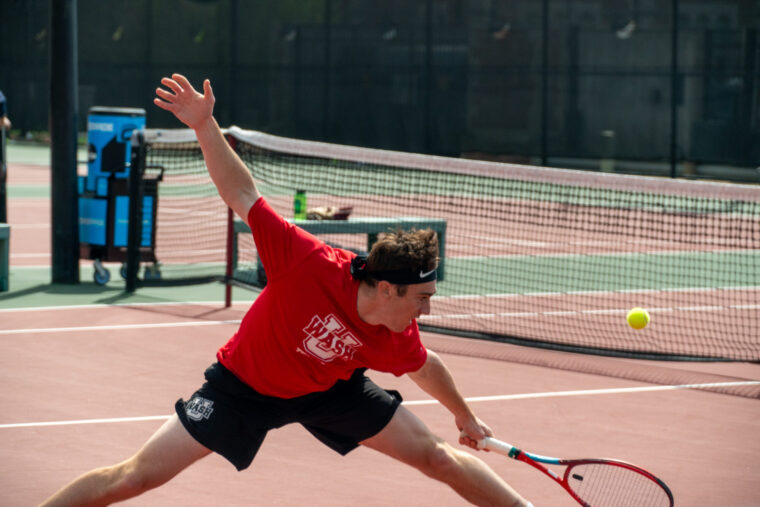
I recently quit the tennis team. Thousands of hours of training, lost weekends, lost memories—lost for no reason, I thought. I was resentful of this wasted time and upset at myself for not looking at the bigger picture sooner. I wanted to do something more, something that would push me out of the identity as an athlete that I held for so long. My reasoning was that college is short, too short to be traveling every weekend and not being able to pursue other passions that I couldn’t in high school because of my sports commitment. I also felt like I was missing the small moments that forge the connections that last a lifetime. I don’t regret the decision, but the devaluation of my time as a tennis player and an athlete in general was misguided.
I wrote my college essay about how one of the biggest issues around the world is girls being deprived of the opportunity to participate in sports. The leadership, connections and confidence that are built through sports are unparalleled, and I couldn’t fathom who I would be if I hadn’t been constantly going from practice to practice ever since I was eight. I think this is why the resentment came at first after I relinquished the title of a (Division III) varsity athlete status—it was a breakup. You have to get angry before you see the good times you had together. Either way, it was a huge shift in my value systems and my priorities. Now, it has been sufficient time to reminisce about the truly amazing things that came out of these years of dedication. A big thing that kept me going throughout everything was the people that were there for me every step of the way.
Unconditional support is one of the most amazing things a person can give to someone. I have been so lucky to be able to set goals and dream big and have people in my life who not only support me, but actively pursue helping me be my best. One such person is coach Parul Verma. Every time I broke down mentally and lost sight of everything else but my backhand going rogue, he reminded me that I was lucky to be on the court. He talked me through my lows—replacing anger with gratitude, determination and the knowledge that everything is under my control. It is about how hard I work, how much I push myself, and I have no one to blame but myself. Coming from a town like Palo Alto, Calif., where kids are pampered and protected and given all the opportunities to succeed, it was a different experience to have someone who left it up to me to decide how hard we worked and when. He was not a comforting mentor that let my failures go by unnoticed—he addressed them, talked about them and made me a better person and player because of it. He would tell stories of his days when he was a kid in India—he was smaller than the other players, which is a natural disadvantage, but he would just keep fighting in every single point, putting spin and height on the ball, giving himself time. This work ethic pathed the way for him to play for the Division I Eastern Kentucky University tennis team at a very high level. He taught me to play to my strengths, be it on the court or in life.
This contributed to the biggest lesson I learned from tennis. We have to accept ourselves for who we are, and learn to make the best out of it. We must push ourselves to our limits in order to win the tough battles. Parul definitely does that, in every aspect of his life, and encourages those around him to live to his standard. Life is short and college is short, but I feel I didn’t waste time with tennis and with people who truly inspired me. I will always hear the encouragements that were shouted at me every time I try to accomplish something and know that if I can get that last forehand over the net, I can do anything I set my mind to. Life is a mental battle between your many selves and you have to decide who you are rooting for. This mindset helps me persevere through the tough times at Washington University, which are plentiful, and will continue to do so in the future.
Stay in Touch!
Get the latest and top news from StudentLife delivered to your inbox