Forum
Media doesn’t need to be social: The case for talking less about entertainment
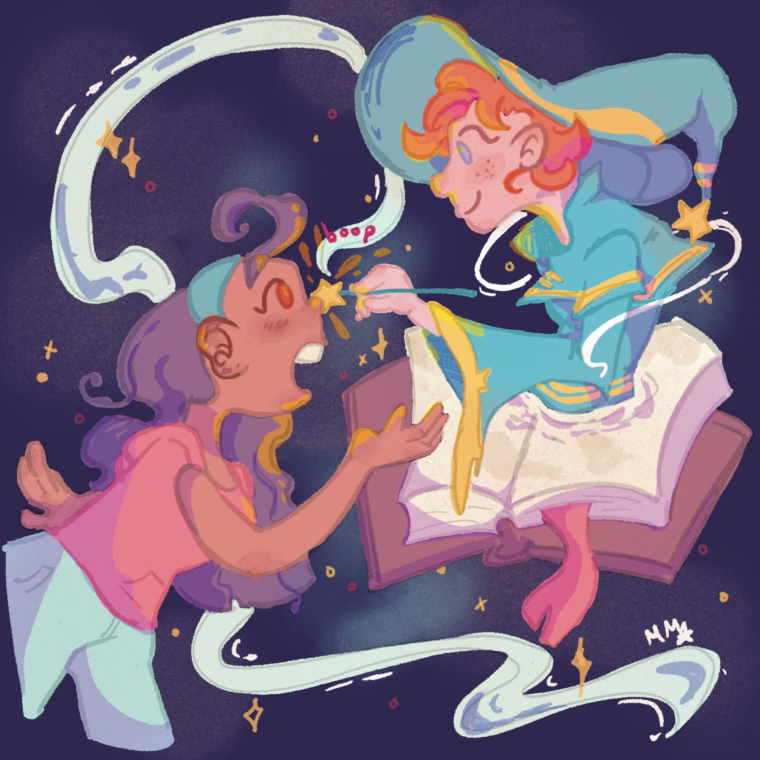
We live in a world overflowing with content. There’s always something to consume, whether it’s a podcast, a TV show, an article, a video or a compilation of “35 Memes That’ll Make You Laugh So Hard You’ll Throw Up Your Own Gallbladder.” The sheer number of things we are asked to interact with on a daily basis can be overwhelming. That stress is compounded by the necessity of keeping up with certain shows and movies just to participate in the cultural conversation of the day. Want to take your time with “Game of Thrones” or “Stranger Things”? Not only will everyone be talking about something else by the time you catch up, but you’ll be hard-pressed to make it a day after a new episode or season drops before coming across some spoilers. Not interested in “Riverdale”? Fine, but be ready for every other tweet, post and BuzzFeed quiz to be about the show. This isn’t exactly a new phenomenon—people have always liked to talk about the things they love. But the spread of social networking sites like Twitter and Facebook, video-sharing websites like YouTube and streaming services like Hulu and Netflix have allowed huge numbers of people to consume and discuss media in new ways—not all of them healthy.
I’ve been involved in the discourse that surrounds various TV shows, books and movies for years, and for the most part, I’ve enjoyed it. My closest elementary school friendships were formed around a shared obsession with the “Harry Potter” books. I’m filled with genuine happiness every time I find someone who loves the gymnastics movie “Stick It” as much as I do. But for the past few years, I’ve found it hard to stay interested in popular, ongoing series. I read the first book in a much-hyped trilogy, and no matter how much I like it, I can’t make myself buy the second. I binged season one of “Stranger Things” in an afternoon, but stopped for good after the first episode of season two. I’m pretty sure I know what my problem is: Once enough people have started talking about something, I stop liking it as much.
That makes me sound like an insufferable hipster, but I’m really not—I’m just kind of lazy and extremely tired. School and social commitments are emotionally draining on their own, not to mention how exhausting it is to keep up with the nightmare that is current events. I just don’t have the energy to care every time I see people obsessing about some detail of a show on Facebook or Twitter. As a defense mechanism against burning out completely, I start to resent whatever piece of media I previously enjoyed for demanding more of my attention than I’m prepared to give. I think I, and many others, have the same problem with social interaction. Hanging out with people is fun, right up until I hit some invisible limit, at which point I immediately hate everyone in the room and want to launch myself into the silent and empty void of space. In almost exactly the same way, I liked “Stranger Things” up to a point, but it’s outstayed its welcome. Now, it’s as dead to me as whatever characters were killed off in season two (I don’t know who and I no longer care).
Just as an overplayed song quickly becomes unbearable, I grow to hate movies and shows I used to like just because of the constant, unwanted exposure. The endless conversation doesn’t go away once I log off. Instead of engaging with media on my own, I unwillingly bring along hundreds of other perspectives. Sometimes, I catch myself wondering what the hot takes on a film will be while I’m still in the theater. I have trouble talking about a popular franchise without feeling that I’m performing the enthusiasm that’s expected of me, instead of actually experiencing it. I think there’s a special kind of enjoyment that comes from sharing cultural experiences—I just wish there was more space these days for personal ones.
Where did this constant discussion of popular entertainment come from? The growth of networking sites like Twitter and Facebook have undoubtedly given rise to the pervasive idea that all media needs to be social. Spotify, for example, pushes its users to share what they’re listening to with their friends, to the point that connection is the default; a “private session” has to be re-enabled every six hours. Maybe some people like this feature, but unless I’m at a concert, I don’t want my music listening to be a social experience. Maybe it’s just my introversion speaking, but I don’t believe every piece of media needs to be engaged with collectively.
It’s not that I want people to stop talking, and even if I did, I wouldn’t be able to make them; but I do think we need to reevaluate the way we, as a culture, engage with entertainment. The endless stream of debate and deliberation is addictive in its own way. We use it to fill time and occupy our thoughts. As coping mechanisms go, it could be worse. But the price of our constant engagement can sometimes be the shows and movies we love. There has to be a balance between shutting up completely and obsessing over something to the point of exhaustion. I hope we find it soon, because I’m getting tired.
Stay in Touch!
Get the latest and top news from StudentLife delivered to your inbox