Movie Review
‘American Sniper’ preview
Snubbed by Sunday’s Golden Globes awards for Best Actor, Bradley Cooper makes his wide-release debut as American war hero Chris Kyle in “American Sniper.” Set over the course of nearly 15 years, “Sniper” follows Kyle’s SEAL training and subsequent four tours of duty in Iraq and Afghanistan. The film was written by Jason Dean Hall as an adaptation of Kyle’s own autobiography by the same name and supplanted with testimony from Kyle’s wife, Taya.
Deemed the most lethal sniper in American history, Chris Kyle embodies the most patriotic and heroic values central to any famous war hero. Yet, as director Clint Eastwood is determined to show, he is not without his demons.
Eastwood spends most of the movie establishing Kyle’s motivation to fight (God, country, family), his unmatched ability (160 confirmed kills), and most importantly, the emotional toil and post-traumatic stress disorder that haunts him. In one scene early on, Chris and Taya are in the doctor’s office for an ultrasound when the doctor decides to take Chris’s blood pressure. When Chris asks if it’s too high, the doctor quips, “Not if you just had 14 cups of coffee.”
Throughout the movie, Eastwood beautifully portrays the emotional turmoil that Chris Kyle endures. Better than any war movie I’ve ever seen, Eastwood establishes the humanity of the horrors of war. No one can escape the violence—not children, not women, not the families thousands of miles away.
Where Eastwood fails, however, is showing the darker parts of the story that Kyle’s autobiography ignored. While no doubt a war hero, Kyle has often been questioned about his motivations, once stating that he enjoyed what he did. Back stateside, Kyle boasted that he once killed two men trying to steal his truck and that he sniped looters in New Orleans after Hurricane Katrina. Never verified, the stories show the darker side of Kyle that Eastwood would rather forget.
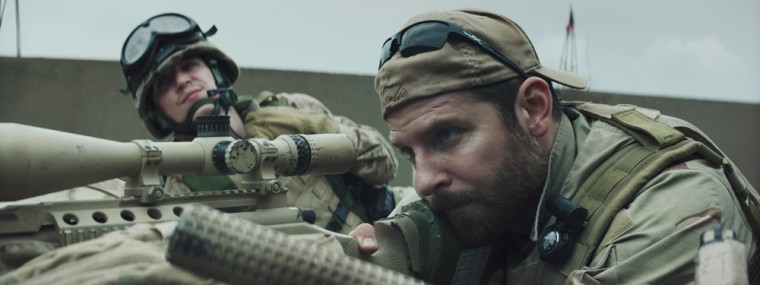
As a movie, “American Sniper” rivals “The Hurt Locker” for authenticity in depicting a war zone as well as telling a genuinely compelling story. Likewise, Bradley Cooper’s portrayal of Kyle is astounding as it perfectly encapsulates the essence of the man from his peculiar accent to his desire to constantly be doing more for what he loves. Yet as a political statement, the movie falls far short. By creating a solely positive legacy for a man who lived fully in the gray era, Eastwood biases an entire audience who wouldn’t otherwise know the truth behind the man.
Bradley Cooper deserves an Oscar nod for what he’s done in “Sniper,” but once again he will be snubbed on the basis of political controversy.
“American Sniper” opens tomorrow, Friday, Jan. 16.
Stay in Touch!
Get the latest and top news from StudentLife delivered to your inbox