News | Uncategorized
As AI sweeps into higher education, two professors take divergent approaches
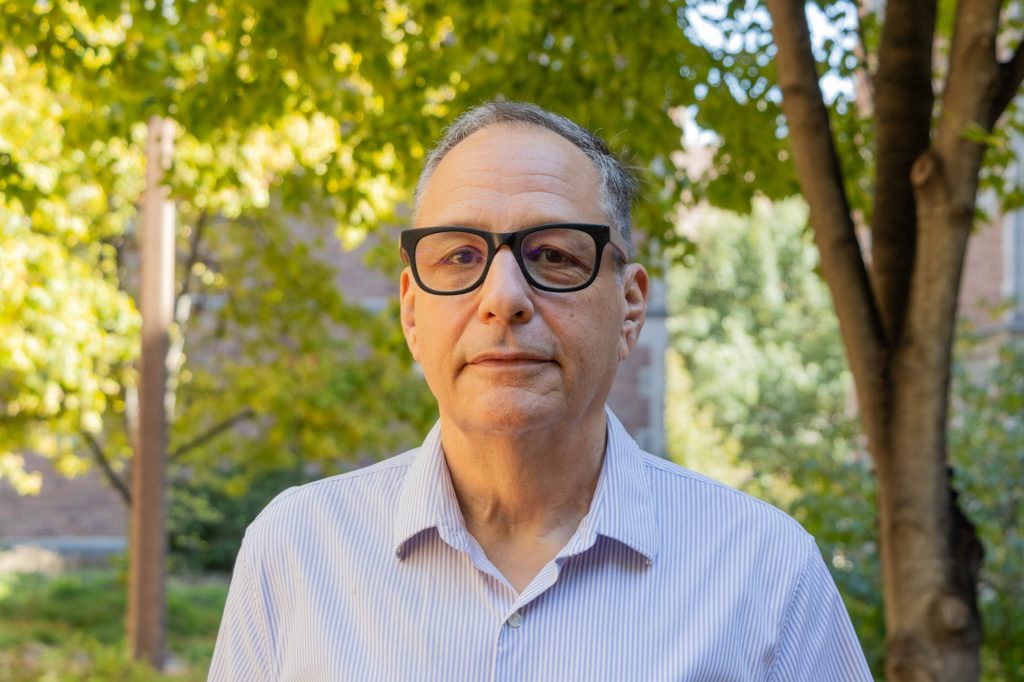
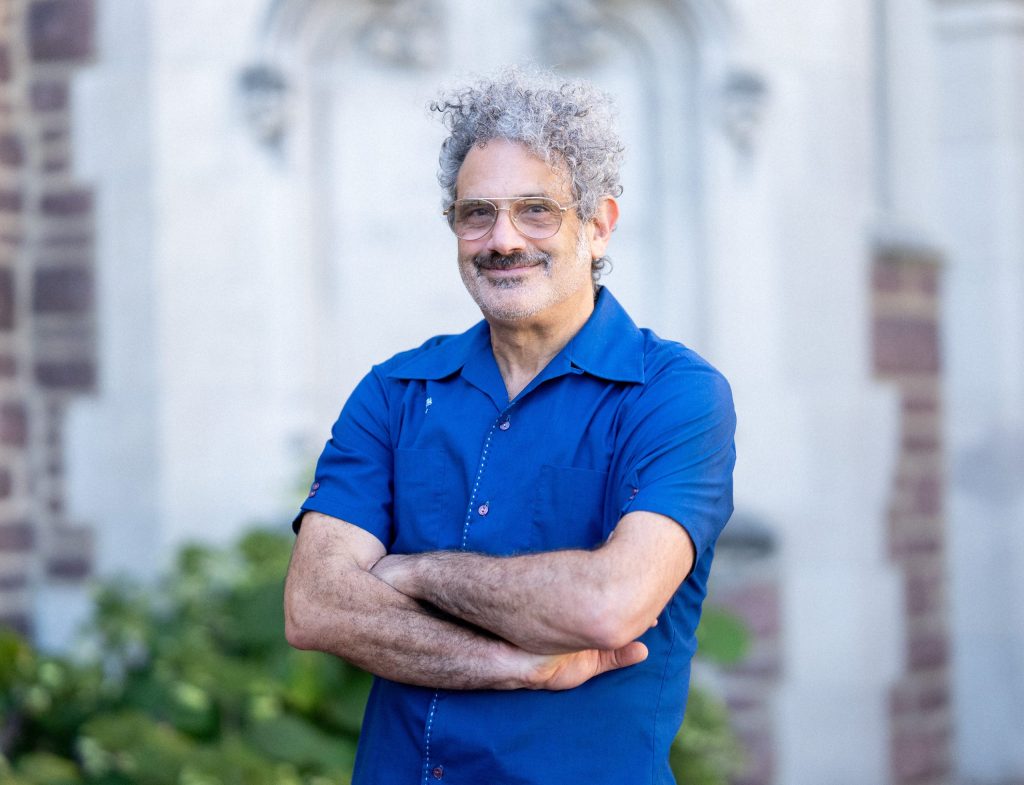
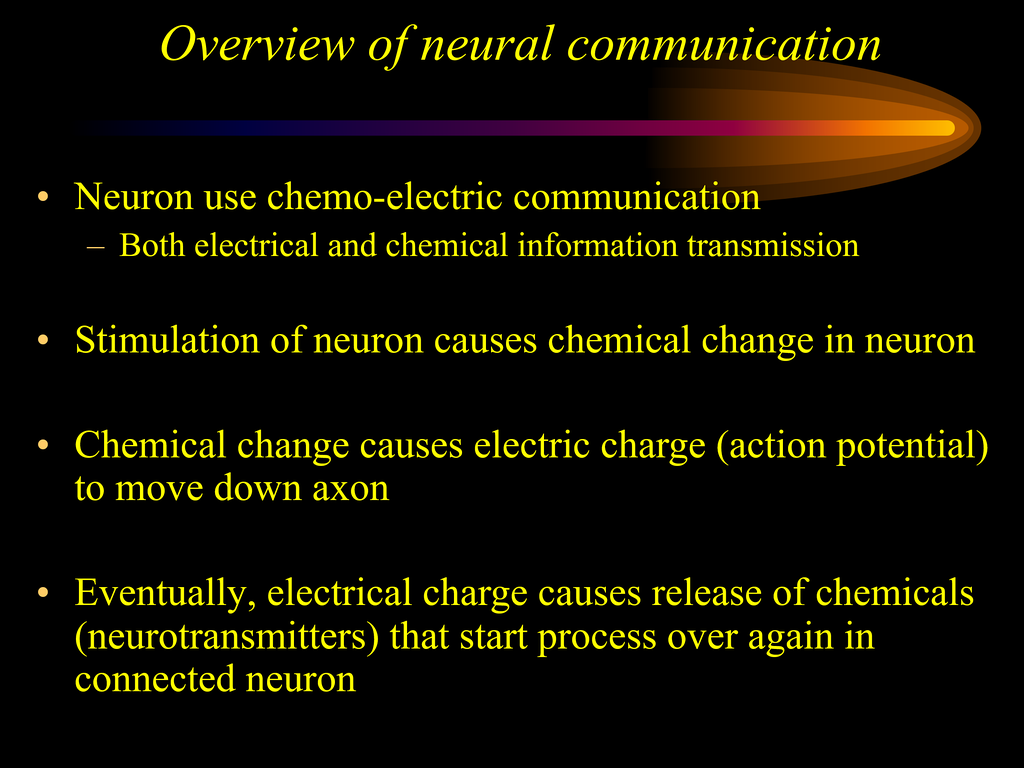
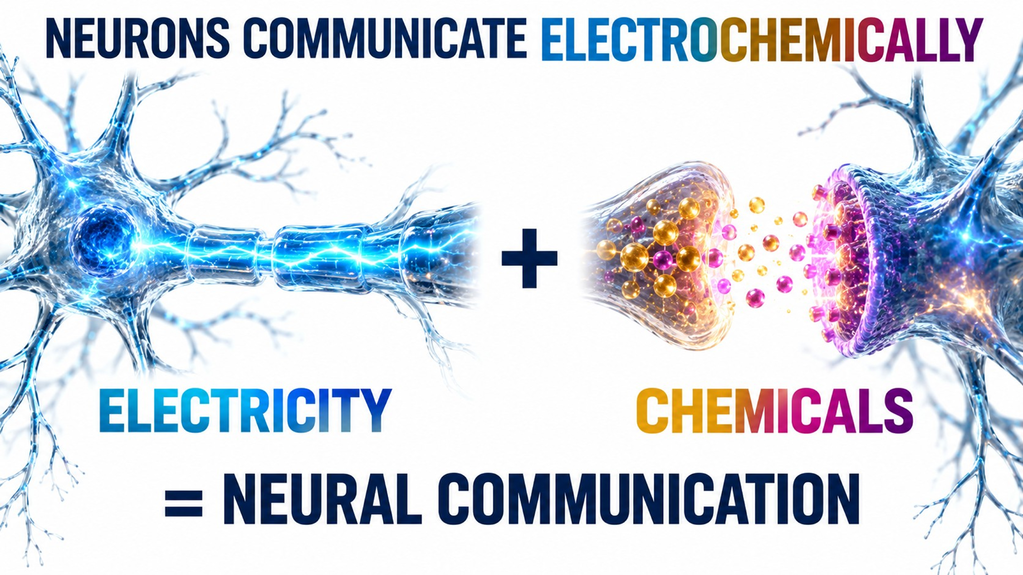
Earlier this year, students in Professor Mitchell Sommers’ Introduction to Psychology course began noticing a change. Sommers’ lecture slides, once mostly lines of text on a uniform background, now exploded with colorful illustrations, demonstrating various psychological concepts. Each illustration was generated by artificial intelligence.
Sommers, a professor in the Department of Psychological & Brain Sciences, utilizes AI for his lecture slides and his personal research. He sees AI as a tool that could revolutionize how professors teach their classes and conduct research.
“If you’re not using [AI], then you’re not using the full complement that’s in your toolbox,” Sommers notes. “A carpenter could always use a wrench as a hammer, but why not use the more effective tool?”
He said that with AI, he now spends far more time preparing his class materials since he has the chance to incorporate many new elements outside of traditional slides into his lectures.
“Before, I could just write down text; now I can ask AI to make an HTML program that gives a particular demonstration of a point that I’m trying to make, and that makes the point so much better than if I just state it.”
However, not all faculty take the same approach.
For Professor David Schuman, the director of the creative writing specialization and Howard Nemerov Writing Scholars Program in the Department of English, AI represents a fundamental threat to proper learning.
“Instead of reading five books, you could ask AI to summarize them, and yes, maybe time is saved. But there are going to be valuable things in those five books that you will not get to see and you will never know,” Schuman said.
Sommers and Schuman show two of the many ways WashU professors are addressing the rise of AI in higher education.
‘Trying really hard to sell me something’
Through the +AI initiative, WashU has attempted to integrate AI into many parts of University life, such as providing a suite of enterprise-level AI tools for students, faculty, and staff, along with creating a new mandatory Canvas module that all incoming students must complete. In addition, the initiative is partnering with faculty to create and adapt new assignments and classes that pertain to the topic of AI.
“We’re not trying to make AI the center of an educational experience. The idea is to take the core education, the core educational values that we have now, and see it through the lens of AI,” Provost Mark D. West said at the time.
When Schuman sees an email about one of WashU’s +AI initiatives, he often just ignores them.
“I have not felt pressure from the University to integrate AI into my courses, and I have no desire to do so,” he said.
Schuman cited how AI has evolved to the point where it has to be addressed by the administrations of colleges. “I understand from the University’s point of view that it is something that they must pay attention to, to remain competitive with other universities.”
However, that didn’t make him trust the technology.
“I’m skeptical as I often am when somebody is trying really hard to sell me something,” he said.
Sommers, by contrast, has embraced AI in his research. He is currently collaborating with Google to study accents and notes how AI has been a crucial tool to properly analyze massive datasets.
“It’s going to dramatically change the nature of research because now I can do research on 100,000 people rather than 100 people,” Sommers says.
Jiaming Chen, a first-year student in Sommers’ Introduction to Psychology course, believes AI slides can be acceptable as long as the instructor remains the core source of learning.
“I personally don’t have a problem with a professor using AI to make their slides,” Chen said. “I kind of think this is a good thing because AI can be really useful, especially when professors have [so many] things to prepare for their classes.”
However, Chen stressed that automated tools must remain secondary to human instruction. “[Sommers] didn’t rely on the slides. He actually had his own understanding and his own explanation, his own examples,” Chen noted. “There’s a difference between using AI to assist teaching and relying on AI to do most of their work, because we are paying for an education, and I expect the professors to bring their own knowledge, or their own understanding, or their own perspective into the classroom.”
And despite believing in the potential of AI, Sommers is still adapting his course to avoid students using it to cheat. Earlier this year, Sommers conducted an informal experiment, submitting a mix of AI-generated writing and student writing to five faculty members to test if they could identify its origin.
“They said, ‘Absolutely not,’” Sommers recalled.
The result was an immediate overhaul of the Introduction to Psychology syllabus.
“I took the writing assignments out,” Sommers said. “Now in Intro Psych, we have three in-class exams [and] a final in-class exam, and I think that’s a terrible way to evaluate students.”
Sommers felt frustrated that he had to start relying on multiple-choice exams as the primary form of testing.
“I think it doesn’t really give students an opportunity to truly demonstrate their understanding … especially since every student isn’t the best at multiple-choice tests.”
‘A constant game of catch-up’
Sommers reports a lack of direct administrative guidance on how to construct AI-proof assignments without abandoning writing altogether.
“AI is just so good at this point that it is difficult to detect, especially if the text is generated in the style of something like a sophomore undergraduate at WashU,” Sommers said. “Starting from orientation with new faculty, it would be great if they could provide ideas on how to create writing assignments that are not subject to or conducive to the use of AI.”
He likened outsourcing written assignments to AI with avoiding physical exertion. “Using AI to write something in class is like going to the gym with a forklift,” Sommers said. “You’ll be able to lift the weight, but you’re not going to benefit from it at all.”
Meanwhile, reliance on automated detection software has found little favor among professors, who view third-party detection tools as unreliable.
“If I have a suspicion that a student has plagiarized or used AI or violated academic integrity in any way, I start with a conversation with that student,” Schuman said. “I don’t feel like AI detection is good enough at this point. It’s going to be a constant game of catch-up.”
Students in arts and creative writing echo those concerns, asserting that automated text generators run counter to the purpose of creative disciplines.
“In writing classes, there’s never much effort to use AI because most people in creative writing are not looking to invite AI into their field,” said senior River Alsalihi, who took seminar classes with Schuman through the Howard Nemerov Writing Scholars Program. “I think the role of art just doesn’t necessitate any kind of optimization. You don’t need to produce a piece of writing as quickly as possible, or a painting. The benefits that some fields may harbor for AI don’t really apply to creative fields.”
This arms race between AI development and AI detection reminded Schuman of the technology’s origin in Silicon Valley.
“AI is a corporate interest,” Schuman stated. “It’s a product that they desperately want to sell, and I think the fact that we’re being sold so hard on this just raises my hackles. … We’re not done being human yet. So let’s not rush into a world where humanity becomes secondary when we haven’t fully learned about ourselves yet.”
As WashU continues to roll out central AI initiatives, Schuman emphasized that institutional integrity depends on maintaining a balance between technological efficiency and humanistic study.
“I think humanities and art are what we’re alive for,” Schuman said.
He believes creative voice is defined by the restrictions of the human mind, which is something that AI lacks.
“That limit is what makes us interesting,” he said.
Editor’s note: Leni Saltos is a student in Sommer’s Introduction to Psychology class. River Alsalihi is a forum editor with Student Life and was not involved in coverage
Stay in Touch!
Get the latest and top news from StudentLife delivered to your inbox