News
Proposed fees to Optional Practical Training may change postgrad employment for international students

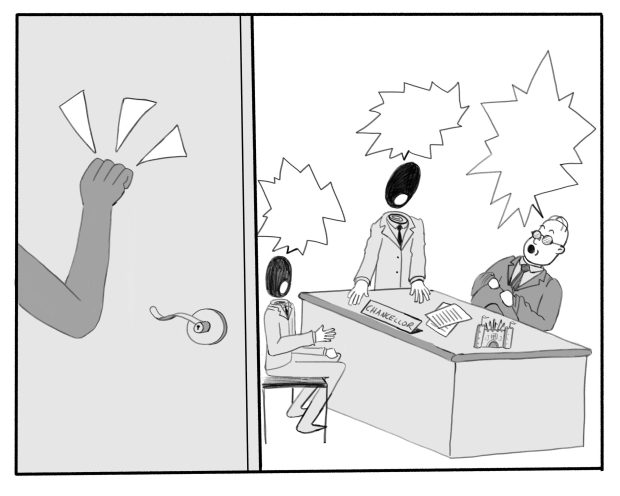
August Moon | Staff Illustrator
In a document published on Thursday, Oct. 8, the Department of Homeland Security (DHS), proposed a fee of $70,000 for every international student seeking postgrad employment through the Optional Practical Training program (OPT). The rule will be discussed until Nov. 9 before being finalized and would affect incoming OPT workers.
In addition to the $70,000 fee, the rule would also charge $30,000 for individuals hoping to extend their OPT, which is only available for students working in STEM fields. The current cost of OPT only includes application fees, which can vary from $470 to $2,250 depending on how the application was submitted.
According to data from 2024, more than 400,000 individuals in the U.S. were OPT authorized. This number has more than doubled since 2007. Today, OPT visa holders make up around a quarter of all F-1 visa holders in the U.S.
The Office for International Students & Scholars (OISS) released a statement in response to the news. In it, they emphasized that the change would not go into place until a “formal rulemaking process” is put in place.
“WashU will share updates on the proposed rule including any applicable fees and the effective dates from which they would apply as and when this information is available,” the announcement read.
While universities would initially be responsible for these fees, it would be possible for them to pass them off to employers or students. It is unclear how, in the case that this law passes, WashU would choose to handle these fees. The OISS did not respond to Student Life’s request for comment.
This proposed change comes alongside rising federal crackdowns on international individuals. This past fall, visa changes and internship restrictions have impacted international students at WashU, narrowing their ability to pursue professional opportunities and adding more stress and uncertainty. But some of these changes, such as the introduction of “admit until dates,” (AUDs) have been temporarily blocked from taking effect, raising questions on if these OPT fees will actually be implemented.
Officials have explained that this rule has been introduced with the goals of “combating fraud and abuse of OPT” and “protecting American workers,” as outlined in the proposed rule.
But experts argue that a lot could be lost if this program is implemented. They warn that undergraduate international student enrollment rates could drop, significantly altering educational institutions’ revenue and diversity.
In the past couple of months, the OISS has offered support to international students as they’ve navigated these legal changes.
An international senior, who chose to be anonymous due to future hiring and immigration status concerns, said that all international students were required to take online training modules in which the changes were explained. The OISS has also offered advising meetings for international students to meet one-on-one to plan and prepare. Lastly, the OISS has been updating its website with the most recent federal changes. The senior said that she shifted her plans near the end of the summer when AUD visa changes were first announced. The introduction of the OPT fees added to the reasons she chose to apply directly to graduate and PhD programs instead of taking a gap year. She explained that this did not largely impact her career goals, as they were already set in place.
“It is not that kind of pivot for me to apply directly because I was preparing,” she said.
Despite this, she thought that the introduced fees could more greatly impact international students who are earlier along in their studies.
“I’m a little worried for the incoming students, like the freshmen or sophomore international students, because they don’t have [Curricular Practical Training] anymore, and their OPT is really uncertain,” she said. “I feel like I definitely heard some of the freshmen international students express concerns about their future.”
Stay in Touch!
Get the latest and top news from StudentLife delivered to your inbox