Scene
Beneath the ink: Tattoos and their significance to WashU students

Hannah Dorval | Contributing Writer
First-years Alexander Huerta, Savannah McKay, and Alyson Lone Bear, and senior Hiram Johnson all have tattoos. Getting a tattoo in college seems typical; it is the time for rebelling, taking risks, and trying new things. Beyond tropes of spontaneity and defiance, though, these tattoos represent students’ identities and act as visual portrayals of important times in their lives.
For Lone Bear, getting a tattoo in college helped her navigate the many challenges that come with being so far from home. A recent tattoo she got of her cat, Lyla, is meant to ground her amid a transformative time in her life.
“I want to have her with me forever. And so it’s kind of a sense of comfort for me. Whenever I’m, like, feeling far, I can rub my arm, and then she’s there for me,” Lone Bear said.
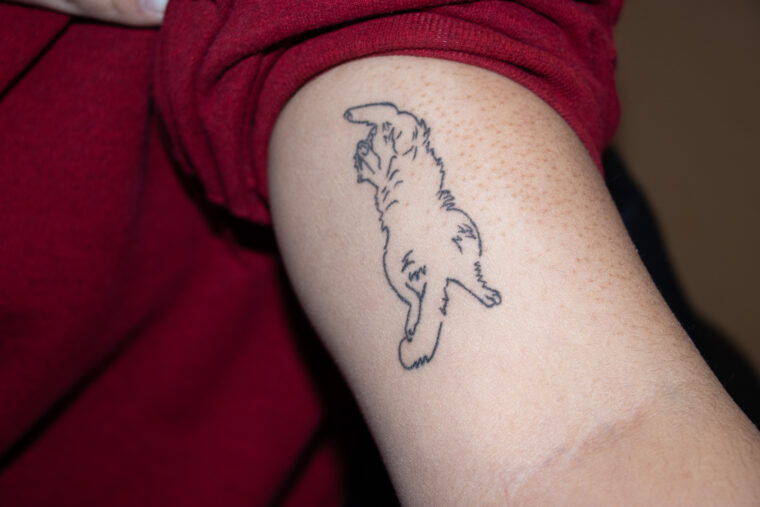
“I want to have her with me forever. And so it’s kind of a sense of comfort for me. Whenever I’m, like, feeling far, I can rub my arm, and then she’s there for me,” Lone Bear said. (Hannah Dorval | Contributing Writer)
Some of the most emotionally driven tattoos are dreamt up in childhood and executed when one has the money and independence to do it. Despite thinking about it for years, McKay’s one and only tattoo is in remembrance of her mom and was only carried out recently. Her left arm illustrates doodles from a letter her mom wrote her before she died.
“One day, when I was a little older than when I got that letter, I was looking at it, [and] I was like, this has to go on my body, right?” McKay said.
Tattoos constantly prove their worth in the form of meaningful conversation.
“It’s an image on your body, and I feel like it provokes you to talk about something, talk about something that’s meaningful to you. I feel like it’s kind of hard to get the full picture just from the image,” Johnson said, in reference to the sun and moon tattoo on his chest.
Huerta recalls how a conversation with a Beast Craft BBQ employee that started simply with complimenting each other’s tattoos led to an ongoing connection between them. He now frequently converses with her, and some of the conversations that followed dramatically changed how he felt about getting tattoos on impulse.
“It was jaw-dropping to hear this strong woman that I admire be so regretful of something she did as a kid. … That’s definitely made me, now, be more hesitant, and that’s why my New Year’s resolution is to stop getting spontaneous tattoos,” Huerta said.
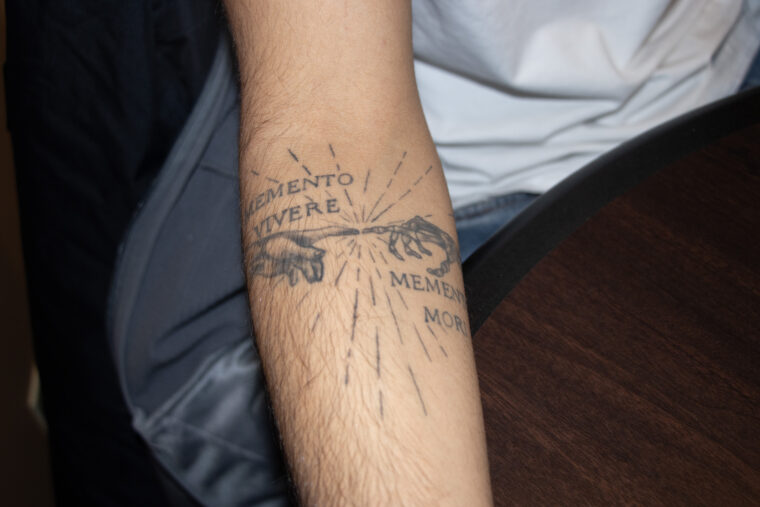
“If you’re not going to hire me because I have tattoos, then your priorities aren’t straight.” (Hannah Dorval | Contributing Writer)
At a career-driven school like WashU, employer perception is at the forefront of students’ minds. When asked about tattoos in the professional world, students agreed that the perception of tattoos has changed in recent years.
“Continually seeing people in professions I want to be in, or professions that other people might want to be in, having tattoos in a professional environment has definitely helped … destigmatize this idea that you can’t have tattoos to be professional,” Lone Bear said.
For some, an employer that regards tattoos as improper is less professional than the act of having tattoos itself.
Huerta added, “If you’re not going to hire me because I have tattoos, then your priorities aren’t straight.”
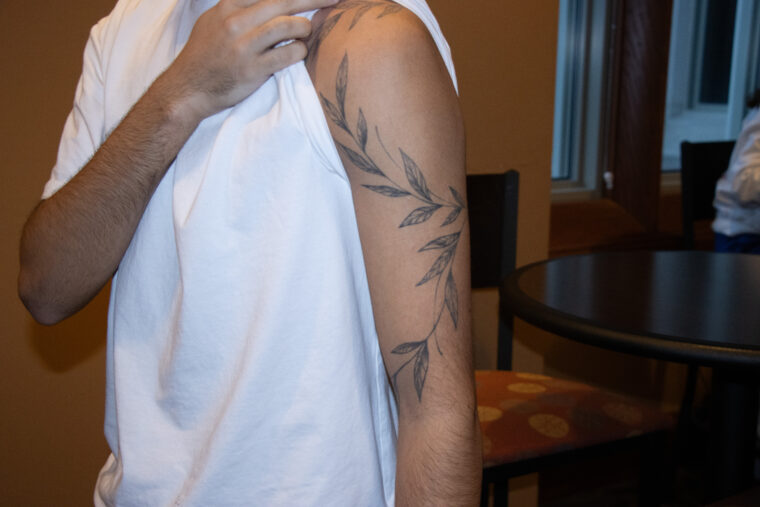
I’m so grateful to be living right now, and I’m so grateful for the life I have,” Huerta said. (Hannah Dorval | Contributing Writer)
Many people face challenges of social anxiety with things like asking for extra cream in their coffee or making a return. Getting a tattoo can also serve as a test of strength for fighting for what you really want. Being assertive in a tattoo shop is especially important because you are not just paying for a service but a good that will last forever.
“At the end of the day, this is permanently on your body, and you need to get what you want, not what you think is convenient for the person who’s supposed to be doing it for you,” Huerta said.
It was clear through these conversations that tattoos seep far beyond the skin and into the intricacies of what it means to want something on your body for the rest of your life.
“Whenever I got my tattoo, it was in the intention of getting a tattoo to live my life, short and fun. … I’m so grateful to be living right now, and I’m so grateful for the life I have,” Huerta said.
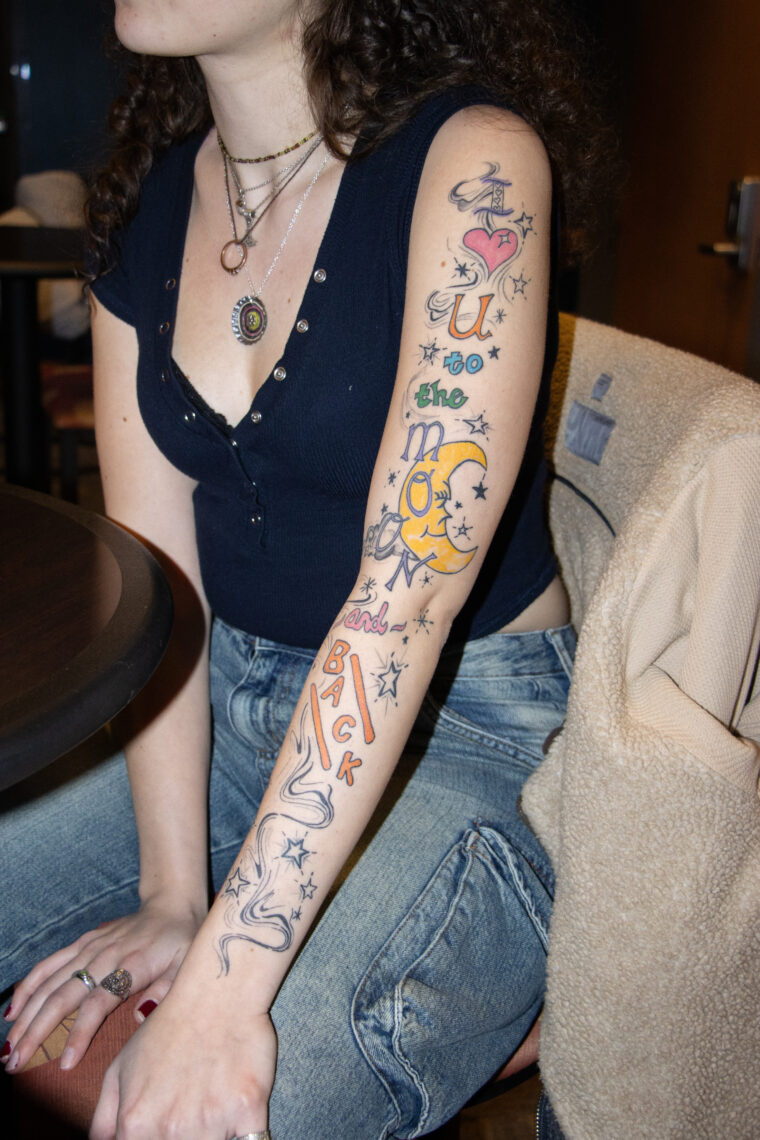
“One day, when I was a little older than when I got that letter, I was looking at it, [and] I was like, this has to go on my body, right?” McKay said. (Hannah Dorval | Contributing Writer)
Stay in Touch!
Get the latest and top news from StudentLife delivered to your inbox