Scene
The Barnes and Noble cookbook section: Testing themed recipes from branded cookbooks
Mac Motz | Staff Photographer
Barnes and Noble is a magical place. Row after row of bookshelves fill the store with that new book smell, coupled with a whiff of pumpkin spice from the obligatory on-site Starbucks. However, all is not as it seems. A plague spreads. New and unique books are left languishing on bottom shelves, with prime real estate instead being taken up by the proven sellers: branded merchandise and trendy ideas. Patient zero, the knick-knack section, was first to succumb to the disease. Soon after, the romance section was inundated with a flood of books about hot hockey boys (which is huge right now, for some reason). Perhaps the most egregious case of unoriginality in the whole store, however, is the cookbook section.
The humble unbranded cookbook shivers in the corners of shelves in this forsaken place. A horde of branded cookbooks have taken its place — all themed around TV shows, movies, books, video games, and famous musicians. Gone are the days when you could publish a book of Halloween recipes. Now it’s “The Official Wednesday Cookbook,” based on the TV show, featuring groundbreaking recipes like waffles (but with black food coloring) and a vaguely Morticia Addams-themed gazpacho titled “the Blood of my Enemies.” I spent a long time in this section, mesmerized and slightly horrified by the unabashed cash-grabbing on display. I spent so long, in fact, that I devised a four-tier system for categorizing these books by how much they deserve to exist. And, for good measure, I cooked a recipe for each one of the tiers.
Tier one: The cream of the crop

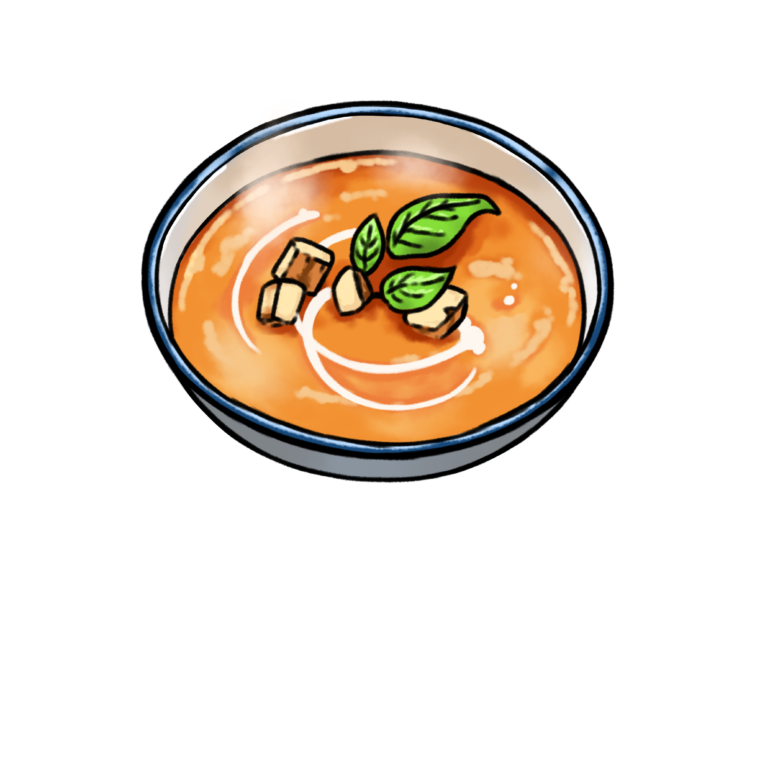
The Stardew Valley pumpkin soup. (Mac Motz | Staff Photographer)
Books here are the rare breed that completely justify their existence. For that to be the case, they have to meet some very specific criteria. First, the piece of media they are based on must contain food. Second, the cookbook must tell you how to cook that specific food. My example for this tier is the “Stardew Valley” cookbook. For those unfamiliar, “Stardew Valley” is a cozy farming simulator video game where players may cook with the various crops they grow. When I play “Stardew Valley,” I am overtaken by a great desire to move to the country, manage a plot of land, and forage for various foodstuffs. Hence, this cookbook fulfills a very real need for me: to eat the “Stardew Valley” food. The cookbook features real-world interpretations of the simplistic in-game recipes — a perfect tier one branded cookbook.
I decided to cook a dish called “Pumpkin Soup.” Evocative. Though it was made with squash instead of actual pumpkin, the soup was still lovely. It was chock-full of fall flavors (taking after the in-game seasonal cycle) like apple cider and ginger. It tasted hearty and wasn’t too hard to cook, either. Really makes you feel like you’re living the homestead life. A festive five out of five for this recipe. Great work all around.
Tier two: Take it with a grain of salt

Sopapillas and honey, a staple of the southwestern U.S. Predictably delicious. (Mac Motz | Staff Photographer)
We’re moving out of the realm of media which explicitly contains food. Cookbooks here cannot follow the simple model of tier one. Instead, they solely rely on their source material’s conceptual proximity to food. If you, for example, watch a movie set in Italy, you would expect the cookbook to contain Italian food. This straightforward relationship between source and recipe is emblematic of a tier two. An example is “Ticket to Ride: The Official Cookbook.” If you’re not a board game fanatic, I wouldn’t fault you for not having heard of “Ticket to Ride.” Imagine “Catan” but instead of building roads and settlements, you’re just building railway lines across a map of America. It rules. This game doesn’t contain food explicitly, so the cookbook themes its meals around the various train lines and regions of the United States the trains cross through, vaguely evoking the idea of a cross-country train trip. The cookbook still deserves to exist, but you’re on thin ice, “Ticket to Ride.” I’ve got my eyes on you.
Anyway, I cooked sopapillas and honey, a staple of the southwestern U.S. They’re essentially pockets of deep-fried dough drizzled in honey. Predictably delicious. “Ticket to Ride: The Official Cookbook” provides a decent recipe for them. Although deep-frying dough in a dorm kitchen was terrifying, this wasn’t the fault of the cookbook, so I have left it out of my overall rating: four out of five. Stay on your toes, “Ticket to Ride.”
Tier Three: The bad apples
At this tier, the relationship between media and recipe has become much more abstract. The source material not only contains little to no food in and of itself, but any relationship between it and food is not immediately clear. Cookbooks in this tier must draw from the amorphous vibes of the source material and attempt to replicate abstract concepts like “scary” and “the Pacific Northwest.” I’m talking about “The Unofficial Twilight Saga Cookbook: Flavors from Forks” for this tier. A “Twilight” cookbook is baffling on many levels. For starters, most of the characters in “Twilight” are vampires that physically cannot eat human food. Why, then, would I want to take a vampire’s recipe for “Volturi Vegetable Minestrone” (the Volturi, of course, being a villainous vampire coven)? Sometimes, even the book gives up on its own theme, leading to strings of increasingly sad recipes like “Wolf Girl Blueberry Muffins” followed by “Mike’s Protein Shake” followed by “Breakfast Cereal Bars.” Although some recipes in this cookbook are legitimately things they eat in “Twilight,” others are random red foods renamed to include blood, like the “Bloodred Baked Eggs” (shakshuka) or the “Warm Blood Bisque” (ew).
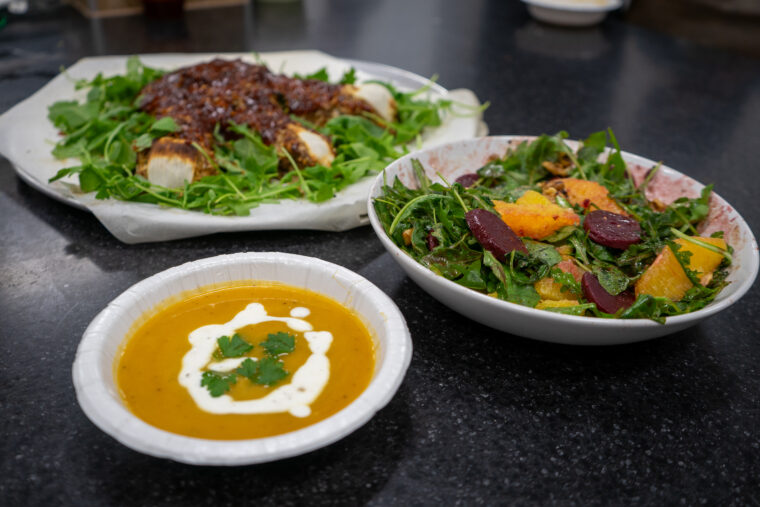
Keeping to an on-theme recipe, I sampled the “Bloody Beet Salad.” The “blood” in this salad is provided by the titular beets as well as blood oranges. Inspired. Candied walnuts were a welcome addition, and baby arugula kept the base interesting, but I was thoroughly underwhelmed overall. Three and a half out of five. Do better.
Tier Four: I’m going bananas
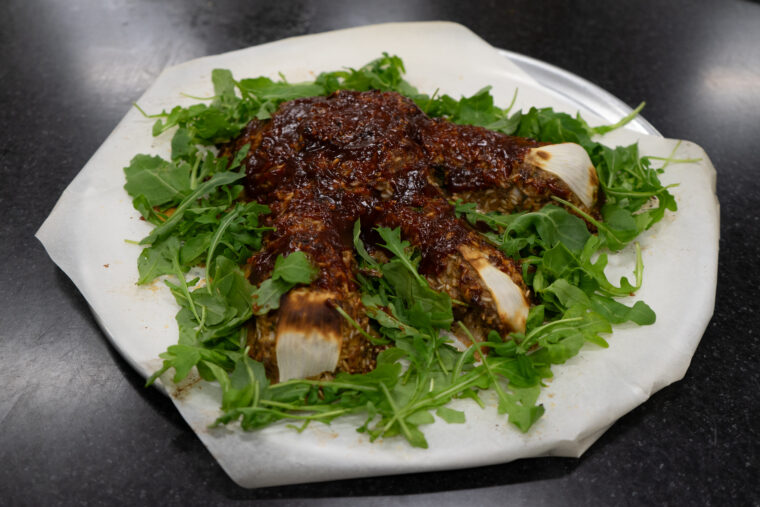
The Godzilla loaf. “Will you give it three toes, or four?” (Mac Motz | Staff Photographer)
In the deep ocean, creatures that have evolved under the immense pressure and lack of sunlight often look alien and bizarre. The cookbooks this deep into my tier system are no different. They do not have food from their source material to replicate. They do not even have a possible vibe to follow. Books here are rare, but I did find one: “Godzilla: The Official Cookbook.” Despite originating in Japan, the Godzilla franchise has gone global, meaning the cookbook has no geographical basis for its food. The vibes of a giant city-destroying lizard are so far removed from food that there is no possible dish that could follow them. Under immense pressure, the “Godzilla” cookbook must adapt. You must eat the lizard. Eschewing conventions of the genre, the flavors of the food are not meant to evoke Godzilla. This cookbook is purely shape-based. Recipes include “Guaczilla,” guacamole with the avocado peel repurposed to look like Godzilla’s head. Derailed train cars become the “Tokyo Train Car Sandwich.”
I chose to make the horrifying “Godzilla Loaf,” a normal meatloaf you fashion into the shape of one of Godzilla’s gargantuan feet. The recipe asks you to “place an onion wedge on each toe to simulate claws.” The blurb on the page ominously ends with the question “Will you give it three toes, or four?” I gave it three. I would describe the flavor as thoroughly edible. It’s the only meatloaf I’ve had which used rice as an ingredient, so the texture was novel, but not unpleasant. Has anyone ever had a mind-blowingly great meatloaf? It’s about what you’d expect. Three out of five. The onions indeed looked like toenails, which was off-putting.
Stay in Touch!
Get the latest and top news from StudentLife delivered to your inbox