Scene
Fine Dorming: Exploring the wide world of soup

Erica Shi | Staff Illustrator
Leaves are changing, cool weather is blowing in, sweaters are coming out of closets … It’s finally fall, y’all. As the seasons change and as I am settling in for a long Missouri winter, the craving for a warm bowl of soup has possessed me once again. I usually would beg my family for soup, but now I am at the helm of my own soup making. My hope is to assist you, fledgling chef, in charting your own path with a handful of suggestions, cooking tips, and encouragement among the colorful foliage of this crisp Midwestern fall.
Step 1: Start with a recipe to learn the ropes
The easiest way to make your own soup is to start with a recipe from the internet. Searching “soup recipe” will get you millions of options using a wide variety of ingredients and strategies, and while you are starting out, I encourage you to find a recipe that sounds or looks good and try it out. Websites like Allrecipes or Delish can provide easy-to-follow recipes, and if you want to explore different cuisines or variations of meals you know, New York Times Cooking articles are a great way to try something new that’s a little more difficult.
When starting out, it can be helpful to find an easier recipe. Recipes that have fewer ingredients tend to be easier, especially if those ingredients are accessible on or near campus. One pot recipes are also usually good beginner recipes, as they don’t tend to include complicated equipment and also leave you with fewer dirty dishes. In general, while starting out (and especially in a dorm), finding recipes with fewer hard-to-find ingredients (spices, sauces, or produce that might not be carried by Schnucks), complicated pieces of equipment (like food processors, blenders, or stand mixers), and dishes required are good recipes to start with. Chicken noodle soup, beef vegetable soup, or chilli can be really easy, foolproof starters to help you learn the basics (when to add different ingredients and what flavors and ingredients go together) without mistakes affecting your endpoint. Slightly more complicated recipes like broccoli cheddar soup or potato soup can help build soup skills, like blending and when to add different ingredients for ideal texture, without being too challenging.
Step 2: Combining multiple recipes
As you grow braver in your soup making, you can start looking at multiple recipes. I made tomato soup earlier this semester (my recipe is below). While looking at recipes, I realized there are many ways to make it. So I started looking at commonalities (tomatoes) and differences between recipes. Some had onion, and others had red peppers. Some included heavy cream, others didn’t. Using this information, I combined some of my favorite ingredients: red pepper, garlic, and basil, adding in what I thought would taste good together. I also used a method of cooking (roasting all of my ingredients on a sheet pan) from a completely different recipe, because I knew that it would enhance the flavor of the soup. Experimentation is one of the foundations of cooking, and soup is one of the most forgiving dishes for trial and error. Once you know the fundamentals, trying new things can get you the best results.
Step 3: Experimenting and creating your own recipes
Once you are more sure of your soup-making ability, you can start inventing your own soups instead of relying on recipes that others have made. Most soups have four basic elements: some vegetables, a protein, a carb, and a broth.
Vegetables are key, either whole or blended, and serve as the flavor base for all soups. The four main vegetables typically used in all recipes are celery, carrots, onion, and garlic. This is a foolproof base for any recipe, providing both flavor and substance for your soup.
Proteins usually come in the form of meats, such as chicken, beef, or sausage/pork), but plant-based proteins like chickpeas, lentils, or beans also work well — and in some instances better. These proteins add a lot of flavor and help make a soup feel like a full meal.
Carbs tend to come in three main forms in a soup: noodles, potatoes, and occasionally rice. These provide substance and soak up the rich flavors of your soup.
And finally, the broth is what makes your soup a soup: the three main forms are chicken (good for lighter soups with either no meat or white meat), beef (good for soups with red meat), and vegetable broth (good for no meat, vegan or vegetarian soups).
Extra tip: A side
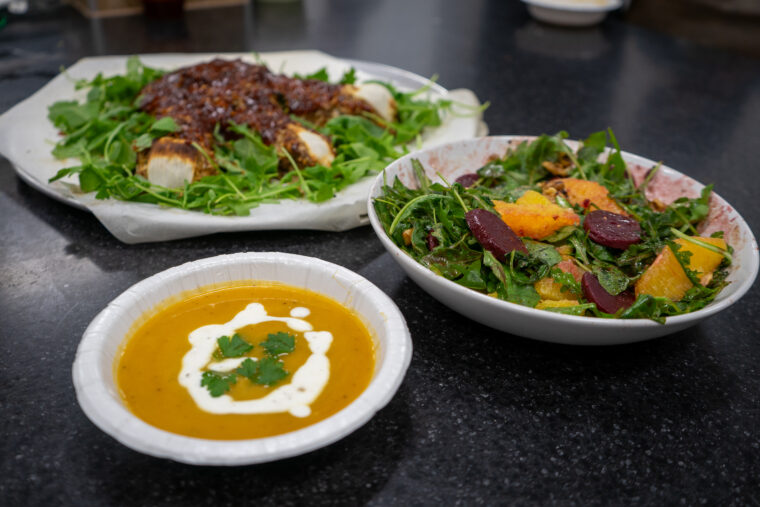
If you have the capacity, adding a small side can help round out your meal. I am a diehard fan of garlic bread, but pairing your soup with a salad, a grilled cheese, or a sandwich will all work well.
Now that you know the basics, I invite you to begin your own soup journey. Whether you make a recipe your own or follow it to the letter, all that matters is that you are in the kitchen trying. Enjoy the journey, and let your warm soup carry you through these cold autumn months. Happy souping and good luck!
Mason’s Homemade Tomato Soup
Ingredients:
4 pounds roma tomatoes
1 white onion
2 heads of garlic
3 full size carrots
4 red bell peppers
68 ounces of vegetable broth
A handful of fresh basil
8 tablespoons of olive oil
2 cups of heavy cream (Optional)
Italian seasoning (usually consisting of Basil, Rosemary, Oregano and Thyme)
Equipment:
Baking sheets
Large pot
Blender or immersion blender
Steps:
- Preheat your oven to 400°F. Drizzle two baking sheets with 2 tablespoons of olive oil each.
- Chop your carrots into 3 inch long logs, and then cut your tomatoes, onion, bell peppers, and carrot logs in half, and lay with the insides facing upward on your baking sheets.
- Without peeling, cut the bottoms off of your heads of garlic, and lay face up on your baking sheet. This will make the garlic easily blendable.
- Toss all vegetables in olive oil, and drizzle a small amount of olive oil on each head of garlic , and bake until all tomatoes are soft (30-40 minutes).
- Remove the baking sheets from the oven. Using tongs, remove the skins from the tomatoes, and then transfer everything except the garlic to a blender or a large pot,if using an immersion blender.
- Carefully, pick up the head of garlic, and squeeze gently over your blender or pot, until the softened cloves come out.
- Add enough broth to cover your vegetables, add the fresh basil, and blend.
- Once smooth, transfer to pot and add the rest of your vegetable broth, cooking until the soup begins to bubble.
- Optional: add heavy cream to your soup and stir. Serve on its own, or with a grilled cheese sandwich and enjoy.
Hearty Italian Sausage and Vegetable Stew
Ingredients
2 pounds of Italian sausage
5 carrots
8 celery sticks
1 white onion
1 can Italian Style stewed tomatoes
2 tablespoons of garlic (roughly 20 cloves)
1 bag of spinach
4 russet potatoes
64 ounces of beef stock
Equipment:
Large Pot
Can Opener
Steps:
- In a large pot, break Italian sausage into bite sized chunks or smaller, and cook on medium heat until browned, then remove and set aside.
- Drain most of the leftover grease, leaving a little bit at the bottom of your pan.
- Roughly chop your carrots, celery, and potatoes into bite-sized pieces.Dice your onion.
- Add carrots, celery, and onion to the pot, and cook until your onion is translucent and your celery is slightly cooked. Add minced garlic and cook until slightly aromatic, ~1 minute
- After the vegetables are cooked, add your Italian sausage, stewed tomatoes, and the potatoes. Then add the beef stock.
- Bring to a boil, stirring frequently. Then lower the heat and simmer for approximately 40 minutes, or until you can easily split the potatoes with a fork.
- Keep the stew at a simmer, then add your spinach, cooking until the spinach is slightly wilted.Serve with bread or autumnal salad.
Easy Garlic Bread
Ingredients:
Half a head of garlic
1 take and Bake baguette
4 tablespoons of butter, or 2 tablespoons of olive oil
Optional: Parmesan cheese
Steps:
- Split your baguette down the center, or cut into 1 inch thick slices.
- Dice your garlic, and cook with the butter or olive oil in either the microwave or a small saucepan
- Top each slice of baguette with garlic mixture, optionally top with parmesan cheese, and bake on a baking sheet according to the bread’s instructions, usually around 6-7 minutes. Enjoy!
Stay in Touch!
Get the latest and top news from StudentLife delivered to your inbox