Scene
Freshmen making moves: WU’s upcoming chess masters
Two freshmen currently hold elite rankings in chess: FIDE Master and National Master Vincent Tsay and Candidate Master Alec Beck. Having grown up around chess, they both had their share of structured training and tournament-hopping and have found meaning in the classic, universally loved strategy game. Their newest plan of action: adjusting to college life at Washington University.
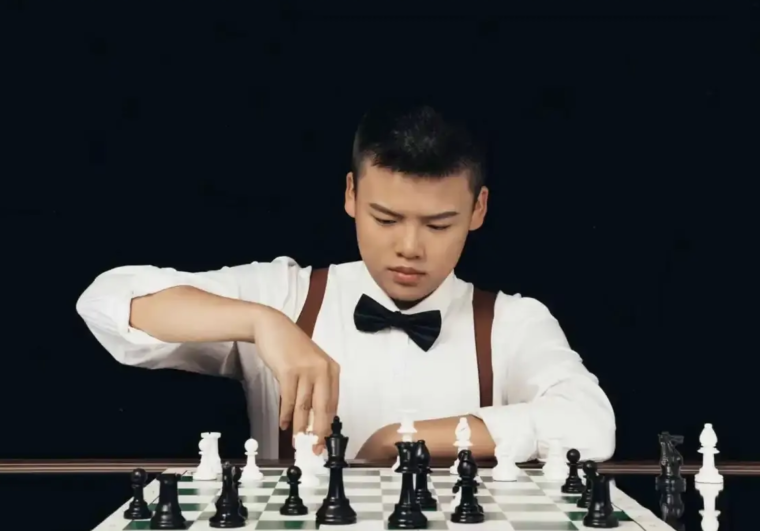
Though he recently started studying economics and philosophy at WashU, analytical thinking is nothing new to Vincent Tsay. At 12 years old, Tsay achieved the internationally recognized title of FIDE Master. He did this in an unconventional way — by becoming World Cadet Chess Champion in Brazil. First, Tsay explained the usual route to becoming a FIDE master: “You achieve a rating of 2300, which I’ve done throughout the later portion of my career.”
Courtesy of Vincent Tsay
However, he mentioned that certain tournaments, such as international age-restrictive championships, usually have titles as prizes. “It’s much more rare,” Tsay added. So, along with winning a gold medal, Tsay became a young chess master.
At nine, Tsay discovered chess on his own from going to theater classes. Next-door to the auditorium where he had classes, he found a chess club — and from there, he was introduced to the game.
“When you’re young, it’s a lot of the time for fun,” Tsay commented.
He improved quickly — within only a few years, Tsay was competing in tournaments with his mother’s support. Now elevated from being just a hobby, his chess career was also aided by a natural ability that he calls his “intellectual curiosity.” However, Tsay credits most of his progress to his own training and the accessibility of chess in his environment. Living in New York, he benefited from the bustling chess scene. Tsay recounts, “At a certain stage of my career, I went to tournaments every week.”
Clearly, it takes consistency and dedication to become one of the best. As a Candidate Master, Alec Beck hopes to become a National Master, a name that only the top 1% of rated players can call themselves. Currently, one would need a rating of at least 2000 to get to Beck’s standing. He explained, “To put that in perspective, 2000 is like the top 2% of all U.S. chess members.”
Starting at four and-a-half years old, Beck’s first tournament was at seven.
“It felt natural to me — it felt right,” Beck said. While studying the game, he had a few different coaches throughout the years, but his goal was the same: to hit a certain rating point every year. “For 99% of people, it’s almost entirely just practicing, studying, and working at it,” Beck said.
Apart from winning a couple of elementary state chess championships, Beck noted that one of his most rewarding experiences was bringing the chess movement to his own high school.
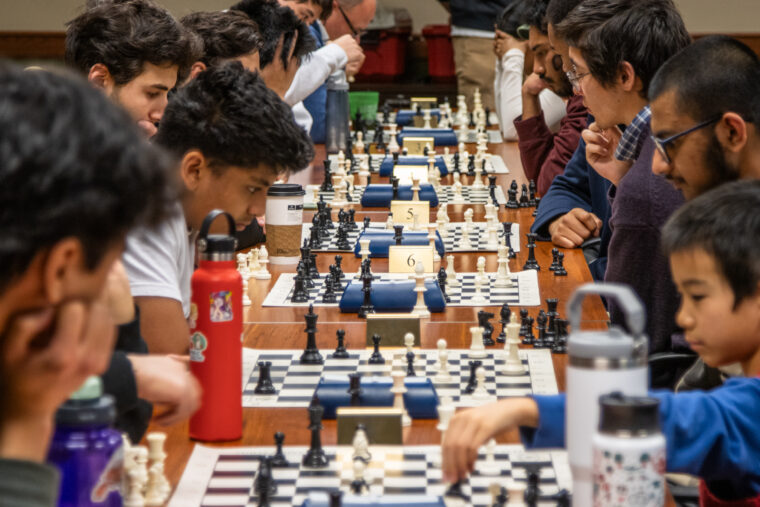
When playing with friends, chess can be a relaxing pastime, but things get serious in competitive settings.
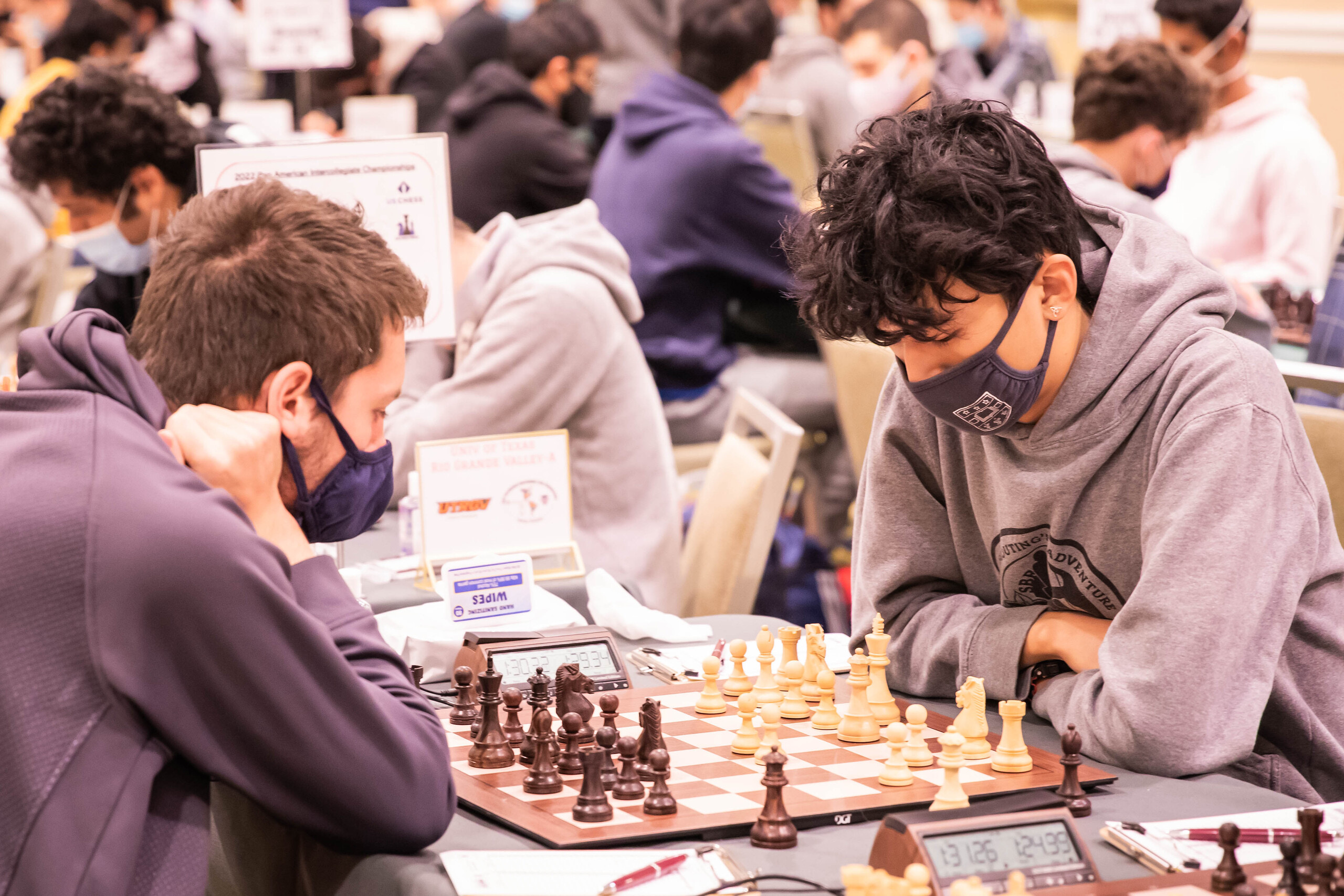
“A lot of people don’t realize how intense a tournament atmosphere is,” Tsay said. “It’s not the type of tension, like in sports, where people are screaming, yelling, cheering, booing,” he explained. “It’s a silent tension.” Discussing the reflective nature of the sport, Tsay continued, “Once you get back to the dorm, as a chess player, you’re still thinking about the game you just played.”
This pressure even applies to chess’ younger generation, likely because of some of the parents behind their boards. “[Parents] will stand there and watch the entire time,” Beck recalled. Younger kids, as Beck observed, are also known for displaying their dominance through memorization.
Memorization especially applies to the opening of a chess game and is distinct from the middle-game and end-game. According to Beck, 50 years ago you could probably make it through a match simply with a good sense of the game. Now that computers have analyzed an inconceivable number of chess variations, however, there is arguably less room for player interpretation in the first opening. Beck explained, “Whatever [the computer] spits out is the best, or the second-best,” and this could be regardless of the practiced intuition of the player. “They’ll just crush you. It’s just better.”
“Usually, a chess game at my level lasts around five hours. And that’s oftentimes too little time,” Tsay stated. “When you’re really thinking in the moment, and there’s that many options to consider, and you’re debating in your mind back and forth, you know, it’s not that much time,” he concluded.
For players like Tsay, a game of chess involves many factors — not just memorization, but tactical thinking, the style of his opponent, and an intuition for pattern recognition. Tsay’s biggest tip is to “look at things from your opponent’s perspective.”
Another lesson of his goes beyond the game. For Tsay, one of the biggest teachings in chess is a sense of personal accountability. Taking responsibility for a game is something unique to chess, as it is a highly individualistic sport in nature. He added that getting help from the people around you by asking questions is also helpful. Continuing to ask the question “What is your opponent trying to do?” Tsay describes how this breakthrough led to both competitive and personal development.
“You don’t truly understand your belief until you understand why your belief may be wrong [and] understand the counterargument,” Tsay said.
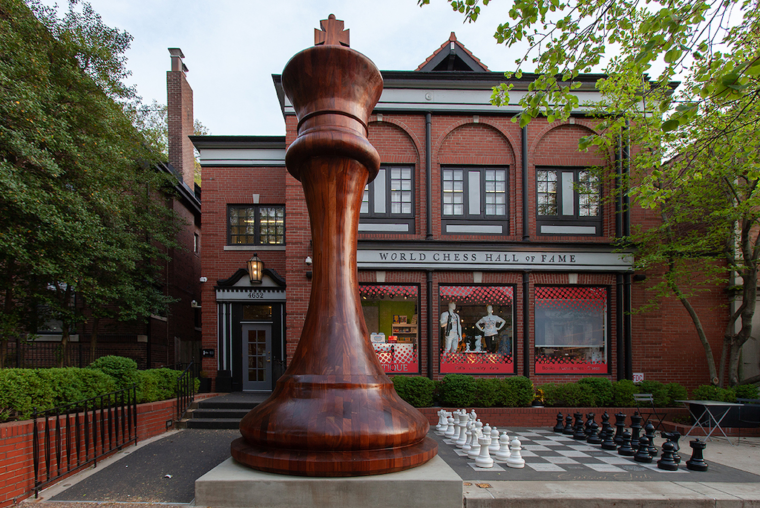
St. Louis is the chess capital of the nation, so it has much to offer in terms of community. Beck made sure to extend his reach to the biggest chess club in the U.S.
“If you’re playing chess at WashU, you’re probably part of the St. Louis Chess Club,” Tsay recounted about attending one of the St. Louis Chess Club’s invitational tournaments. “That’s actually how I got introduced to WashU.”
At the end of the day, Beck appreciates chess for its ability to transcend language barriers as well as connect people.
“You can meet so many new people. There’s such a wide range of interests. Chess — there’s no boundaries. If you speak a different language than your opponent, if you’re from a different place, it doesn’t matter — you can still enjoy a game with them,” he noted.
Beck explains that one of the reasons it is a special game for him is “enjoying the game itself with someone else you wouldn’t otherwise talk to.” With the potential to bring people together regardless of their backgrounds, as well as an internationally widespread community, chess offers a prime opportunity to try something new.
Finally, Beck gave his biggest piece of advice to new players: “Keep playing games. You can study and analyze openings, but the way to get better is to play games. Play online, play with friends.”
Stay in Touch!
Get the latest and top news from StudentLife delivered to your inbox