Scene
Running a political club during an election year: The lives of College Democrat, Republican presidents
2020. Impeachment. Pandemic. Recession. Protests. Another semester of online learning. And oh yeah, an election year.
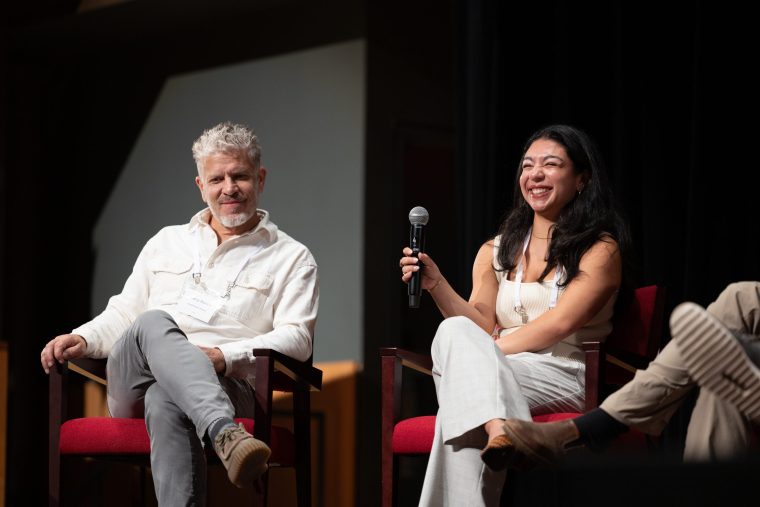
For junior Matias Mayesh and senior Arik Wolk, 2020 is nearly the end of their college journeys, but one that so far has proven to be very, very eventful. As club presidents of the College Republicans and College Democrats, respectively, this election cycle has pushed them towards partisan involvement in local and national elections. It has also made their weeks nothing short of busy.
 Mia Goldberg
Balancing their credit-loaded schedules with campaign phone banking, club meetings and organizing a debate between the two clubs makes for no easy task. As Nov. 3 nears, the days only seem to feel longer and longer for them. Still, it is something they eagerly look forward to.
Matias Mayesh is like an anti-Stan-Kroenke; a proud Los Angeles native who doesn’t exactly fit the ideological narrative of his home but who came to St. Louis ready for new opportunities. As a conservative, Mayesh is involved on campus with College Republicans and the Danforth Dispatch, a newly-created publication whose mission is to increase more unconventional discourse on campus. His journey in fostering a right-leaning philosophy stems from the struggles his family’s small business faced under the Obama administration.
“Growing up, my parents faced some ridiculous regulations to employ people in their business,” Mayesh remembered. “Whether it be the Affordable Care Act, taxes or local restrictions, just seeing how much of a negative impact government can have, made me more to the right and think of how to approach these issues.”
Regulations would be the least of Arik Wolk’s impetus to get involved. As a high school senior from north Jersey, 2016 was the year that changed his view towards civic engagement. In his own words, Wolk became “passionate about the election, and when Trump won, [he] was horrified about what went wrong and that spurred [him] into action when he came on campus.”
Four years down the road, he has built quite the resume. He canvassed for Phil Murphy’s 2017 gubernatorial victory in New Jersey and followed that up with an instrumental role in Cort VanOstran’s hard-fought 2018 MO-2 congressional campaign—all before becoming a two-year president of College Democrats.
Regardless of their differences, Mayesh and Wolk experienced the age-old adage: “Elections have consequences.” Whether it be the state of a family’s source of income or, in the case of Wolk, supporting the rights of LGBTQIA* family members, politics pushed them in one direction and certainly turned weekly dinner talks into something at the forefront of their lives. This year, however, the club presidents have their own concerns about the ongoing presidential climate.
As Wolk put it, “2020 is just something everyone is tuned into and emotional about. There’s a lot of tension in the air but voting is the only way to release it.”
Mayesh only furthered that notion, saying “Politics [are] crazy, it’s everywhere now and so polarized. Late-night comedy, sports, news, whatever. There’s no more ‘I’m a tennis player, what do you like?’. It’s just ‘Are you blue or are you red?’”
Both Mayesh and Wolk’s sentiments are rooted in their political ideologies. On the more liberal end of the spectrum, college student turnout is crucial in supporting Democrat candidates. On the other hand, conservative students, not only here on campus but also across the states, are very cautious in expressing their views, especially in a day and age when discussing politics has become a conversation starter.
As involved members of the larger Republican and Democrat conversation, they aren’t exonerated from participating in the increasingly polarized climate, but they haven’t exactly been a cause. Even with a dichotomy in their beliefs and experiences, both come together to have arduous support for more student involvement here at Washington University. Wolk recommended quite a few conventional means for future students to begin their own political journeys.
“Look at the Gephardt Institute or the Career Center,” he said. “That’s how I got involved with election campaigns; they always need active volunteers. And if you want to help increase voting regardless of party, there are so many nonpartisan resources on campus that are geared towards that.”
For the more right-leaning, however, Mayesh recommends you start searching elsewhere.
“Most of the time conservative initiatives don’t really advertise to colleges even though I believe they should,” he said. “Luckily all around us are Republican candidates. Look for them and just help any way you can. The contested campaigns might be the most significant and impactful.”
Politics has changed quite a bit in the lifetimes of most University undergraduates. And although they don’t exactly collaborate on hosting red-white-and-blue-themed mixers every once in a while, here at the University, they’ve made sure to keep political partisanship civil, informative and engaging.
“I think we work well with each other,” Mayesh said. “We have our differences, but at the end of the day, we just want Wash. U. kids to get involved. Organizing debates, connecting with local candidates, becoming passionate about specific issues, there are all great things to strive for as a student body.”
Stay in Touch!
Get the latest and top news from StudentLife delivered to your inbox