Student Union
SU Senate approves revised definition of sexual assault in WU judicial code
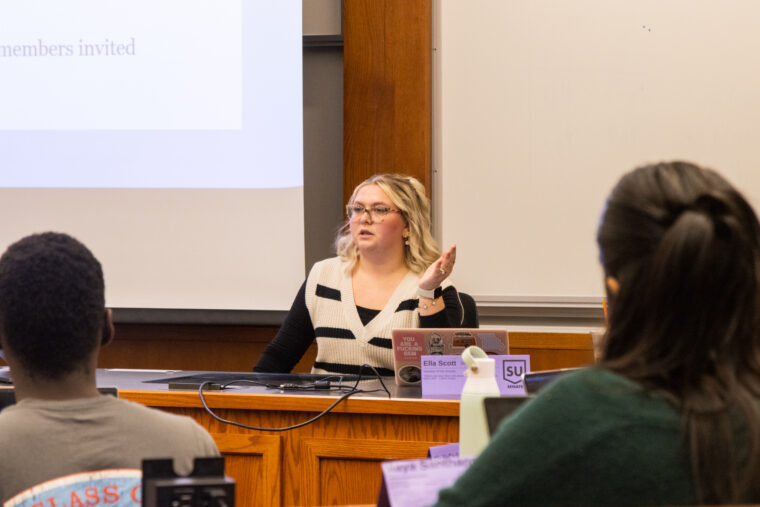
Student Union voted to approve a revised definition of sexual assault in Washington University’s judicial code at its weekly session on Tuesday.
The new code expands upon the definition of consent, making what constitutes sexual assault clearer to students through a longer definition with more concrete examples.
The Office of Student Conduct began developing the new definition two years ago when a task force was appointed by Vice Chancellor Sharon Stahl to reconsider the definition of assault. A year later, a second task force was appointed to continue the work of the first.
Before the changes could be applied to the code of conduct, however, the Office of Student Conduct needed approval from Student Union.
Senate proposed small changes to the updated sexual assault definition last week, freshman and SU senator Zakary Kadish said.
“We proposed minor revisions,” Kadish said. “We [understood] that we [couldn’t] create our own definitions because that would have to go through legal, that would have to go through the task force that was assigned to this.”
Sophomore and SU Senate Speaker Ben Hauser noted that the code had already been considered by many students and faculty members before making its way to Senate two weeks ago.
“[Director of the Office of Student Conduct Tamara King] spent a lot of time with a lot of different subcommittees, especially composed of undergrads and faculty who came in with extremely different ideas of what they thought the definition should be,” Hauser said. “She basically came to us for one final say on what the undergraduate student body as a whole would think about it.”
King noted that while these particular edits warranted earlier review, traditionally revisions are made to the conduct code on a three-year basis.
“Regularly the judicial code is reviewed every three years for overhaul and revision,” King said. “The three-year review is meant to edit or modify things that have changed due to technology or things of that nature.”
More comprehensive edits to the conduct code will be made next fall, but after two years spent modifying the sexual assault definition, Hauser is happy SU approved the revisions. He feels the changes will help students to more fully understand what sexual assault is and may prevent future occurrences of sexual violation.
“Student Union’s really happy it’s passed; I think it’s a good change,” Hauser said. “And I think it’s really good that a lot of us have that really clear direction of when are you in line, when are you not in line, so we can watch out for that sort of incident in the real world.”
Stay in Touch!
Get the latest and top news from StudentLife delivered to your inbox