Campus Events
The incredible, edible…ballot
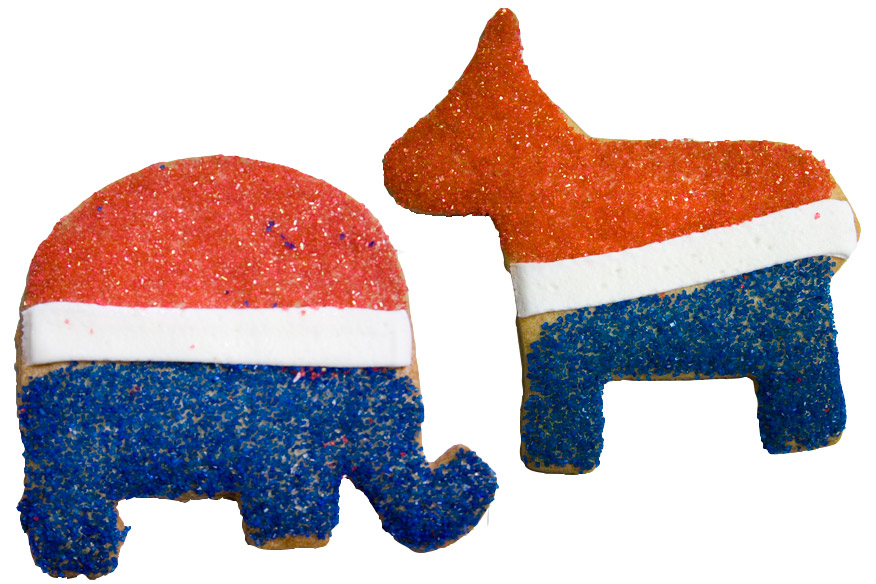
This isn’t a typical election. Instead of punching a hole in a ballot, students will cast their votes by biting into the election cookie of their choice: a Republican elephant or a Democratic donkey.
Those looking to exercise their right to vote can do so in the DUC café, Whispers and on the South 40.
The cookies, which are sugar cookies with red, white and blue icing, along with sprinkles, are being carefully counted.
Washington University Dining Services will have a tally of how many of each cookie have been sold by Monday.
Dining Services hopes to test the heat of the student body’s fervor for each party.
“The idea came from the students,” said Nadeem Siddiqui, the resident district manager of Bon Appétit. “They wanted to have a little fun with it and gauge support and kind of predict how the students will vote.”
Students concocted the cookie idea two years ago, when the University hosted the vice presidential debates between Joe Biden and Sarah Palin.
“I think it’s a cute idea, but I didn’t know about it,” sophomore Annie Sayers said.
For those who do purchase a cookie, the outcome is sweet.
“They are pretty good,” senior Jenny Lloyd said.
Though the cookies are available in two shapes, students are worried that a bias exists in the system because the elephant cookies are larger than the donkey ones.
“If I’m going to buy a cookie, I’m going to buy the cookie that satisfies my hunger,” junior Morgan Loewith said. “I’m worried about cookie voter fraud.”
Some students are not concerned that the results will be cooked because of the overwhelmingly liberal student body.
“I’m not worried because I think it’s going to be a landslide election,” sophomore Aaron Foote said.
On the other side of the cookie debate, the students’ bias is a concern.
“Last time I got an elephant because that was the only kind left,” Lloyd said.
Still, Siddiqui maintains that the cookie system is an exact one.
“Of course they’re accurate,” he said. “They don’t need to have elections; you just go by the cookies.”
Siddiqui is so confident, in fact, that he hopes that other states will use the system, which he says would save a lot of money.
“I think this model should be adopted by the country,” Siddiqui said.
Each cookie costs $1.75, and no additional employees were hired to work at the polls.
Stay in Touch!
Get the latest and top news from StudentLife delivered to your inbox