News
SU FY27 budget increases overall student group funding, cuts major programming
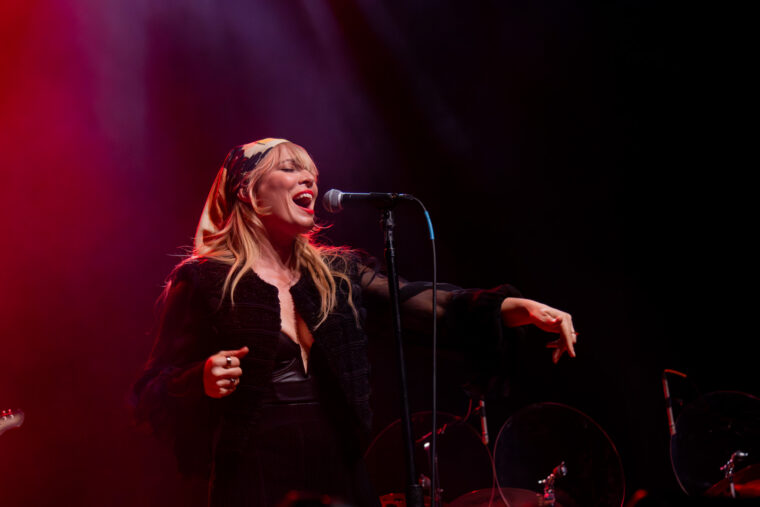
Natasha Bedingfield, the 2025 NAP headliner, performs at the Pageant. SPB has made the decision to end NAP, with its budget dropping from $802,935 in FY26 to $642,999 for FY27. (Eran Fann | Photo Editor)
In February this year, Student Union (SU) approved its fiscal year 2027 (FY27) general budget of approximately $4.8 million, an increase from about $4.65 million allocated for FY26. For the upcoming fiscal year, more funding will be directed towards student groups compared to FY26.
The FY27 budget made several significant changes, including removing funding for Night at the Pageant (NAP), tightening how the Budget Committee evaluated student organizations, and enforcing stricter allocation policies. The Committee denied funding to service and social justice organizations based on spending history and instead prioritized funding for groups it believed would fully spend their funds.
The FY27 budget allocated about $2.87 million to student groups through budgets, appeals, and executive appeals, up from roughly $2.53 million in FY26. For FY27, SU set aside $720,995.34 to SU entities and school councils, including groups like SPB; $151,023.07 to block-funded programming such as Campus Y, EST, and Uncle Joe’s; $169,850 to student group resources like space agreements and supplies; and about $956,568 to operating costs, including the Student Affairs MOU and administrative expenses.
Former Vice President of Finance Meris Damjanovic said the budget structure reflects how students expect SU funds to be used.
“The last thing you do is budgets and appeals. Whatever [money] is left goes into budgets and appeals,” Damjanovic said in an interview with Student Life. “When people hear SU has a $4.8 million budget, they assume that that means that there’s $4.8 million going to student groups.”
$1.61 million of the $2.51 million requested by student organizations was allocated, resulting in a funding rate of 64.15%. Funding outcomes differed widely. While environmental and sustainability groups received 89.30% of their requested funding, and religious and spiritual groups received 82.33%, service and community engagement groups received only 22%.
One of the affected service and community engagement organizations is Engineers Without Borders (EWB), which received no funding for FY27. The group had requested $77,417.55 for FY27 and had previously been allocated about $39,000 for the current Fiscal Year 26, which SU later retracted.
Sapp said the decision was largely based on the structure of their projects. The organization works on the design and oversight of international infrastructure projects, specifically in Uganda, and relies on licensed contractors to carry out construction while students lead the design and project management.
“The Budget Committee views giving money to contractors as a giveaway, and they don’t see that as directly benefiting Wash U students,” Sapp said.
SU also cited the group’s past spending history as a factor in its decision.
The loss of funding is a significant challenge for the organization, which is now shifting toward external funding sources, including grants, alumni donations, and sponsorships.
“It’s obviously a big hit to our club, but we’re hopeful that these other initiatives are going to be able to close that gap,” Sapp said.
Despite the setback, EWB leaders said they understand SU’s reasoning and plan to continue working with the organization in the future.
“We understand where they’re coming from and we look forward to working with them in the future to rebuild our relationship,” Sapp said.
Social justice organizations saw no upfront funding out of the $6,903.49 they requested for the upcoming fiscal year. Larger categories, such as sports clubs and cultural groups, received around 68.22% and 69.79% of their requests, respectively.
In an interview with Student Life, former Budget Committee Chair Palladium Liang said that service and social justice groups received less funding to ensure that funds are fully used. This stricter approach to budget allocations marks a shift from previous years, when higher initial allocations led to large amounts of unspent funding, according to Liang.
“For a lot of the service groups, why you see their funding proportion is so low is because in previous semesters we allocated more than what they actually spent,” Liang said. “We end up having so much overhead at the end of the semester that can’t be retrieved, and that money can’t go into student group programming.”
Looking to next year, Liang aims to shift more funding decisions into the appeals process.
“Whatever money we allocated, we had to be extremely confident that groups would spend it all,” Liang said. “If they need more, we encourage all these service groups to come back… to appeal for more money.”
This year, the committee relied heavily on spending patterns and attendance data while making decisions for FY27.
“We had groups look at their history of spending,” he said. “If a group had consistent attendance, we would do the same amount, but if a group consistently has fewer people attending, we funded a lower amount and encouraged them to come back with attendance figures for appeals.”
According to Liang, these changes were reinforced by updated funding policies. The Budget Committee did not fund fundraising events this year, introduced stricter limits on travel funding, capped at two trips over 500 miles, and evaluated placeholder events strictly based on historical spending. Additional changes include a $20-per-person cap on food for most events, venue caps across all groups, and the elimination of funding for individual memberships entirely. Together, these policies aim to reduce unused funds and ensure that allocations reflect realistic spending.
While student group funding increased overall, SU reduced funding for its own programming. The SPB saw its budget drop from $802,935 in FY26 to $642,999 for FY27. The largest factor in this decrease was the removal of funding for Night at the Pageant (NAP), a fall semester concert event that had cost around $143,000, according to Damjanovic. Damjanovic said the decision was based on cost efficiency.
“NAP was removed from the budget because the cost per person of the event did not justify the total cost. It was a cost per person that we wouldn’t accept from a student group programming an event of that size,” he said. “We did the three-year trial run of NAP, and it didn’t end up paying out like we had hoped it would.”
Both Liang and Damjanovic said the FY27 budget reflects an effort to prioritize long-term financial stability and ensure that funds are actively used rather than left unspent. Damjanovic emphasized that budgeting decisions extend beyond numbers alone.
“Your main goal when you’re balancing a budget should be the long-term financial health of SU,” he said. “It’s impossible to make everybody happy, but the general budget is a compromise, and I think we’ve struck a good one for Fiscal Year 27.”
SPB did not respond to Student Life’s request for comment.
Editor’s note: This article was updated at 11:50 pm on April 23, 2026 to reflect that SU’s budget was passed in February and did not entail redirecting funds from large scale programming as previously stated in the article.
Stay in Touch!
Get the latest and top news from StudentLife delivered to your inbox