News
WashU Students organize to put reproductive rights on the ballot
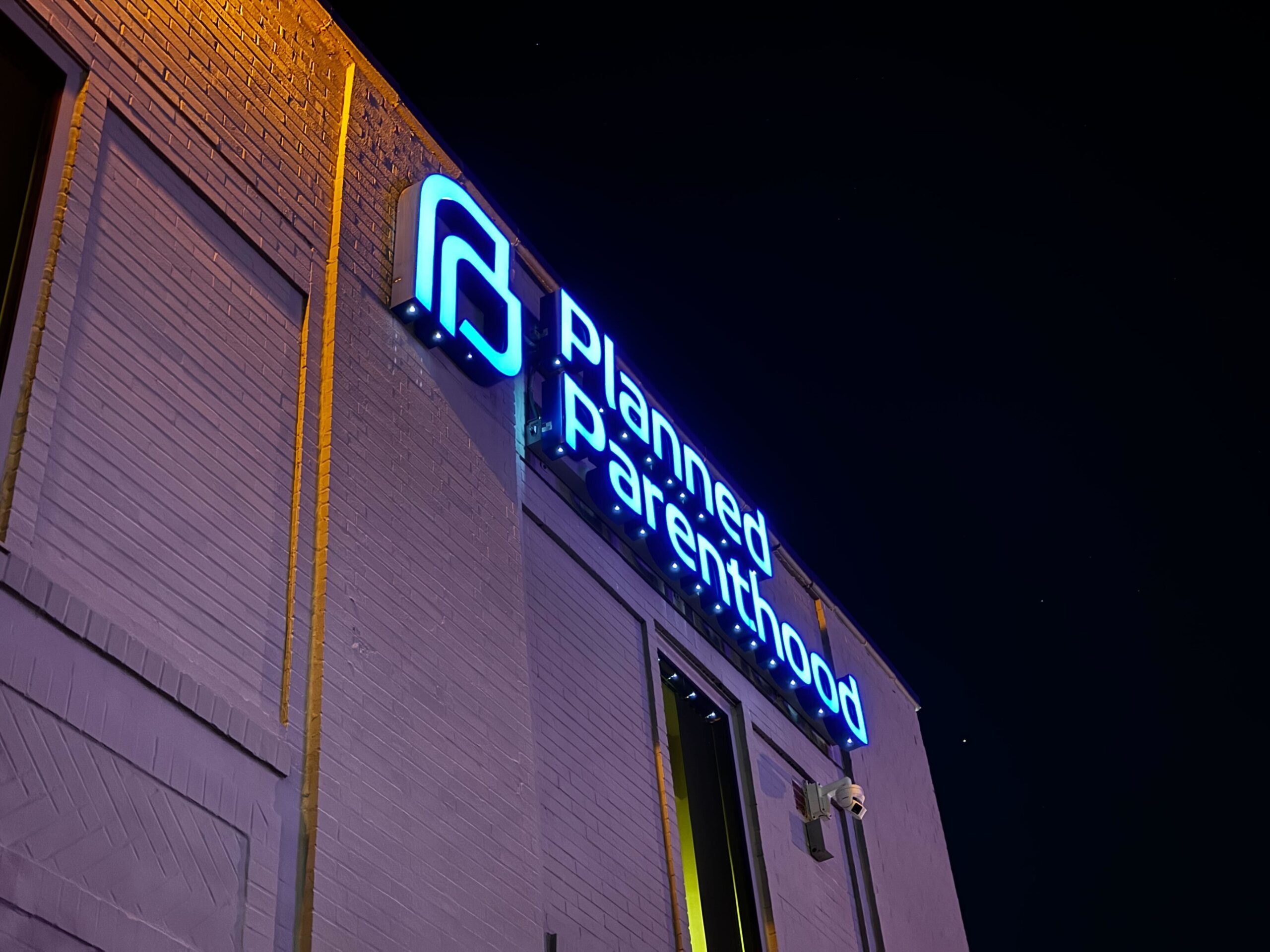
The Central West End Planned Parenthood facility on Sunday evening. Healthcare facilities like this one have not legally been able to provide abortion care since June 2022. (Isaac Seiler | Student Life)
Ahead of the 2024 election in Missouri, Washington University students and members of the St. Louis community are collecting signatures to get a pro-abortion amendment to the Missouri constitution on the ballot.
The minimum amount of signatures is due by May 5, 2024. Once the Secretary of State has verified that there are at least 172,000 valid signatures from registered Missourians, Governor Mike Parson will schedule the ballot initiative as early as August.
For WashU junior and abortion-rights activist Amelia Letson, the status quo in Missouri is unacceptable.
“Missouri was the first state to completely ban abortion after Dobbs,” Letson said. “We’ve seen the fallout of that, we’ve seen people having to exit the state, it is extremely emotionally, physically, and financially taxing on people.”
In response to Missouri’s ban, activists and organizers like Letson have been collecting signatures for a constitutional ballot measure that amends the state constitution to ensure the right to abortion.
“We’ve seen a lot of mobilization in the St. Louis community…we know that a majority of people in Missouri support [abortion rights],” Letson said. “I think that support is what really has been guiding this process — at least, the work that I’ve done with it.”
Abortion rights proponents have been working since January to secure the minimum signatures required to get the initiative on the ballot.
Sophomore Elena Wierich, who collects signatures for the abortion petition, said the Missouri ban is a fundamental issue of reproductive justice. Wierich was initially inspired to collect signatures for the ballot initiative by women she met during her summer internship at the League of Women Voters.
“Reproductive justice is important,” Wierich said. “I think that with this abortion ban, it’s really hard for people who don’t have the resources to go to another state to get access to abortion care.”
Wierich indicated that in her experience, there were several requirements for signature collectors, including mandatory training and bureaucratic hurdles.
“[Volunteers] have to go to a training in order to circulate the pages,” Wierich said. “You have to check out the number of pages that you want to have, and then send them back in. The signature has to be in one place, and the printed name has to be in another place, and if they get messed up, you have to strike out the whole line.”
In its current iteration, the ballot initiative, spearheaded by the group Missourians for Constitutional Freedom, mandates that the government “shall not deny or infringe on a person’s fundamental right to reproductive freedom.” The ban limits abortion past the point of “fetal viability,” which generally occurs around 24 weeks after conception.
“It’s really just about trusting patients and their doctors to decide what’s best for them in every unique situation, and removing [that power] from politicians,” Letson said.
In June 2022, just after the Supreme Court released the Dobbs v. Jackson decision, overturning the right to abortion in the United States, former Missouri Attorney General Eric Schmitt and Missouri Governor Mike Parson issued directives, bringing the state’s abortion trigger ban into effect.
Because of Missouri’s trigger ban, also known as the 2019 Right to Life of the Unborn Child Act, abortion procedures are effectively banned in Missouri without exception. Earlier this year, the Missouri General Assembly voted against granting exceptions for rape and incest.
Abortion clinics in eastern Missouri openly refer people seeking abortion services outside the state to Southern Illinois abortion clinics in Carbondale, Fairview Heights, and Granite City. In 2023, Illinois passed “sweeping abortion protections” in the wake of the Dobbs decision.
Since the Dobbs decision, several traditionally Republican states have successfully passed abortion rights amendments — including Kansas, Ohio, and Kentucky — and similar efforts are being made in 13 U.S. states.
However, the ballot initiative in Missouri faces some opposition, with a recent Pew poll finding that only 45% of Missourians support legal abortion in all or most cases, while 50% believe it should be illegal.
Some Missouri state representatives are pushing legislation to make it more difficult to amend the state constitution via ballot initiative. These efforts are unlikely to succeed before November.
Pro-life organizations in Missouri have also set up hotlines to report the location of signature gatherers. In Wierich’s experience, this complicates publicizing signature-gathering events.
“If there’s anybody circulating petitions, or if there’s anybody who they know will be at a specific place at a specific time, they’ll bring a caravan of protesters,” Wierich said.
WashU students, including Letson, are gathering signatures in support of the ballot initiative on Thursday, April 11 all across campus. Only those registered to vote in Missouri are permitted to sign the petition, but anyone can assist with collecting signatures.
“If students want to get involved, I would encourage them to attend a training…there are lots more happening in St. Louis and across the state,” Letson said. “I would direct people to the Missourians for Constitutional Freedom website.”
Stay in Touch!
Get the latest and top news from StudentLife delivered to your inbox