Forum
If you’re actually against AI-generated art, go see ‘Wildwood’
Danesh Temirbekova | Staff Illustrator
From scriptwriting and closed captions to entire trends like the infamous “fruit love island” series on TikTok, it is becoming more and more rare to find social media accounts whose content is created entirely by humans rather than artificial intelligence.
More than any other artistic medium, animation has become the target of online “AI slop,” or low-quality generative AI videos that only exist through stealing and mishmashing different parts of human art without any credit given. In a random stream of short-form content sampled by the YouTuber Sambucha, around 25% of the videos that circulate on TikTok, Instagram Reels, and YouTube Shorts are fully generated with AI. For an industry that already struggles to gain recognition beyond children’s entertainment or the backdrop of an adult cartoon, the persistence of human art largely rests on the financial and critical success of animated films.
Although they have the potential to reach audiences of all ages, releases from independent studios that have less clout than those with a monopoly on animation like Disney or Pixar, such as Laika Studios’ “Wildwood,” heavily depend on social media exposure and elaborate marketing campaigns to generate enough cultural buzz to be successful. Which is why, even though the film took 16 years to produce and had an estimated $100 million budget, “Wildwood” grossed less than $13 million in its domestic opening weekend. Similar to other stop-motion films, this underperformance at the box office has limited the cultural influence of “Wildwood” to viewers who are already outspoken and passionate about the importance of human-made art. Luckily, Laika has been able to stay afloat financially in the years of production between its releases, but only because its CEO, Travis Knight, is the son of a co-founder of the Nike shoe company.
“I never want to think to myself “they won’t make movies like this again” when there will always be innovative, hard-working people who would spend their whole lives creating art for others if they could make a sustainable living for themselves.”
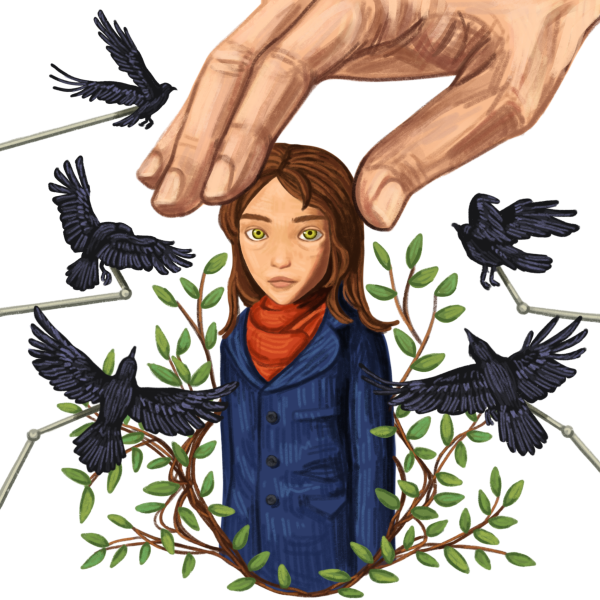
In addition to the years that were put into making the film, it took over 1,000 artists to create “Wildwood.” Every on-screen element is crafted by hand and shot frame-by-frame to create the illusion of movement. But beyond their extreme commitment and labor, Laika’s projects have almost always experienced poor box office performance due to their aforementioned lack of mainstream attention. Even “Coraline,” the studio’s highest grossing and most well-known film, is now merely regarded as Laika’s “one-hit wonder.”
While the film has yet to find financial success, “Wildwood” has received overwhelming critical acclaim, with a current 99% rating on Rotten Tomatoes across over 150 reviews. Having seen the film on opening weekend, I cannot overstate how transformative of a movie-going experience it is on the big screen. Knowing that thousands of hands crafted and perfected every visual detail you can see, from intricate vines of ivy to miniature storefronts throughout Portland, enhances the liveliness of the film’s world and story. Ironically, the fantastical elements of “Wildwood” felt the “realest” to me because I was fully immersed in its magical, dangerous, and mystifying setting out of sheer amazement at the artistry on display.
Naturally, upon seeing all the empty seats in the theater, it boggled my brain that a film as breathtaking as “Wildwood” was not something everyone was dying to watch. In the greater context of 2026, when AI is replacing human artists left and right, I refuse to imagine a world in which stop-motion, let alone human-made animation, ceases to exist. I never want to think to myself “they won’t make movies like this again” when there will always be innovative, hard-working people who would spend their whole lives creating art for others if they could make a sustainable living for themselves.
But we as audience members and consumers of art have to provide them that opportunity by supporting their work. The more often films like “Wildwood” are taken for granted, the more likely it is that we could lose them for good. If these projects became financially successful, smaller studios like Laika could produce more films with even better stories, characters, and worlds for generations to come. High box office numbers could prove to executives in the entertainment industry that well-crafted, human art is still profitable and still matters. So, if you want your movie ticket to really count, I highly recommend using it to give thanks to the thousands of artists who make movie magic like “Wildwood” happen.
Stay in Touch!
Get the latest and top news from StudentLife delivered to your inbox