Forum | Staff Columnists
24/7 convenience store not ‘for St. Louis’
Elma Ademovic | Staff Illustrator
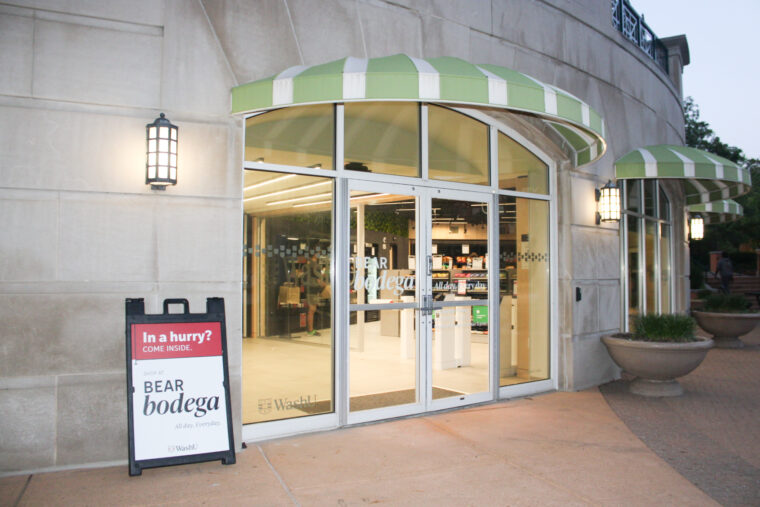
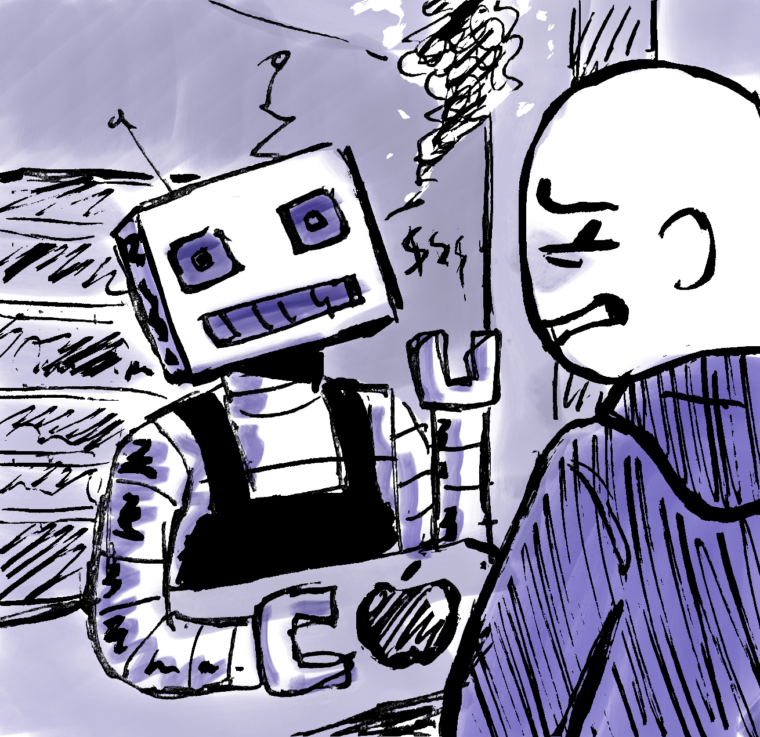
The South 40 Country Club released plans to develop yet another amenity: a 24/7 convenience store powered by Amazon’s Just Walk Out technology. Soon, hungry students won’t be forced to trek to Schnucks. Nor will they be required to chat with the cashiers on campus. Instead, Jeff Bezos will charge students’ accounts as they stroll out the door — no eye contact necessary.
I will admit, a 24/7 convenience store on the South 40 sounds like a good idea. For years, students have struggled with the accessibility of food on campus, the issue being covered by Student Union and Student Life alike. For the first time ever, a store will offer “snacks, drinks, fresh produce, everyday essentials, grab-and-go items, and vending options” on campus at all times.
However, the “Bear Bodega” — and especially its new checkout system — is not as glamorous as it seems. A closer, contextual look at the University’s plans for the 24/7 convenience store indicates how WashU fails to prioritize its relationship with the St. Louis community.
It’s well-known that WashU feels isolated from the surrounding city — a part of the larger issue of segregation in St. Louis. One of the few ways that students engage with members of the St. Louis community is through their daily interactions with the dining staff, who often come from different socioeconomic and racial backgrounds than many WashU students.
Over the past few years, WashU has cut down on interactions between students and dining hall workers. Grubhub has replaced in-person ordering, while Paws & Go recently implemented a required self-checkout. The progression to a convenience store that offers no human interaction seems only natural.
But the Bear Bodega doesn’t only extend the divide between students and St. Louis community members; it also cheats St. Louisans out of job opportunities and income.
According to their website, Just Walk Out’s technology “free[s] up staff” and can transform spaces into “24/7 autonomous retail operations.” The website also touts that, while operating the technology, the University of California San Diego made a $2 million increase in revenue.
Autonomous or not, it seems the Bear Bodega could make enough money to pay minimum wage to a few citizens of St. Louis. Instead, WashU (and Sodexo) has opted to outsource its labor to Amazon’s artificial intelligence, or maybe — as reported by Business Insider — 1,000 underpaid workers in India recording people check-out.
I fear that the Bear Bodega is only the most recent WashU property development that manipulates the student-city relationship for the University’s own gain. Through property acquisition, construction, and housing policies, WashU has worked to shelter its students within the campus’ bounds and spheres of influence.
Since 2023, WashU has purchased nine properties on the Delmar Loop and the entirety of Fontbonne’s 16-acre campus. Earlier this year, the University announced that all underclassmen are now required to live on campus. Along with the 24/7 convenience store, the University plans to build two new dorms on the 40, too. These new developments make some expect that underclassmen will be forced to live on the South 40 for two years before getting the opportunity to live off campus.
The pace of these policies makes WashU appear less interested in developing St. Louis than creating a private city of its own: one that can be marketed as safe, bougie, and separate from the people living just outside campus bounds. Through years of self-investment, the University has created a space where students can survive without ever stepping off University-owned soil.
While I am not sure what WashU’s next big development may be, we must continue to hold the University accountable to its stated goals of being “for St. Louis” and building community. If WashU is truly interested in fostering a community on the South 40 and beyond (and not just in making another buck), their community-building efforts must include more than the students on campus. Our community includes WashU employees and the citizens of the surrounding city.
At the end of the day, the convenience store’s walk-out technology puts dollars into the pockets of two billionaire entities: Amazon and WashU. What it does not do is put dollars into the pockets of St. Louisans who live just beyond campus. The Bear Bodega will deny our community of meaningful relationships, work, and engagement with the city we call home.
Stay in Touch!
Get the latest and top news from StudentLife delivered to your inbox