Forum
We shouldn’t be proud of our T20 status

Mimi Milord | Contributing Illustrator
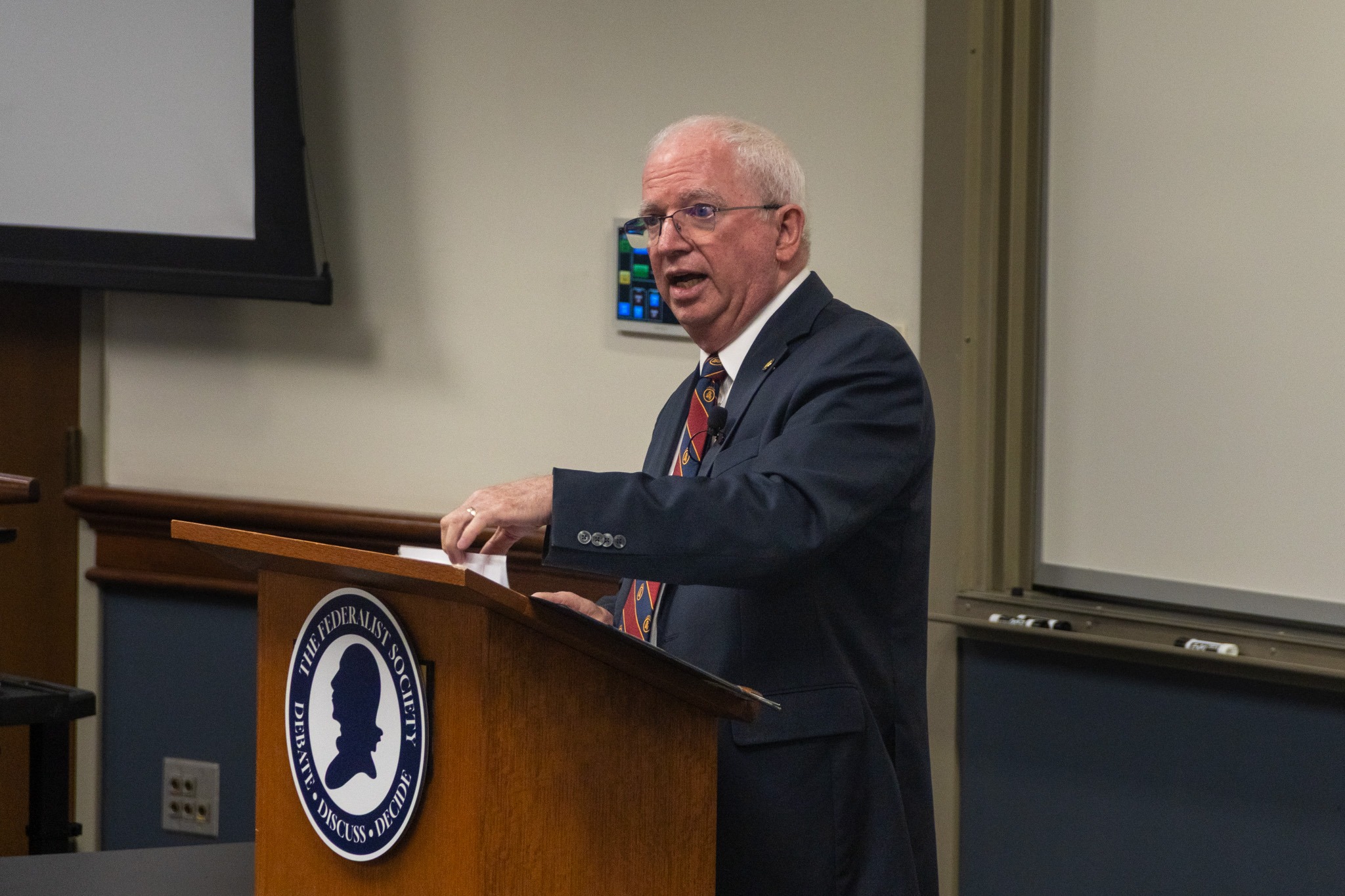
When the latest U.S. News & World Report ranking was released, WashU’s return to top 20 status was celebrated across campus. T20 has a nice ring to it, right? In a talk to WashU students and faculty in mid-November, Professor Evan Mandery of John Jay College of Criminal Justice (CUNY John Jay) argued that rankings don’t reflect schools’ positive impacts on society. And we agree: College rankings revere “elite,” “Ivy Plus” colleges — which include universities in the Ivy League and comparable schools such as MIT and Stanford — that perpetuate class inequity.
WashU isn’t necessarily considered “Ivy Plus,” but we are a private institution that was labeled as one of the least socioeconomically diverse colleges in 2017. As WashU continues to grapple with improving national name recognition and school identity, we caution the University against emulating Ivy Plus institutions and prioritizing rankings over becoming an institution that advances social progress.
During the presentation, Mandery proposed two possibilities of what colleges’ “true missions” should be: to elevate low-income kids into higher socioeconomic status or to encourage already rich students into becoming “do-gooders” (i.e., encouraging wealthy students to use their privilege for good). If college rankings reflected these two principles, then so-called “elite” schools would rank nowhere near as high.
Mandery argued that Ivy Plus institutions preserve class inequities and shared some revealing stats on student outcomes from his book, “Poison Ivy: How Elite Colleges Divide Us.” Less than 3.5% of students at Ivy Plus institutions enter from the lowest income quintile and end up improving their socioeconomic status post-grad. However, Ivy Plus schools have high stability rates, meaning that people who attend these institutions overwhelmingly remain in the socioeconomic status they grew up in. Given that children of parents in the 99.9th percentile of household income are 2.2 times more likely to be admitted into Ivy League schools, Ivies evidently reinforce existing inequalities.
In fact, if you rank schools based on “top-mobility,” which measures the share of students who enter college wealthy and then go on to become richer, the resulting list is strikingly similar to the U.S. News & World Report rankings, with Ivy Plus colleges dominating the top spots.
In contrast, no Ivy Plus institutions are represented in the colleges with the highest bottom-to-top social mobility rates, which measure the percentage of students who go from low to high socioeconomic status after graduation. Eight of the 12 schools with the actual highest mobility rates are City University of New York (CUNY) schools, which is New York City’s public university system, despite how the CUNYs have a combined endowment of just $1.1 billion. This is a mere fraction of the Ivy League’s combined $177 billion endowment total (larger than many countries’ GDPs).
Although these schools have considerably less prestige and fewer resources than Ivy Plus institutions, they lift students out of low socioeconomic status at higher rates, fulfilling Mandery’s first principle of what colleges’ true mission should be.
As for his second principle of creating “do-gooders,” a multitude of students graduating from Ivy Plus institutions end up going into finance or consulting. These schools use persistent recruiting events to steer undecided students who are, in the words of Mandery, “high achievers receptive to status signals,” into high-income career paths like business instead of social impact-oriented professions.
Our T20 status and shrinking acceptance rate should not be something to celebrate. Ivy Plus schools neither meaningfully uplift an economically diverse group of students nor produce “do-gooders.”
Many of us were shocked when President Donald Trump began threatening to revoke federal funding from colleges and universities, but there is a reason why attacking institutions like Columbia and Brown is not a cause for concern for many Americans. People have no reason to trust elite institutions when the narrative that they represent of the opportunity for social mobility is so far removed from reality.
It is unsurprising, then, that Americans have a steadily declining trust in higher education. In a survey from May 2025, 27% of respondents were in favor of Trump’s proposed policy of withholding federal funding from noncompliant universities, and 26% were neutral. Americans distrust higher education because of its elitism, so Trump’s threats are often met with indifference, if not support.
WashU must rethink the type of institution we want to be — we can try to mirror these elite schools, or we can build our own path. Historically, WashU has perpetuated the income inequality of Ivy Plus schools — in 2014, we were ranked second in median family income nationwide. Although the WashU administration has taken steps to shrink this gap, increasing the percentage of Pell-eligible students by almost four times in the last decade, we have been slow to do so. For example, we were one of the last schools to adopt need-blind admissions.
It’s time, as WashU students, to reframe our vision of what this institution should be. The temptation of prestige and exclusivity is strong, but instead of falling into line with Ivy Plus clones, we should focus on having positive social impacts with our extensive resources. Let’s ditch the reliance on rankings as a measure of worth and amplify pressure on the administration to make policy that widens our socioeconomic diversity, like decreasing the influence of early decision admissions, which advantage wealthy students.
Stay in Touch!
Get the latest and top news from StudentLife delivered to your inbox