Forum | Staff Columnists
What the ‘performative male’ says about us
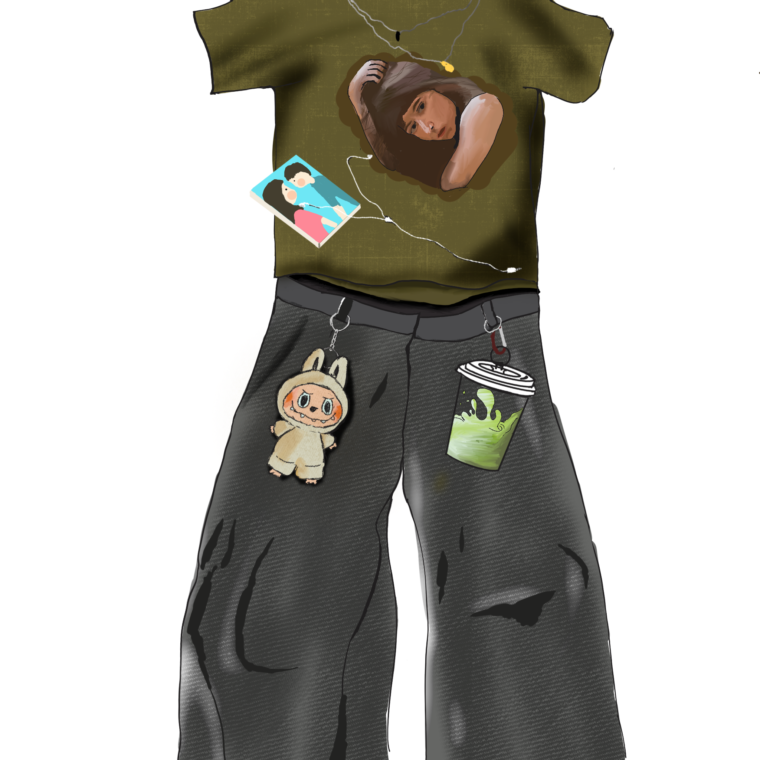 David Wang | Staff Illustrator
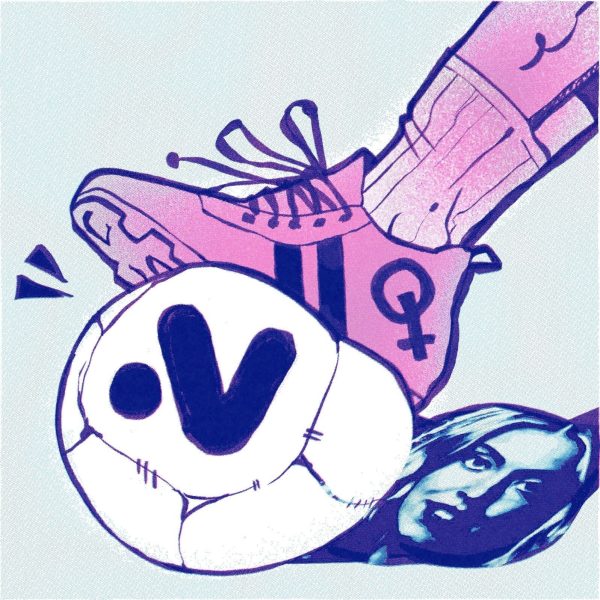
 Since I have been back on campus, I’ve heard a lot of talk about the performative male. Women warn one another about the man who is strictly performative, and even my guy friends wield this accusation. Rumor has it there will be a “performative male contest” on the Swamp. Clearly, this meme has taken hold of a large part of WashU’s collective consciousness, but why? And what does it say about our campus?
For those unfamiliar with the term, the performative male is a viral caricature that has recently gained traction online. He drinks matcha, wears wide-legged jeans, collects vinyls, reads feminist literature, and keeps up-to-date with internet culture — behaviors that subvert gender norms. Ultimately, the hallmark of this man is that his interests are not genuine but feigned. His true motive is to appear disarming to women often for the purpose of courting them.
While the phenomenon started as a warning for women to look out for this particular type of man, it quickly became a joke. Men began to dress as performative males or film other performative males in public. Recently, the meme has manifested into in-person competitions in cities like Seattle, Chicago, and San Francisco where men compete to be the most performative.
The immense popularity of this meme reveals a deeply hypocritical tendency amongst liberal-leaning campus culture: though the performative male meme is meant to be socially conscious, it actually reaffirms the same patriarchal systems we — as a society and generation — claim to subvert.
But that’s a lot to unpack. Let’s go back to those cities where the performative male competitions happened.
It’s no coincidence that these contests took place in left-leaning cities. The performative male is restricted to these liberal bubbles, where his rise is reactionary to the current political climate.
With the overturning of Roe v. Wade, a president in office who boasts of sexually assaulting women, and the largest political gender divide of any generation being amongst Gen Z, one can imagine why many men can come across as threatening to women. The performative male arises out of the necessity for Gen Z men to display their political (and moral) stances without having to outright say them. In other words, they are virtue signaling.
But there are multiple layers to this virtue signaling, which is enacted even by those who point the finger at performative males. In order to be the performative male, you must be savvy when it comes to online discourse. Therefore, those who might be labeled a performative male are likely to have already engaged with the meme. In response to the threat of being labeled as performative, they mock the performative male themselves. In simpler terms, men who make jokes about the performative male are momentarily absolved as being considered as such.
With that said, it’s easy to imagine why this meme has risen to such heights. The performative male recreates the meme to show that he’s not performative himself — he’s in on the joke. This is why we see competitions with hundreds of men in parks “pretending” to be performative males.
This is a joke that mocks performance whilst performing. And that irony doesn’t stop at this behavior — it is embedded in the very language of the term itself.
As Alisha Haridasani Gupta and Nicole Stock describe in their New York Times article on the performative male, the term “performative” as it relates to gender can be traced back to Judith Butler’s essay, “Performative Acts and Gender Constitution: An Essay in Phenomenology and Feminist Theory.” Gupta and Stock explain how the term has gone from “a philosophical concept to common pejorative.” By stripping the term “performative” down to an insult, the speaker appropriates academic language. This appropriation can still give the speaker an air of being well-read, asserting their membership in a politically-aware in-group, even as the term is wielded as little more than an insult.
And still, the irony runs deeper. If the word “performative” signals feminist literacy, the word “male” signals something else entirely — and it is one of the reasons this meme grips us so tightly. When speaking of the performative male, we steer clear of casual terms for men which are more commonly used in daily speech. Instead of “guy,” “dude,” or “bro,” popular culture has opted for another academic, and this time, clinical, term: “male.”
By choosing the word “male,” the meme positions him less as a social subject and more as a biological specimen. He is not a “guy” with quirks or contradictions but a “male” whose very essence is reduced to performance in pursuit of sex. This framing reinforces, rather than subverts, the essentialist link between masculinity and sexual desire.
Through the guise of humor, the performative male allows us to deflect the possibility that men might enjoy Labubus, matcha, vinyl, or Clairo for genuine reasons. It is easier — and safer — to assume that their actions arise from an essential, heteronormative drive rather than authentic interest. In doing so, the meme reassures observers that gender norms remain intact, that masculinity is predictable, and that subverted expressions of identity are always, by default, performance.
What appears as playful parody is in fact a mechanism for containment: it laughs off nonconformity while reinforcing the very social scripts it seems to critique.
Our obsession with the performative male unmasks the contradictions of Gen Z’s liberal culture and consequently a large swath of students at WashU. We laugh at his posturing to reassert our own moral and cultural capital. The name we’ve given him transforms him into a specimen, while his behavior is reduced to heteronormative and essentialist desire. Throughout all of this, humor is the weapon of choice.
With this seemingly simple joke, we reinforce gender norms and signal political righteousness while slashing the unsettling possibility that the performative male’s interests could be genuine. In the end, he is a caricature where parody, signaling, and essentialist thinking coexist in perfect, ironic harmony.
As for the competition on the Swamp — well, perhaps you will see me there. After all, what is more performative than a cis, white, heterosexual male criticizing the patriarchy?
Stay in Touch!
Get the latest and top news from StudentLife delivered to your inbox