Forum | Staff Columnists
Walking the straight and narrow
Over the summer, as I was walking to my lab early in the morning, I was struck by the fact that I hadn’t been thinking for so long that I couldn’t remember when I last thought. I had filled my mind with to-do lists and plans. I read and analyzed, but I didn’t really take the time to think.
By “think,” I mean deep introspection, such as where you are going in life and what is going on in the world. I mean thinking about what you want to do after you get out of college, where you will be in five years, what your friends say about you and so forth. The sort of creative thinking whose only reward is living a more meaningful life.
So I started thinking more—on my walks to and from the lab mostly. “What good is my research going to do the world?” I asked myself. Well, it does provide a method to inactivate viruses in water and could possibly save the 600,000 children who die each year from rotavirus. It could, provided the research paper doesn’t die on a desk and is instead actually implemented. This led me to thinking of the fork in the path that led to academia on one side and industry on the other. It’s this sort of thinking that I am talking about. It started with me focused just on myself, spread to thinking about children around the world and ended with me debating the merits of two different lifestyles.
At a certain point, a friend showed me an article, “The Disadvantages of an Elite Education” by William Deresiewicz, an ex-English professor of 10 years at Yale. “I’m getting an elite education, right? What could be wrong with Wash. U.?” I thought. I decided to read it.
Deresiewicz makes many good points that I will pass up to focus on what interests me most. His most audacious statement is that an elite education is “profoundly anti-intellectual.” I couldn’t decide if he was right or not, so I decided to think about it.
The only class that made me actually think critically and introspectively last year was my History of World Cinema class. I spent many nights trying to say something meaningful about a film’s perspective on life; long hours were spent trying to link concrete sights and sounds to an abstract message. All my other classes did not require any such deep thought.
I recall a conversation I had last year with someone on my floor who no longer attends Wash. U. He expressed the exact same sentiment as Deresiewicz, saying that he felt that Wash. U. was not a place that encouraged genuine “intellectual inquiry.” I was taken off-guard back then as well. Surely a university of all places is the best for intellectual inquiry?
“Being an intellectual means, first of all, being passionate about ideas,” Deresiewicz writes. I can think of few students who are passionate and committed to an idea. Here “passionate” is meant as an idea that fills you with fire and to which you offer your time and work as holocaust.
What other features mark an intellectual? “Being an intellectual begins with thinking your way outside of your assumptions and the system that enforces them,” and “the ability to engage in introspection…is the essential precondition for living an intellectual life,” Deresiewicz writes.
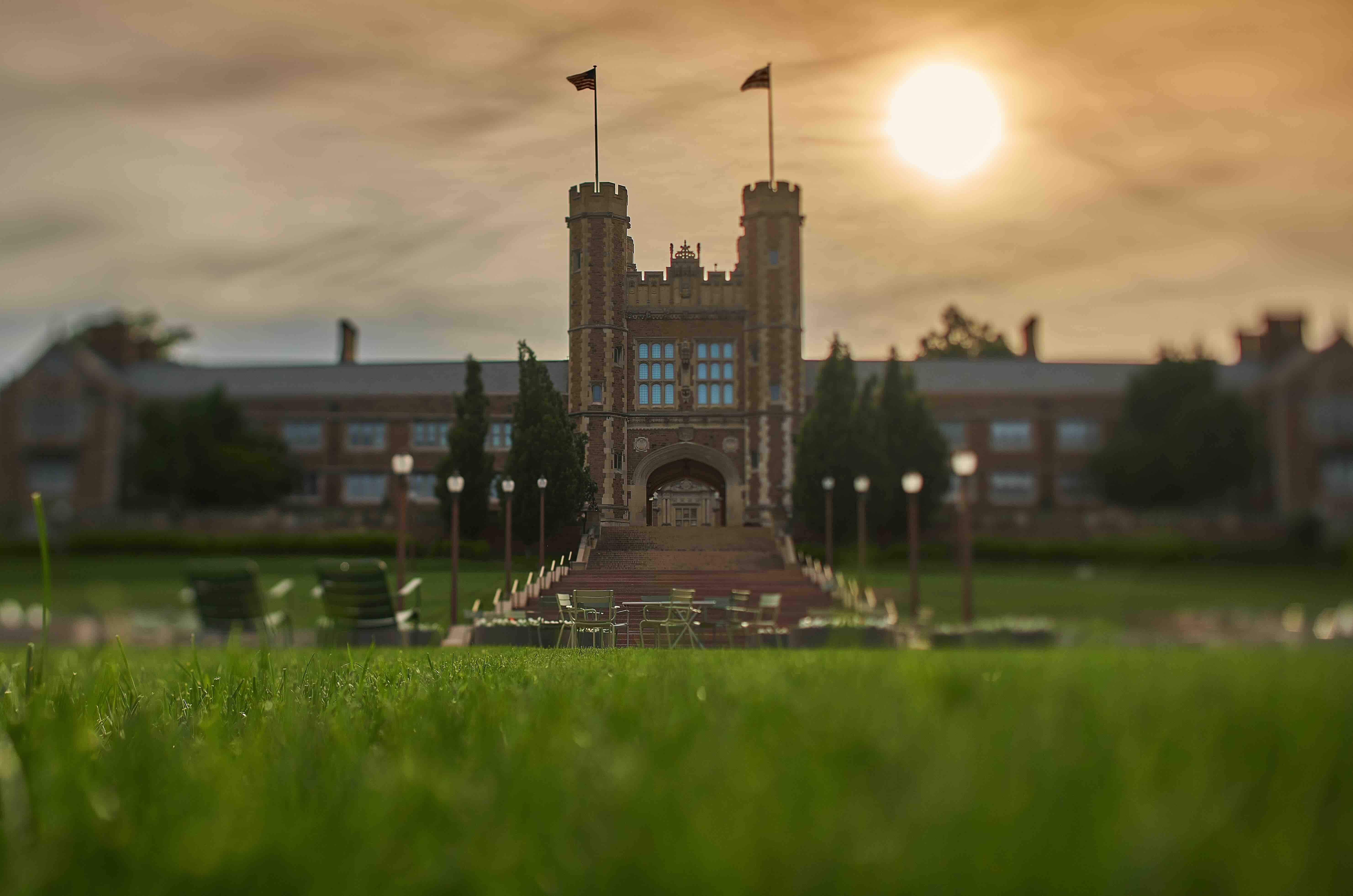
Walking along a path on campus the other day, I noticed the ropes lining its sides. I thought to myself that that captures the intellectual life of Wash. U. A smooth path that you can follow that will lead you to a life of comfort. Few students lift the rope, step to the side and risk stumbling on the uneven ground.
Interpreted through Deresiewicz, the path is an assumption that leads you to the system that Wash. U. embodies. Being an intellectual would mean stepping off the path and asking yourself why you are walking on that path.
I have only taken that one class that has encouraged me to step off the path and look at life and myself. I had hoped that my other humanities and social science classes would have encouraged me to do so, but I have been disappointed. In talking to my friends who have taken many more of those types of classes, I have been told that what I’m looking for wasn’t found by them either.
So I am left to ask myself what an education really is. I hope that it is not just to give me a piece of paper and the ability to live so long as I color within the lines drawn by the system but rather that it will give me the ability to make a life however I please.
Stay in Touch!
Get the latest and top news from StudentLife delivered to your inbox