Staff Columnists
You can still send your kid to an Ivy League school–or Wash. U.
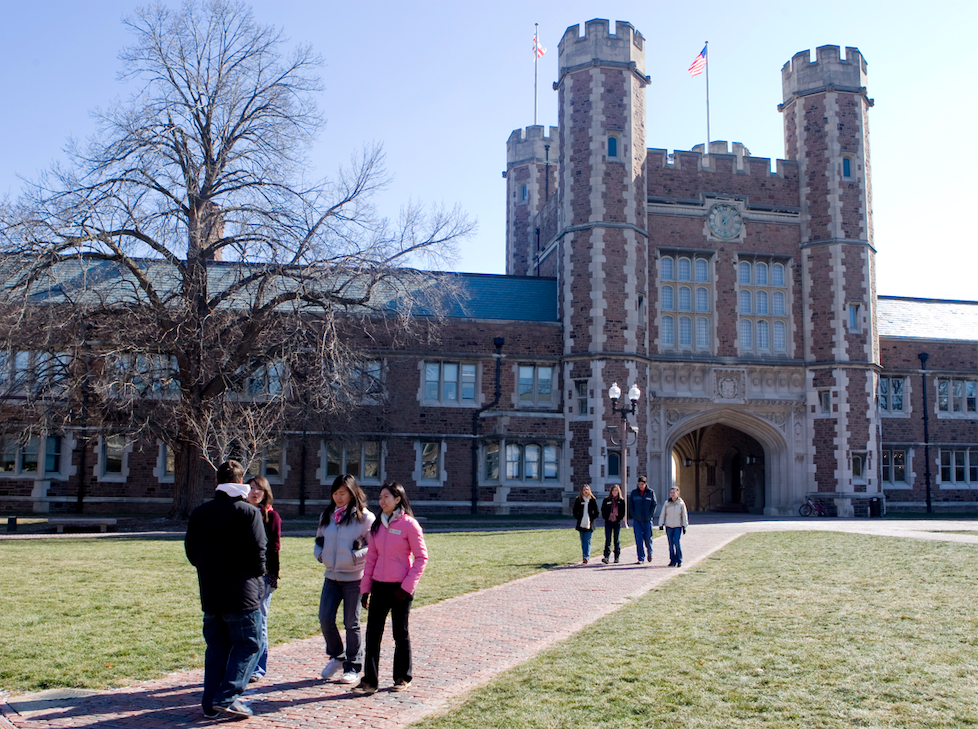
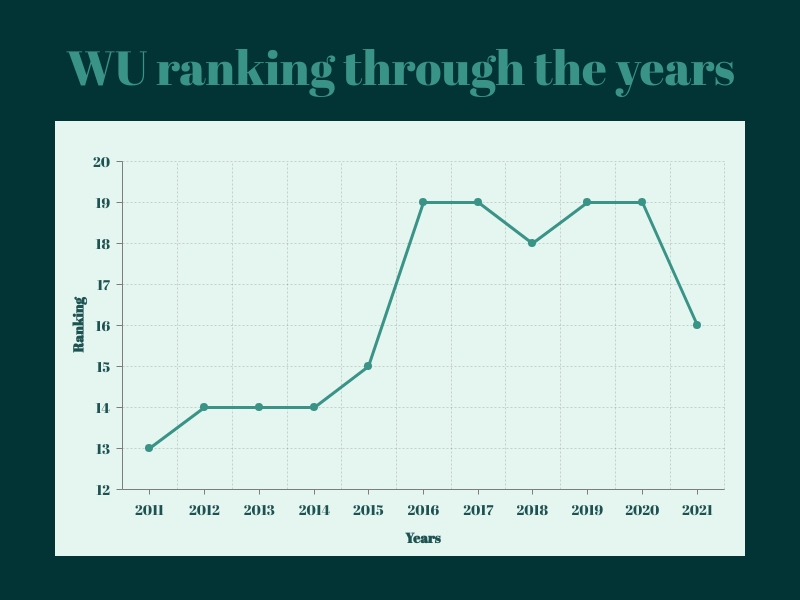
In its most recent rankings, U.S. News & World Report awarded Washington University the No. 14 spot on its list of top national universities. While this is a source of pride for the University, one has to wonder—how much does a school’s ranking matter? The notion that attending a prestigious university automatically equates to a valuable education has been hotly debated for a while.
It gained particular attention over the summer, when New Republic published a controversial article called “Don’t Send Your Kid to the Ivy League,” written by former Yale University professor William Deresiewicz. Deresiewicz argues that selective universities (a category that includes Wash. U., despite the Ivy League focus of the story) are overrated, saying that they offer a hollow education. Instead, he advises students to consider other options such as smaller liberal arts colleges or public universities.
As a student who transferred to Wash. U. from the University of Illinois at Urbana-Champaign, I’ve benefited from having both the “highly selective” and state-school perspectives. While Deresiewicz has some valid points, his qualms about the futility of private education aren’t problems that are faced solely by private universities.
Deresiewicz criticizes selective schools for emphasizing a career-oriented education, thus devaluing learning for the sake of knowledge. He claims that students are “heading meekly in the same direction, great at what they’re doing but with no idea why they’re doing it.” Essentially, he believes that selective universities harvest robots.
I feel you, Mr. Deresiewicz.
Trust me, I’ve spent plenty of Holden Caulfield-motivated evenings lamenting the perils of, if you will, “the system.” It saddens me when I encounter passionless flesh-sacks, whose primary goals are to make six figures and die in some beautiful suburban fantasy. I wish that academic institutions placed less emphasis on conventional success and career preparation. I wish that there were less pressure on students to become passionless flesh-sacks in the first place.
But here’s a spoiler alert: getting an education from a state school will not salvage your soul from becoming a corporate drone. The issue of students being misguided, confused and without purpose doesn’t exclusively plague selective universities. Students everywhere worry about practicality, even at public universities. Academic institutions themselves propagate the STEM (science, technology, engineering and math) and business fields, praising their career viability while often leaving the humanities departments in the dark. This emphasis on professional careers, combined with the insecurity about the future that college students already face, drives students to choose “stable” majors instead of following their passions. Unless you’re looking at a liberal arts college, this remains pretty standard.
But Deresiewicz does highlight a major truism: that selective institutions are playgrounds for America’s elite, resulting in homogeneity.
Diversity goes much further at a state school. You meet people who come from backgrounds of greater socioeconomic variation, as well as students who have taken more non-traditional educational routes. You meet people who are pursuing their degrees while simultaneously taking care of a child, for goodness’ sake. I’ve had incredible experiences and interactions at my previous university—whether those would be able to replicate themselves here is dubious.
That’s not to say that students at Wash. U. don’t have intriguing personal narratives. However, there does appear to be a common thread of (dare I say it?) privilege. Nothing is wrong with that, but as someone who comes from a lower-income household, I know that the presence of wealth has the ability to make one feel a little out of place.
So considering these factors, is an elite education really worth it? Should you have saved your parents some cash and gone to state school?
The truth is that it doesn’t matter, and declaring one academic experience superior to the other is useless. Your decision to attend a flagship state school over a top-15 university is not going to define you. No matter where you go, college will always be, well, college. You’re going to change your mind and make mistakes. You’re going to meet fascinating people and have intense 4 a.m. conversations that change you. You’re going to consume borderline-toxic amounts of Easy Mac and ramen. You’re going to feel accomplished at points and sob on your neighbor’s rug at others. You’re going to get away with things that you’ll eventually tell your grandchildren about. Maybe you’ll even figure out what you’re doing with yourself.
And look, you might chug through college with the intention of becoming a corporate drone. You might drop out of school and write poetry in some dingy cabin for the rest of your life. Personally, I’m shooting for a rat-infested studio apartment in Brooklyn after graduation. Either way, it doesn’t matter where you spent your four years. It is your responsibility to shape your education, identity and future as you see fit. Only you can decide what you want to receive out of your university and what you’re going to do with your education and opportunities.
Stay in Touch!
Get the latest and top news from StudentLife delivered to your inbox