Theater
The interrelated nature of ‘Love and Information’
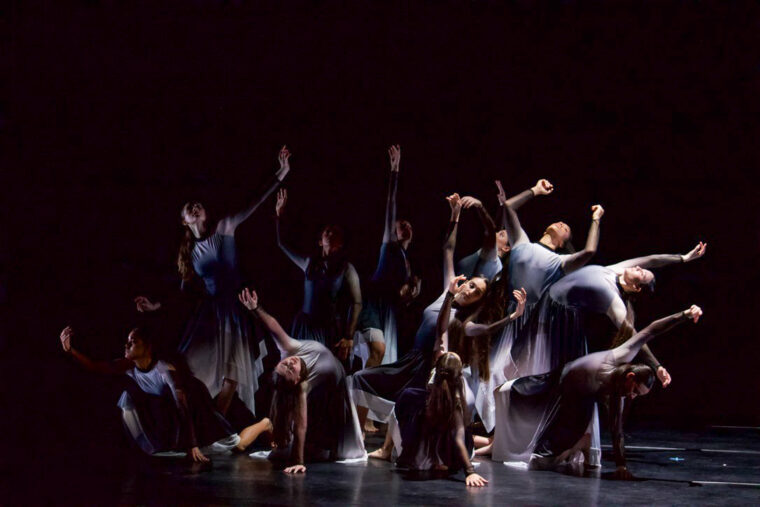
Whether this article has information that interests you or not, the humanistic craving for knowledge may cause you to keep reading. This craving and the double-edged nature of being “in the know” is the central message conveyed through Washington University Performing Arts Department’s rendition of Caryl Churchill’s “Love and Information,” shown over the last two weeks at the A.E. Hotchner Studio Theatre. Depicting brief interpersonal interactions and the sharing of all sorts of information, “Love and Information” illustrates the raw relationships between individuals and the centrality of knowledge, or lack thereof, in their perseveration. Pausing the Washington University bubble on a bustling Saturday night filled with Carnaval and Relay For Life to go to the tiny, hidden theater, I am not hesitant to say it was a night well spent.
Running a full 90 minutes and lacking an intermission from the continuously changing five-minute scenes, this Andrea Urice-directed production serves as a shortened version of the two-hour long off-Broadway performance released in 2014. Though a bit shorter, this performance doesn’t lose the power and movability produced by the piece’s central message. Emphasizing the importance of interpersonal relationships and technology’s growing influences on such connections, this rendition lacks the intermission that could cause detachment from the constantly revealed characters, problems and raw emotions.
Such instances include the scene in which a boy packing his suitcase is pestered by who seems to be his younger sister to share a dark and unsettling secret he refuses to tell. Though reverberations of Carnaval could be felt from the nearby Edison Theater, the tone of the play did not lose its intensity.
Given the shape and size of the Black Box theater, audience members are thrown deeper into the mix of each and every scene, as though they too were a part of the situation being acted out before their eyes. From the first scene to the last, audience members experience an enriching theatrical experience that forces them to face the reality of a random and self-mediated world. At scene changes, actors would disperse from various sides of the stage into the audience and the black abyss surrounding the stage of the tiny theater. This quiet disintegration from scene to scene maintained the mood and made each audience member a cast member as well.
With a cast comprised of 14 individuals playing numerous unnamed and unidentified characters, it goes without saying that strong dedication and skill went into mastering the intricacies of the characters that fill the 50 scenes of the play. Members of the cast did a strong job switching to and from different characters while maintaining the professionalism and the somberness that pervade the play throughout. The play invites an appreciation for randomness, which each performer grasps well, in order to make possible the quick yet smooth transitions that occur between each scene.
While a distinct, cohesive plotline did not exist, each brief scene tied together in its representation of individuals gaining information, both for better and for worst. Including moments such as a friend telling on another friend’s crime, a boss choosing to fire an employee over social media, a boy that cannot feel fear and ultimately a compilation onstage sharing little random facts that truly have no context nor affiliation with the play itself, “Love and Information” captures the power that information has in bringing individuals together or pushing them apart. Perhaps the most influential scene occurs at the very end, when after 90 minutes of random conversations, a vignette depicts some of the most emotion-packed words anyone can say: “I love you.” Thus the moral of the story appears in the title itself: while information can exist without the presence of love, love cannot exist without communication to guide its existence. Though no longer being shown, “Love and Information” touched the lives of those who had the opportunity to stop and consider the existential on their night off.
Stay in Touch!
Get the latest and top news from StudentLife delivered to your inbox