Cadenza | Music
WU a cappella confronts new challenges in the face of COVID-19
This semester, a cappella groups are facing quite a challenge. With everything being virtual, a cappella groups must rethink the way they work and create music amid the pandemic.
Changes range from a revamped audition process to new ways of producing musical content, but the groups are powering ahead.
 Grace Bruton | Student Life
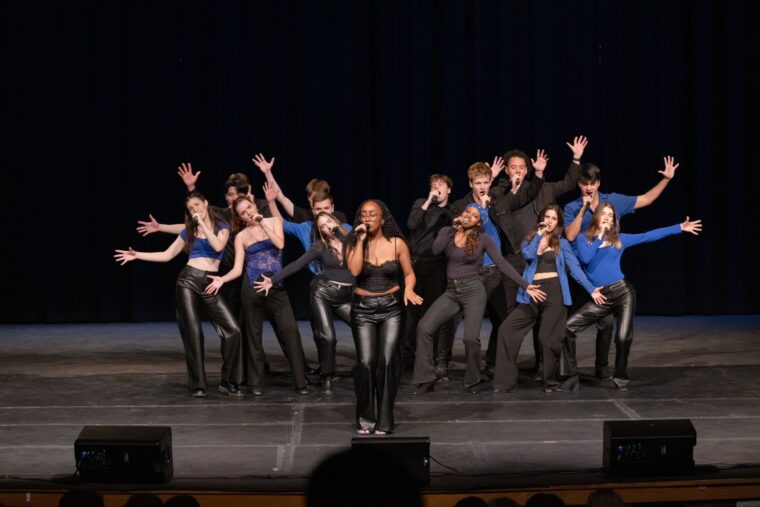
A scene from a pre-pandemic a cappella concert.
To start, representatives from the various a cappella groups formed a small auditions committee, which created a customizable auditions process for each group to sign off on. Some groups have already taken advantage of this process of approval and have jumped into the auditions process. One group that has done just this is Bollywood fusion group Sur Taal Laya.
Junior Avinash Murthy of Sur Taal Laya said that the auditions were “pretty normal…except it was all virtual.” The overarching challenge with auditions is not getting to hear the newcomers sing with the whole group, testing the blend.
However, components like range and personality can still be showcased through Zoom and video recordings. “It is not shooting in the dark because we can hear you sing, but it’s like shooting in heavily dimmed [light],” noted junior Madelyne Quiroz, a member of Mosaic Whispers.
At this point in the semester, Mosaic Whispers are not sure if they will add new members and are primarily focused on creating media content. Quiroz said that most years, “it has always been about live performances and competitions,” so this year is quite different. The International Championship of Collegiate A Cappella (ICCA) is also going to be completely virtual this year. The competition will require groups to submit a four-minute video showcasing their a cappella talents.
“Everything has been thrown out the window,” Quiroz said. She explained all of the possibilities and limitations that the virtual semester has created, especially regarding media content. Groups can use media platforms like Instagram and YouTube to create video quartets with recorded materials, she said.
Junior Gaby Musickant, the group coordinator for The Amateurs, said that the new media options open the door for new opportunities. “[The new media] let people practice arranging and do low-stakes, short arrangement[s],” she said. She added that the circumstances allow people without as much arranging experience to do so with less time pressure, making it more of a “passion project.”
The pandemic has also allowed students to expand into other creative realms as well. “For people interested in learning how to do sound engineering, they can be involved in the process of editing the videos,” Musickant said.
There are also shifts beyond production. Sur Taal Laya, in efforts to have fun and come together as a group, held a fundraiser for a local music organization by having people pay to hear members of the group sing a song of choice. The fundraiser illustrates another path that groups could take, using their musical talents to help a community or organization.
Many components of the fall are still uncertain, as many groups do not yet know if they will take in new members or what content they will create, but Quiroz emphasized that every group “is on the same page that what’s of paramount importance is offering, to whatever extent is feasible, the musical community that is a cappella is at Wash. U.”
Stay in Touch!
Get the latest and top news from StudentLife delivered to your inbox